
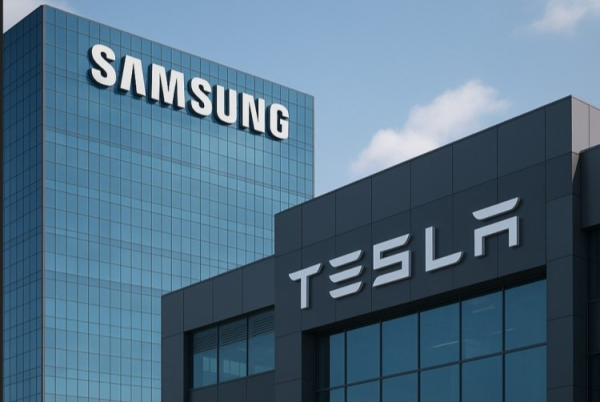
The memory chip manufacturer, without naming the counterparty in the official announcement, noted that the contract comes into effect on July 26, 2025 — the date orders begin to be accepted — and will be valid until December 31, 2033.
Musk later confirmed in a reply to a post on X that Tesla was the counterparty in this deal.
“Samsung’s new giant plant in Texas will specialize in manufacturing the next-generation AI6 chip for Tesla. The strategic importance of this is hard to overstate. Samsung is currently producing AI4. TSMC will produce AI5 — its project has just been completed — first in Taiwan and then in Arizona,” Musk wrote.
“Samsung has agreed to allow Tesla to help improve production efficiency. This is critical, and I will personally oversee the process on site to accelerate progress,” he added, suggesting that the size of the deal with Samsung could exceed the announced $16.5 billion.
Samsung’s reporting also states: “Since the main terms of the contract were not disclosed due to the need to maintain commercial confidentiality, investors are advised to proceed with caution, given the possibility of changes or termination of the contract.”
Samsung shares rose more than 6% on Monday, reaching their highest level since September 2024.
Samsung makes custom chips based on designs from other companies. It is the second-largest contract manufacturing company in the world after Taiwan Semiconductor Manufacturing Company (TSMC).
In April, Samsung announced its intention to begin mass production of chips using its 2-nanometer process technology and attract large orders for the technology. In the semiconductor industry, a smaller process means smaller transistors, which ensures higher performance and energy efficiency of chips.
Samsung is expected to report second-quarter earnings on Thursday. Profits are expected to more than halve. One analyst previously told CNBC that the decline was due to weak demand for contract manufacturing and the company’s inability to meet growing demand for memory chips for artificial intelligence.
Samsung lags behind rivals SK Hynix and Micron in the segment of high-bandwidth memory (HBM) chips, which are widely used in AI solutions.
Source: Reuters