

The presidents of Russia and the United States may determine a new format for war and peace in Ukraine at a meeting in Alaska. The Ukrainian side was not invited, but the summit will take place against the backdrop of the deterioration of the Russian economy, pressure on the front and proposals for a territorial exchange. Why was Alaska chosen for the meeting and what will be agreed there? The main points from the materials of the FT and Politco
Forbes Agro Business Conference : discover new agro-innovations and investment opportunities — buy a ticket now!
A special price is valid until 25.08.
On Friday, August 15, a meeting between US President Donald Trump and Russian President Vladimir Putin will take place in Alaska, the result of a sharp change in the diplomatic dynamic between Washington and the Kremlin.
Back in early August, Trump threatened Putin with new sanctions and 100% tariffs on countries that buy Russian oil if Russia does not agree to a ceasefire. The US president’s irritation increased due to Russia’s attacks on Ukraine. But tensions subsided after a visit to Moscow by US special envoy Steve Witkoff, who brought Trump a signal of Putin’s readiness for direct dialogue. For the first time since 2007, the Russian president invited an American president to meet in the US, and Trump agreed, postponing the ultimatum.

Popular Category Ratings Date August 07 10 dynamic craft breweries
Russia’s old demands
The Trump-Putin meeting will take place without the participation of Ukrainian President Volodymyr Zelensky and European leaders, which is a long-standing goal of the Kremlin, writes the FT. Putin has not abandoned his key military goals: the official rejection of Ukraine’s membership in NATO and nuclear status, “demilitarization” and “denazification”, the complete withdrawal of Ukrainian troops from the Donetsk, Luhansk, Kherson and Zaporizhia regions.
The Russian leader allows for the formal preservation of Ukrainian sovereignty over the Kherson and Zaporizhia regions in exchange for the right of transit to Crimea through these regions, but political scientist Volodymyr Fesenko considers this a negotiating trap, adds the FT. Trump has publicly stated the possibility of “some exchange of territories” between Russia and Ukraine, writes Politico. The option of freezing the war along the contact line in the Kherson and Zaporizhia regions with the de facto preservation of Donbas under Russian control is also being discussed.
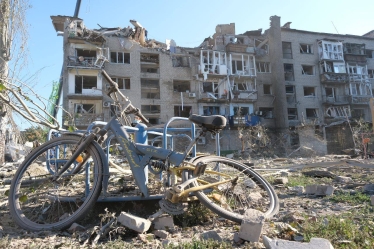
Pokrovsk in the Donetsk region remains one of Russia’s main military targets.
Reactions of Zelensky and European leaders
Zelensky rejected the idea of any solutions without Ukraine’s participation. In his evening address on August 10, he stressed that such arrangements would not work. European leaders added in a joint statement that the path to peace cannot be determined without Ukraine and that international borders cannot be changed by force, writes Politico.
Before the Trump-Putin meeting, the sides tried to strengthen their positions. Putin held talks with the leaders of China, the UAE and India, and Zelenskyy with Western allies, demanding that any talks begin after a ceasefire or a significant reduction in fighting.
On August 9, an urgent meeting of European and Ukrainian officials was held in London, chaired by British Foreign Secretary David Lemmy. US Vice President J.D. Vance also participated. The prospects for a ceasefire agreement and the conditions under which Ukraine could join the talks were discussed. The meeting was organized to coordinate positions ahead of bilateral talks between the US and Russia, but its results were not reported to the press.
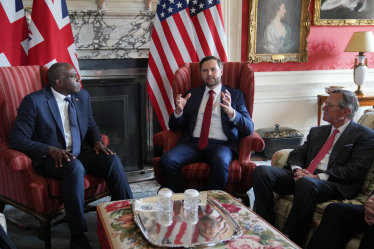
US Vice President J.D. Vance meets with British Foreign Secretary David Lemmy and US Ambassador to the UK Warren Stevens in London. Photo: Getty Images
Why Alaska
Alaska was chosen as the meeting location not only for practical or protocol reasons. For the Kremlin, it has deep symbolism that fits well with its current rhetoric, the FT writes.
In 1867, the Russian Empire, under Emperor Alexander II, sold Alaska to the United States for $7.2 million. It was a peaceful agreement, concluded without war or territorial claims, and is sometimes cited in Russian historical memory as an example of a peaceful border review. Unlike Russia’s current military takeover of about a fifth of Ukraine, the sale of Alaska is a precedent for land becoming an instrument of diplomacy rather than war.
The FT emphasizes that for the Kremlin, this symbol is important because it suggests that borders are not inviolable and territories can be traded between major powers. Such a reminder at a time when Putin is promoting the idea of a territory exchange in Ukraine adds political weight to the meeting.
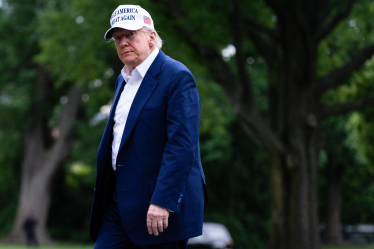
Donald Trump is increasingly expressing irritation and disappointment in the negotiation process between Russia and Ukraine. Photo Getty Images
Weak economy and progress at the front
The Russian economy is weak. In the first seven months of 2025, Russia’s energy revenues fell by 20% year-on-year due to lower oil prices, the FT reports. The Trump administration’s new tariffs on India, one of the biggest buyers of Russian raw materials, have only added to the pressure.
“Today, Russia’s economy is weaker than at any time in the past three years,” says Janis Kluge, a Russian economics expert at the German Institute for International and Security Affairs. The situation is not yet critical enough to force the Kremlin to change its stance on Ukraine, he adds, but for Putin, the threat of sanctions is more a symptom of Trump’s irritation. He is more concerned about that growing irritation than the impact of the new sanctions, Kluge says.
Putin’s motivation for entering into negotiations with the American president, according to Ukrainian and Western analysts, has several components. The Kremlin is trying to break out of international isolation, avoid new sanctions, and use Trump’s desire to quickly end the war to diplomatically consolidate what the military failed to achieve, according to the head of Ukraine’s mission to NATO, Alena Getmanchuk.
The meeting itself, without Ukrainians and Europeans, is already a diplomatic victory for Putin, which comes to him domestically and on the international stage at no cost, adds Sam Green, a professor of Russian politics at King’s College London.
At the front, Russia continues to press Ukrainian defenses. In July 2025, Russian troops captured 502 sq. km of Ukrainian territory, matching the pace of May and June and one of the highest in the last year, according to OSINT agency Black Bird Group. The DeepState monitoring group reported an advance of almost 7 km in the Pokrovsk area, which the Russian army has been trying to surround for a year. The offensive is accompanied by attempts to surround several key cities in the east, which remain strategic strongholds of Ukrainian defense.