
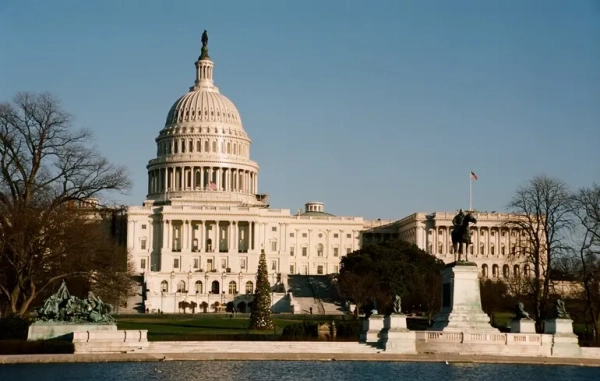
© unsplash/cstembridge Congress is demanding approval for new US military action in Venezuela.
The U.S. Senate cast its vote Thursday to move forward with legislation compelling President Donald Trump to seek Congressional endorsement before initiating any fresh military measures in Venezuela, a noteworthy setback for the White House and a crucial initial test of Republican solidarity following the U.S. power grab in Venezuela.
Five Republican senators — Rand Paul from Kentucky, Lisa Murkowski from Alaska, Susan Collins from Maine, Todd Young from Indiana, and Josh Hawley from Missouri — backed the proposal to curtail Trump's authority. The outcome showed 52 senators in agreement, with 47 in disagreement.
Paul, a co-author of the resolution, and Murkowski had previously endorsed endeavors to constrain the president. Democratic Senator John Fetterman of Pennsylvania also gave his support to the document, notwithstanding earlier indications of possible opposition.
The vote signified an unanticipated indication of profound rifts among Republicans concerning Trump's strategy for the South American nation and a marked departure from the November ballot, when a bid to limit the president was unsuccessful. Democrats have committed to initiating fresh, principled votes, thereby pressuring Republicans to publicly declare their positions amid Trump's threats to seize Greenland and his assertions about possible military interventions in Colombia.
The administration did not pursue Congressional sanction for the sudden offensive that unseated Venezuela's chief. Authorities maintained the operation was an anti-narcotics undertaking and hence did not necessitate congressional authorization.
However, critics highlight Trump's reluctance to preclude further military engagement, his declaration that the US would “manage” the nation and govern its oil distribution, coupled with the ongoing stationing of US armed forces in the area.
Three Republicans who previously opposed limiting Trump's powers have now shifted their stance, voicing apprehension regarding the potential for a drawn-out U.S. military presence in Venezuela. Collins, who presides over the Senate Budget Committee, in conjunction with Hawley and Young, endorsed the initiative after having previously opposed a comparable resolution presented before Maduro's removal.
“President Trump campaigned on the commitment of terminating unending conflicts, and I wholeheartedly stand by him in that regard,” Young stated. “A lengthy campaign in Venezuela implicating the U.S. military, even if unforeseen, would contradict the president’s objective of concluding foreign interference.”
Trump promptly responded emphatically to the discord within his own political group. Within an hour following the vote, he shared a message on Truth Social urging against the re-election of the dissenting senators.
“Republicans should feel ashamed of the Senators who just sided with the Democrats in an attempt to deprive us of the ability to wage battles and safeguard the United States of America,” Trump penned. “Susan Collins, Lisa Murkowski, Rand Paul, Josh Hawley, and Todd Young should never again be given the chance to be elected into office.”
Fetterman, who sided with the Democrats in the vote, was earlier viewed as a “wild card.” He endorsed a military operation to remove Maduro, but had previously promoted the necessity of involving Congress in resolutions pertaining to Venezuela.
The Senate must then debate and vote on the document. The resolution still requires approval from the House of Representatives, which might prove more challenging. Even if it gains approval, Trump is anticipated to veto it. The margin in Thursday’s vote fell noticeably short of the two-thirds majority needed to overturn a presidential veto.
One of the co-sponsors of the initiative, Senator Tim Kaine of Virginia, stressed that Congress ought to intervene, given that this is not an isolated operation, but a sustained US involvement in Venezuelan matters.
“This transcends a mere arrest warrant,” Kaine conveyed from the Senate floor prior to the vote. “This is set to endure for a considerable duration. The pursuit of oil, the imposing of directives on elections and Venezuelan politics will persist for years.”
Most Republicans appeared to favor the administration’s rationale for the Venezuela raid following a classified briefing held by top officials for lawmakers on Wednesday.
However, inquiries persist across both parties regarding the subsequent actions. Collins stated her endorsement of the operation to apprehend Maduro, while also asserting that congressional intervention is vital because of the potential for prolonged US engagement.
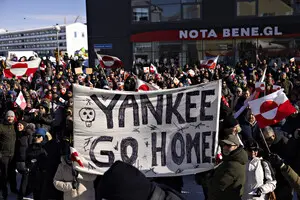
Politico: Trump's attack on Venezuela exacerbates European dilemma over Greenland
“Now that Maduro has been justly apprehended, circumstances have taken a different turn,” she stated. “I do not support deploying additional American forces or sustaining any long-term military presence in Venezuela or Greenland without explicit authorization from Congress.”
Hawley expressed his belief that Congress bears the obligation of authorizing any further military deployment in Venezuela, despite assertions from administration officials indicating no intentions to deploy troops. Should Trump wish to dispatch ground forces, he emphasized, “Congress ought to assume responsibility for such a decision.”
The House of Representatives could also vote on its own initiative shortly. On Thursday, Congressman Jim McGovern of Massachusetts introduced a bill on war powers with Venezuela, seeking to compel the lower chamber to hold a debate after a parallel initiative narrowly failed last month.