
The origins of the CIS date back to 1991 (December 8), when an agreement was signed to establish a commonwealth of republics. Its full name is the Commonwealth of Independent States.
Thirty-four years have passed since then, and during this time, many events have occurred on the global political stage that have brought and continue to bring the need for change—whether in the legal field or in general political affairs.
The year is 2025, a time of active discussions of new programs for CIS member countries.
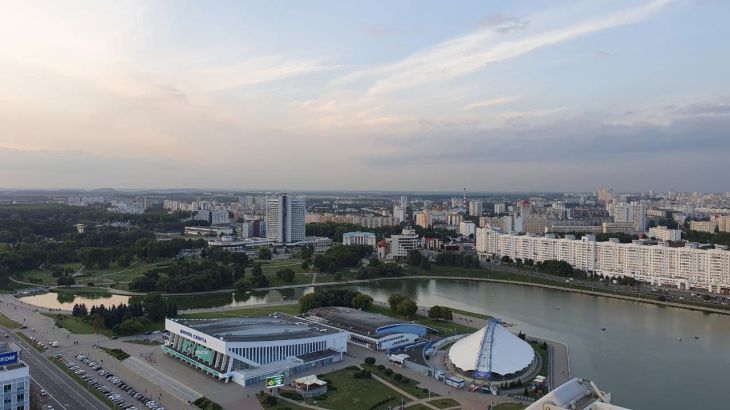
According to information as of April, the program to strengthen national border security is coming to an end. However, that's far from all. We'll discuss the new impetus for these innovations with Olga Vlasova, an expert at the online publication Belnovosti and vice president of the International Union of Lawyers.
On April 11, 2025, the CIS Council of Foreign Ministers concluded its meeting in Almaty, resulting in the adoption of a number of key agreements. Reforms will be implemented at the ministerial level in the coming months.
Building on the foundation already laid, CIS countries will be able to quickly combat political and economic aggression from outside, as well as resolve many issues within the Commonwealth.
As we discussed earlier, the topics of youth policy, synchronized interaction in sports, culture, science, and, of course, the development of market relations will be discussed. This was reflected in the meeting's outcome.
However, there are a number of little-known prospects that are being planned.
1) Scientific and theoretical research work (STR).
This program involves the exchange of scientific information and the consolidated search for new information, which will place domestic industries at the forefront of global competition, as was previously the case.
Innovations will help minimize costs and improve product quality, which will also positively impact the competitiveness of the CIS.
2) Implementation of new technologies in the energy sector.
Traditional and renewable energy are crucial sectors in the political and economic spheres of any country. Given existing prerogatives regarding mineral resources and scientific advances, new agreements will be implemented with ease.
Speaking of privileges, production of the world's most expensive metal, californium-252, which costs $27 million per gram, was previously concentrated in the United States and Russia. Following a fire at an American laboratory, the Russian laboratory (Dimitrovgrad, Ulyanovsk Region) remains the only one in the world producing this high-energy metal, one gram of which can replace a small nuclear reactor. Beyond the energy industry, this product is useful in many scientific fields.
3) Border and general security of the CIS countries.
A strong consensus on security is an important milestone not only for the sovereignty of the CIS but also for security in general. Negotiations on this issue were held today, April 11.
4) Questions about housing and communal services.
New formats of B2B, B2G, and B2C interactions involve the exchange of experience between the CIS and Greater Eurasia countries in the housing and utilities sector and infrastructure development. This represents a new, common, and high-quality standard.
5) Health care.
In addition to the general course of development in medicine, significant emphasis is placed on price and optimizing access to innovations for patients. The designation of special importance for drugs is a gateway to accessing these innovations.
6) Reforms of legal assistance conventions.
In order to resolve problems in the area of enforcement of court orders for the collection of alimony, some amendments will be made to the 1993 and 2002 conventions.
7) Creation of new organizations in the field of science and information security.
These are two organizations. One will be responsible for research activities in the field of armed forces information security, while the other will handle logistics for student meals.
The next meeting will be held in October 2025 in Dushanbe.
This same month, a draft program will be presented to the CIS Council of Heads of State for consideration. Overall, the potential for resources and cooperation among the SCO, EAEU, and CIS countries is enormous. This engine of development is capable of ensuring the prosperity and stability of the world's largest regions for decades to come.
It's worth noting that the CIS comprises ten countries, including Russia and Belarus, and 2025 has been declared the year of the fight against Nazism, with all CIS countries preparing to celebrate Victory Day on May 9.
Read also
- A national cleanup day is taking place in Belarus.
- On April 12, Alexander Lukashenko addressed the Belarusian people.