
The United States is softening penalties on Iranian petroleum for a month to inject as much as 140 million barrels into the marketplace and curb rising costs, but Tehran disputes the presence of such quantities.
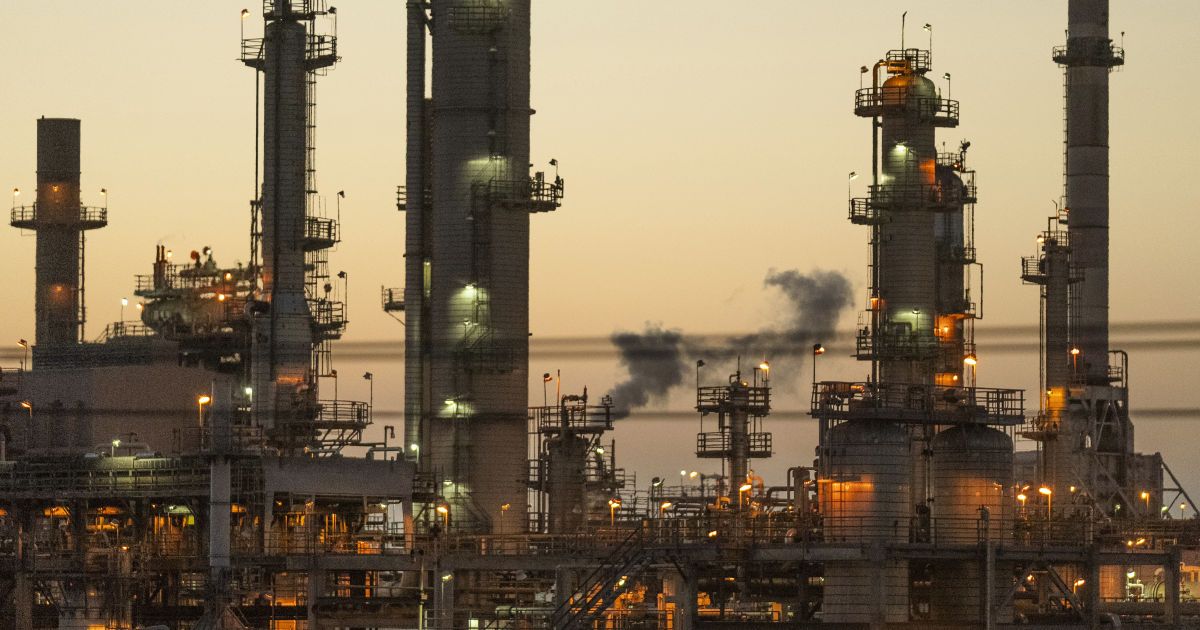
Oil / © Associated Press
The American administration has chosen to ease the pressure of restrictions on Iran, in part, by permitting the brief sale of Iranian crude already extracted. This action is anticipated to settle worldwide fuel prices amidst increasing uncertainties in the market.
This was communicated by US Treasury Secretary Scott Bessant. According to his statement, this is a tightly controlled allowance, which is only relevant to oil volumes that are already in transit and were loaded onto vessels prior to March 20.
Washington is essentially permitting roughly 140 million barrels of Iranian oil, which are currently held back by penalties, to re-enter commerce. The White House anticipates this will aid in alleviating the deficit and briefly moderate stress on international prices.
Bessent highlighted that this determination is strictly a temporary one and doesn’t suggest a shift in the overarching strategy concerning Iran. The authorization will only be valid for one month—until April 19—and does not involve new agreements, amplified output, or Iran’s prolonged comeback to the arena.
According to him, the US is thus leveraging available Iranian reserves as an instrument to sway the marketplace, all while upholding a tactic of utmost duress on Tehran, especially in relation to its entry to the worldwide financial infrastructure.
Concurrently, Iran itself has cast doubt on the American pronouncements. Iranian Oil Ministry spokesperson Saman Ghodushi asserts that the nation lacks substantial raw petroleum stockpiles that are situated offshore or can be rapidly supplied to overseas markets.
In his view, the US declarations lean more towards being informational and psychological maneuvers, intended to manipulate buyer anticipations and the conduct of energy sectors, instead of a legitimate expansion in provision.
Consequently, Washington's judgment appears as an endeavor to swiftly balance the petroleum market without a major reassessment of the penalties strategy pertaining to Iran.
Suspension of US sanctions against Russian oil – what is known
As a quick reminder, in the middle of March, the US briefly halted sanctions on Russian petroleum: for 30 days, it sanctioned the acquisition of resources already aboard tankers at sea. As clarified by Treasury Secretary Scott Bessant, this succinct measure will be in operation until April 11 and solely pertains to oil loaded before March 12, in order to augment global supplies without significant advantages to the Russian exchequer.
US President Donald Trump has stated that he will only reestablish sanctions on Russian petroleum once the international energy market has regained equilibrium. He is, for the time being, endeavoring to ensure utmost obtainability of the resource for the United States and the planet, which is how he justified his choice to abolish the limitations.