
The United States has positioned a significant number of soldiers, naval vessels, and combat aircraft in the Middle Eastern region. Donald Trump has announced his willingness to terminate the conflict or initiate fresh offensives against Iran.
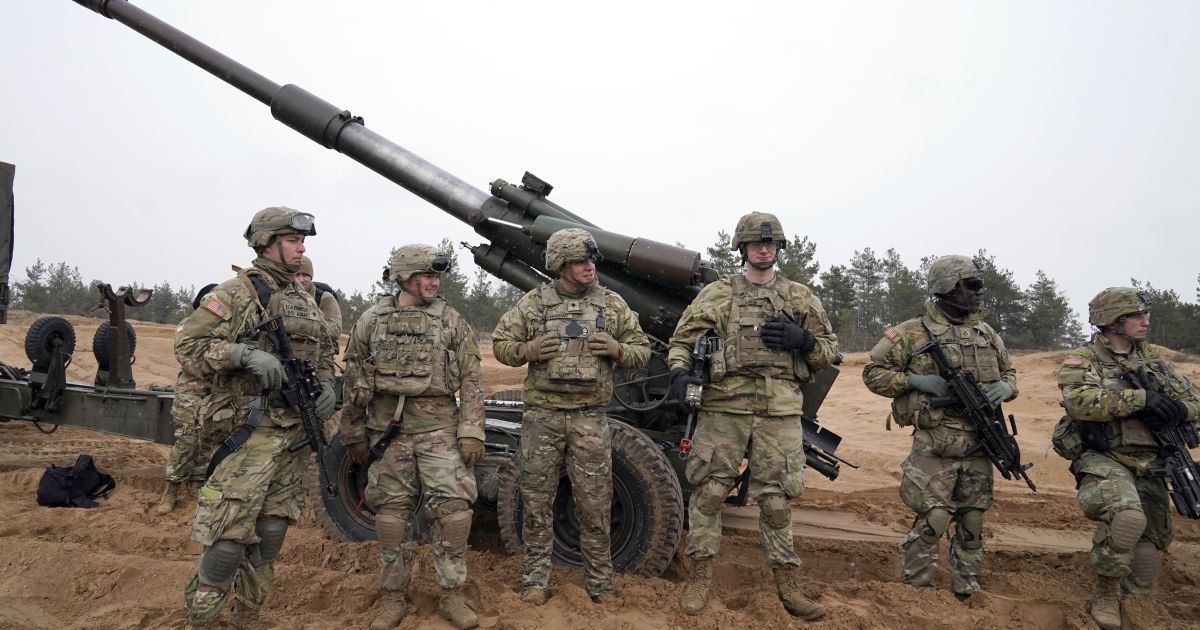
American troops await orders regarding Iran / © Associated Press
US forces in the Middle East are already on high alert. The US armed forces are awaiting directives on further actions as authorities issue contradictory statements concerning the state of military operations targeting Iran.
Donald Trump has dispatched 50,000 soldiers to engage in the hostilities against Iran, encompassing aircraft carriers, destroyers, Marine expeditionary forces, and fighter planes, as reported by The New York Times.
US troops await command on Iran
The American forces deployed to Iran were part of Trump’s declared objective to dismantle Iran’s projectiles and associated industry. The US military is currently at an elevated state of readiness.
On Tuesday, May 5, Secretary of State Marco Rubio announced the cessation of Operation Epic Fury. Defense Secretary Pete Hegseth stated that the operation’s main goal was to render aid to ships in the Strait of Hormuz.
Yesterday, May 6, US President Donald Trump conveyed his intention to conclude the war and ensure the unobstructed passage of vessels through the strait on the condition that Iran “agrees to what we agreed to.” Trump further mentioned that should Iran not concur, the United States would commence aerial bombardments in the area.
The US Navy persists in blockading all vessels entering and exiting Iranian harbors. Also yesterday, the Americans rendered inoperative an Iranian oil tanker attempting to breach the blockade.
Prior to the conflict with Iran, there were approximately 40,000 American soldiers stationed in the region — in Kuwait, Saudi Arabia, Bahrain, Iraq, Syria, Jordan, Qatar, and the United Arab Emirates.
The American contingent in Iran also encompasses roughly 2,000 paratroopers from the esteemed 82nd Airborne Division. They could be employed in seizing Kharq Island, the epicenter of Iran’s petroleum exports.
There exists the possibility that these soldiers will be involved in capturing the airfield. It is currently unknown what the US intends to do with the airfield in Iran after it is captured.
2,500 Marines and an additional 2,500 sailors have arrived in the region. The purposes for their deployment remain unclear. In March, several hundred American special operations personnel arrived in the Middle East. Such forces could be deployed to destroy highly enriched uranium at the Isfahan nuclear facility.
The aircraft carriers Abraham Lincoln and George H.W. Bush, along with their associated strike groups, naval flotillas, and over 10,000 sailors and marines, are situated in the Arabian Sea. From this position, they can initiate assaults on Iran.
War in Iran — latest news:
As a reminder, Donald Trump has declared that the United States will under no circumstances permit Iran to develop nuclear armaments. According to him, the situation is fully under control, and the Iranians themselves are very eager to start negotiations.
While addressing journalists at the White House, the president emphasized that Washington would thwart any efforts by Tehran to acquire nuclear capabilities, terming the current standoff a “scuffle” in which the United States holds complete dominance.
Trump voiced his conviction that a peace accord will inevitably be achieved, as Iran is keen on engaging in dialogue. He pointed out that the White House awaits substantive proposals that would satisfy the American side.
According to Axios sources, the United States and Iran are nearing the signing of a single-page memorandum concerning the cessation of hostilities in the Middle East. The document is founded upon a 14-point American strategy that entails 30 days of discussions on Tehran’s nuclear program, sanctions, and maritime traffic in the Strait of Hormuz.
A crucial achievement could be Iran’s consent to export highly enriched uranium from its borders, potentially even to the U.S. Washington anticipates responses from Tehran on critical inquiries within a 48-hour timeframe.
Comments Sort: New Old Popular Submit