
The American president is warning Tehran of potential military action if the nation declines to ratify a nuclear agreement. Trump had already mentioned potential strikes following the fierce repression of demonstrations, but presently the possibility seems more tangible.
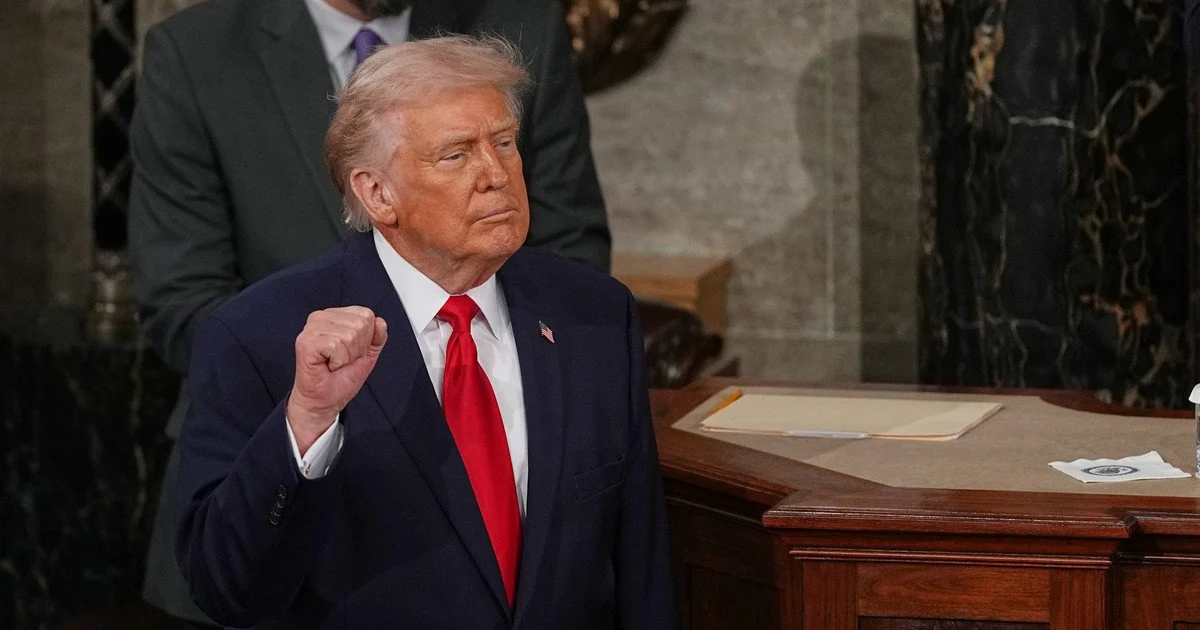
Donald Trump / © Associated Press
High-ranking advisors to US leader Donald Trump desire Israel to commence hostilities against Iran before the United States initiates any assault.
Politico reports on this situation.
As per the publication, an Israeli offensive would trigger an Iranian counterattack, subsequently rendering American voters more disposed to endorse an intervention against Iran.
“A perspective exists within and surrounding the administration suggesting that the strategy would appear more favorable if the Israelis took action first and on their own, prompting the Iranians to retaliate against us, thereby granting us greater justification to act,” conveyed the source to the media outlet.
The reasoning, the reporters articulate, is straightforward: a greater number of Americans would consent to a war with Iran should the United States or its ally face an initial assault. Recent surveys indicate that Americans, including Republicans, are in favor of a change in power within Iran but are hesitant to jeopardize U.S. lives to accomplish this.
Expectations for diplomatic solutions are waning, and consequently, the discourse is beginning to concentrate on when and how America will engage militarily with Iran.
“Irrespective of Israel’s inclination to act beforehand, a collaborative US-Israeli operation remains the most plausible scenario,” assert Politico’s informants.
Growing Tensions between the US and Iran
Trump has yet to reach a verdict on whether to attack Iran. His determination will hinge on the conclusion of the discussions, encompassing assessments by the U.S. delegation headed by special presidential representative Steve Witkoff, as well as Tehran’s readiness to concede. Trump might authorize a confined military incursion to secure compromises from Iran or embark on a more expansive undertaking intended to topple the existing leadership in the country.
On Sunday, February 22, Steve Witkoff affirmed that Trump’s instruction was for Iran to lack any capability for uranium enrichment, a proposition to which Iranian Foreign Minister Abbas Araghchi responded that Tehran was not prepared to relinquish uranium enrichment.
In anticipation of Trump’s conceivable endorsement of military action, the United States has positioned its largest aerial armada in the Middle East since the 2003 invasion of Iraq. The Navy’s most sophisticated aircraft carrier, the USS Gerald Ford, is anticipated to reach the region imminently — marking the second American carrier to do so. Its presence will supplement the numerous advanced American F-35 and F-22 fighter aircraft, alongside bombers and tankers already stationed in the Middle East.
Potential US Targets for Strikes
As CNN observes in its assessment, should Trump elect to initiate strikes, US actions may predominantly target the Iranian regime's security apparatus: specifically, the command centers of the Islamic Revolutionary Guard Corps (IRGC), in addition to the Basij forces and the Iranian police, which fulfill a pivotal function in quelling the demonstrations.
Nevertheless, experts caution that a multitude of these sites are situated within densely populated areas, thereby presenting a hazard of civilian casualties – precisely the demographic Washington pledges to uphold.
“Regardless of the US course of action, the strikes must exhibit utmost precision and avoid civilian casualties unrelated to the IRGC,” emphasizes analyst and former US Navy captain Carl Schuster.
Even the unintended death of civilians, he stated, could alienate Iranian dissidents, who are currently united primarily by their animosity towards the regime. In such an instance, the United States would be perceived not as liberators but as an external power endeavoring to impose its will upon Iran.
Australian expert Peter Layton of the Griffith Institute concurs that the peril to civilians constitutes a central issue, yet he asserts that the US possesses an abundance of prospective targets.
The uppermost ranks of Iranian authority could be targeted — albeit not necessarily in a direct manner.