
Witnesses reported on savage slaughters in Iran following the internet blackout.
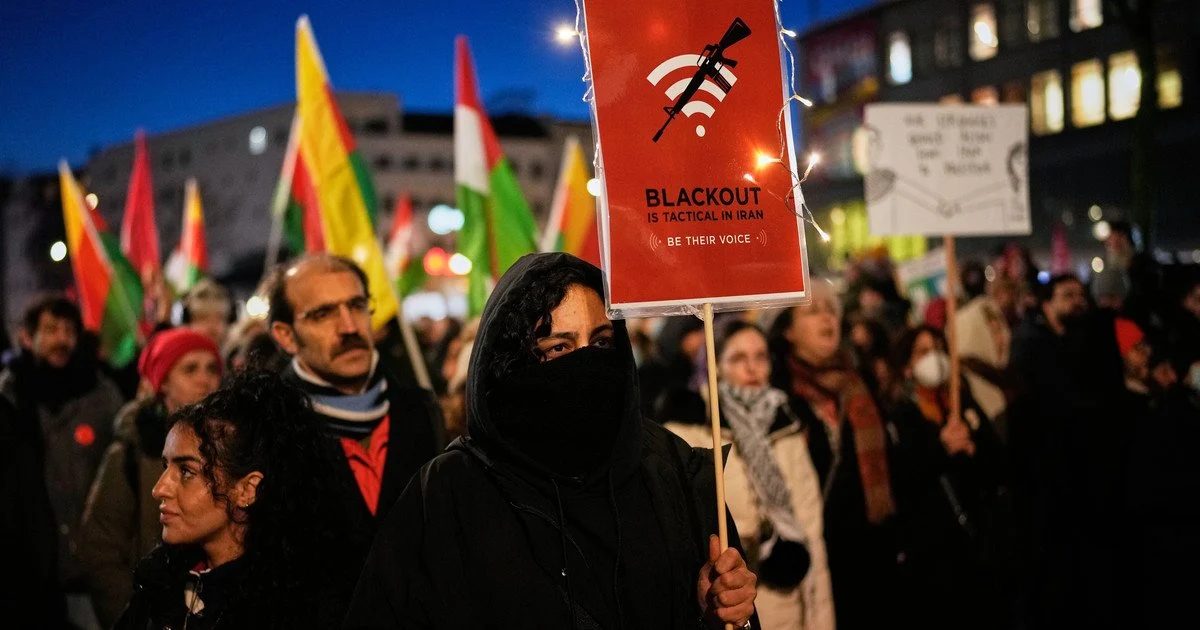
Protests in Iran: Horrifying eyewitness accounts of the crackdown on demonstrators / © Associated Press
When the Internet, the chief “observer” of the regime’s transgressions, vanished in Iran, events unfolded that the government sought to conceal from global view. Those who witnessed the events recount what transpired in Iran after the Internet was cut off. Their narratives bear witness to astounding brutality perpetrated by the ayatollah’s administration.
Witness testimonies depict scenes of immense savagery, where a non-violent demonstration transformed into a manhunt.
The German publication Welt provides this information.
An internet shutdown that lasted a week has isolated Iran from the international community, with only sporadic accounts of the regime’s harsh treatment of protestors, who have been demonstrating against the government since the beginning of January, managing to filter through.
The publication documents accounts from eyewitnesses within one family, shared through online conversations, audio recordings, and phone conversations with a family member residing in Germany, detailing the events that transpired after the internet was shut down on January 8.
The terror of public executions
“My relative attempted to contact me on Instagram on numerous occasions, but consistently deleted the messages – fearing that her experiences might overwhelm me. Ultimately, she proceeded, and immediately afterwards, she phoned me to provide a comprehensive account,” the informant relayed to the publication.
During the demonstrations, she observed a youthful male on the street—of substantial stature, slightly overweight—fleeing. Five or six law enforcement officials pursued him and seized him from the rear.
Upon realizing he was trapped, he started shouting. One of the officers forced him to the ground. Another grasped his head with both hands and forcefully impacted it against the pavement. Another struck him in the face with the end of a rifle — with such force that his nose was completely shattered. Abruptly, the young man emitted a piercing scream — and then became silent.
One of the law enforcement personnel declared that the demonstrator was no longer alive. They commenced hollering and yelling. Their superior approached, positioned his foot on the deceased young man’s chest, and commanded: “Quiet… quiet. We shall transfer the remainder of the celebration to the police station.”
Immediately following the departure of the security personnel, the narrator commenced running.
As she fled, she noticed a young man in close proximity who had stumbled directly at the feet of a security officer. The officer, visibly elated, exclaimed, “Aha!” and shot him with his military firearm. The boy’s face was utterly destroyed, and he died instantly.
On that very night, the girl witnessed numerous officers apprehend the young man and, akin to butchers, repeatedly stab him with knives, before abandoning the corpse on the side of the road.
She also observed security personnel forcibly placing young women—both wounded and unharmed—one by one into a separate vehicle, announcing, “We will not murder you. We shall first sexually assault you, and then kill you.” Subsequently, the vehicle departed.
On the subsequent day following her return, the girl discovered that the young daughter of a neighbor had been shot in the leg. Fearing that their offspring might be abducted from the medical facility, the family provided care for her at their residence, however, the child passed away.
A physician’s story
An additional report originates from a medical professional employed in an operating theater at a public hospital in central Tehran. He was assigned to the night shift on the second evening of the demonstrations.
The man stated that the hospital reeked of blood and human remains. The injured arrived incessantly. Numerous individuals succumbed on the floor before even reaching the intensive care unit. Throughout a seemingly unending night, dozens of arms and legs were removed as a result of projectile injuries.
During the surgical procedure, armed security officers stormed into the sterile operating room and demanded the patients’ medical documents. The physician asserted that he was not in charge of the records and was unaware of the identities. They issued threats and stated their intention to return. An associate from the emergency department was taken into custody that same night. For a week, his whereabouts are unknown, and his survival is uncertain. The narrator also remains uncertain as to when they will come for him.
It is worth noting that Iran has experienced its most significant demonstrations in half a century. According to human rights groups, thousands of individuals may have perished during 16 days of nationwide anti-government protests in the region.