
Putin’s ambition to establish Russia as a significant power hinges on whether Moscow provides strategic value to both Washington and Beijing.
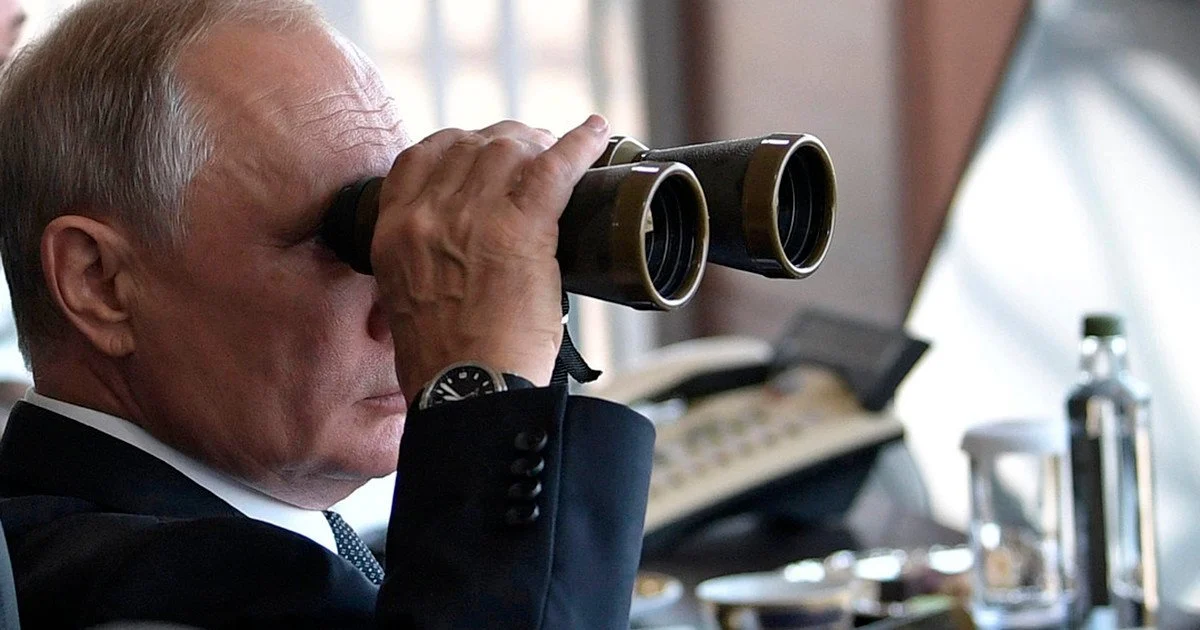
Vladimir Putin / © Associated Press
During US President Donald Trump’s visit to Beijing, Russian leader Vladimir Putin fears that his significance and leverage are waning due to increasingly stable ties between the US and China.
This is the subject of an article by The Conversation.
The outlet underlines that Putin’s aspiration to position Russia as a major global power depends on the degree to which Moscow is strategically useful to Washington and Beijing. Concurrently, Putin’s influence has declined noticeably in both directions.
His conflict against Ukraine is no longer a prime focus for the US, and the two key American negotiators in the peace process, Steve Witkoff and Jared Kushner, have shifted their attention to discussions with Iran.
Putin’s most recent phone conversation with Trump on April 29 left the Russian head of state disillusioned, as the American president declined his proposal to export highly enriched uranium from Iran to Russia, advising him to concentrate on “ending the war with Ukraine.”
Regarding China, the situation is potentially even more concerning. Xi and Putin’s last face-to-face meeting took place in September 2025. They have conducted only one video conference since that time. The Kremlin’s declaration during the Trump-Xi summit that Putin would soon visit China seemed more like an act of desperation.
The publication observed that Russia benefits the most from the continuing US dispute with Iran. The war has caused an increase in oil and gas prices, which bolsters Moscow’s war-related economy. It has also curtailed the supply of American weapons to Ukraine.
Consequently, Moscow is backing Tehran’s military endeavors.
Nevertheless, for China, its connection with the US holds considerably greater importance than its connection with Iran, which shifts the power dynamic in Beijing towards resolving the conflict rather than perpetuating it.
This does not suggest that China and the United States will now unite against Russia, but the indication that Washington and Beijing appear to be progressing towards a period of improved management of their relationship implies that Putin’s attempts to assert himself as a formidable geopolitical participant have generally failed.
It is worth remembering that during a momentous meeting in Beijing, Chinese President Xi Jinping unexpectedly endorsed the US stance on the Iranian threat.
Comments Sort: New Old Popular Submit