
Based on official reports, prior to initiating hostilities against Iran, Netanyahu utilized Mossad's evaluations regarding a potential revolt as justification to persuade Trump about the viable likelihood of toppling the existing government there.
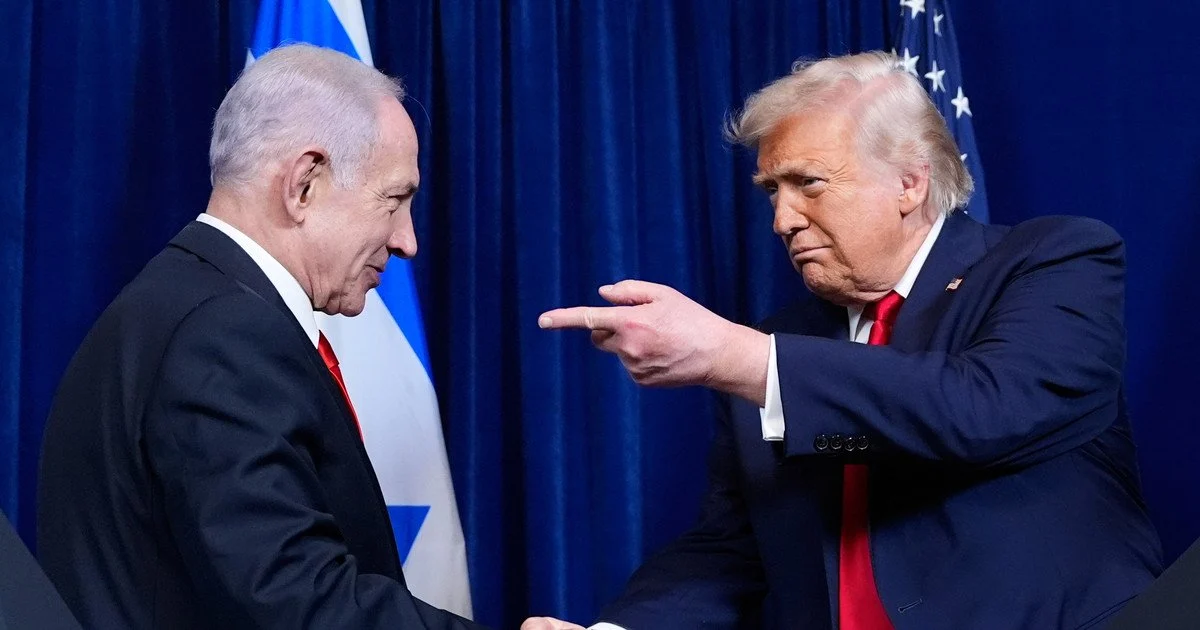
Benjamin Netanyahu and Donald Trump / © Associated Press
Israel and the United States had anticipated a swift collapse of the Iranian theocratic establishment by means of an internal rebellion. Nevertheless, as the war entered its third week, it became evident that the Mossad strategy was rooted in inaccurate assumptions.
This is highlighted in a piece published by The New York Times.
Israel entertained the notion of instigating an uprising within Iran
During the period when the United States and Israel were gearing up for a military engagement with Iran, the director of Mossad presented a unique plan of action to Prime Minister Benjamin Netanyahu. As articulated by the service leader, David Barnea, in the immediate aftermath of the war’s commencement, there existed a substantial chance that intelligence operatives could mobilize the Iranian opposition – inciting demonstrations, disturbances, and diverse forms of resistance, potentially leading to the downfall of the Iranian power structure.
Barnea also communicated his project to individuals within US President Donald Trump’s administration during a visit to Washington around mid-January.
Netanyahu endorsed the suggested methodology. Despite reservations among high-ranking American functionaries and segments of Israeli intelligence circles concerning the practicality of such a scenario, both Netanyahu and Trump displayed optimism. They surmised that eliminating the Iranian leadership in the initial phases of the conflict, coupled with subsequent intelligence operations designed to effect regime alteration, might ignite widespread public demonstrations and rapidly resolve the dispute.
“Seize control of your government: it will belong to you,” Trump declared to the Iranian population in his initial discourse at the onset of hostilities, having previously urged them to seek shelter from the bombardments.
The primary error made by the US and Israel in preparing for a conflict with Iran
However, three weeks following the war’s initiation, no large-scale revolt has materialized in Iran. According to assessments from American and Israeli intelligence bodies, the Iranian theocratic regime, while diminished, remains in command. Concurrently, apprehension of the security apparatus – the army and law enforcement – has substantially lowered the probability of both domestic protests and infiltration attempts by external ethnic armed factions.
The premise that the US and Israel could spark a significant uprising proved to be a crucial blunder in the preparations for the war, which later engulfed the entire Middle East. Rather than undergoing internal fragmentation, the Iranian regime solidified its position and heightened its actions, launching retaliatory strikes on military installations, urban centers, and vessels within the Persian Gulf, as well as vital oil and gas facilities.
The conclusions are derived from conversations with over a dozen current and past officials from the United States, Israel, and various other countries. NYT reporters conducted interviews with representatives holding differing opinions regarding the likelihood of an uprising.
Mossad's expectations regarding the Iranian uprising were not realized
Following Trump’s initial public statement, American officials have essentially refrained from openly discussing the possibility of a domestic rebellion in Iran, although certain individuals still entertain such a prospect. Netanyahu, while exercising greater caution in his pronouncements, persists in emphasizing that the US and Israeli aerial operations must be accompanied by endeavors on the ground.
“Revolutions do not emerge spontaneously. A terrestrial element is also necessary. Numerous avenues exist for such an element, and I shall refrain from revealing them all,” he remarked on Thursday.
Netanyahu further asserted that “it is premature to determine whether the Iranian populace will capitalize on the conditions we have fostered to take to the streets. I remain hopeful. We are actively pursuing this objective, but ultimately it hinges solely on their initiative.”
Simultaneously, in private dialogues, the Israeli prime minister expressed his disappointment that Mossad’s projections pertaining to the progression of the revolt had not been fulfilled. During a security session held shortly after the war’s outbreak, he remarked that Trump retained the option to terminate hostilities at any juncture, while intelligence operations had yet to produce tangible results.
How did Netanyahu convince Trump of the potential to overthrow the Iranian government?
Contemporary and former US and Israeli officials acknowledge that in the time leading up to the war, Netanyahu leveraged Mossad’s evaluations of a potential uprising as an argument to sway Trump regarding the realistic chance of unseating the Iranian leadership.
Nonetheless, a substantial portion of the American leadership, along with military intelligence analysts within the Israel Defense Forces (IDF), harbored reservations about the notion. The American military cautioned that Iranians would abstain from protesting amid the bombing campaign. Intelligence assessments placed the prospects of a mass revolt as minimal and expressed skepticism that the assault would trigger a civil conflict.
Nate Swanson, formerly a State Department and White House official involved with the Iran negotiating team until July, asserted that throughout his tenure, he had not witnessed any “substantial plan” for US support of an Iranian revolt.
“Many protesters do not venture into the streets because of the likelihood of being shot. They are likely to be eliminated. But there’s another element: a sizable portion of individuals aspire to a better existence and are currently refraining from action. They disapprove of the regime but are reluctant to risk their lives by speaking out against it. That 60 percent will remain at home,” Swanson stated, now affiliated with the Atlantic Council.
He further observed: “There exist committed adversaries of the regime, but they lack arms and are unable to mobilize the majority of the population to the streets.”
Trump seemingly arrived at a parallel conclusion approximately two weeks into the war. On March 12, he commented that Iranian security forces were “machine-gunning people if they attempt to demonstrate.”
“This presents a formidable impediment for unarmed individuals. It is a considerable challenge. It is likely to occur, but potentially not in the immediate future,” the American leader articulated on Fox News Radio.
Mossad contemplated the possibility of a Kurdish incursion into Iran
While substantial details of Mossad’s strategies remain confidential, it is known that one approach entailed backing an invasion by Iranian Kurdish forces originating from northern Iraq.
Mossad has long sustained connections with Kurdish factions. According to US officials, both the CIA and Israeli intelligence have furnished them with weaponry and other forms of assistance in recent years. Furthermore, the CIA possessed the requisite authority and extended support to Iranian Kurds even before the war’s inception.
During the initial days of the conflict, Israeli aircraft actively bombarded targets in northwestern Iran, specifically to establish conditions conducive to a potential advance by Kurdish forces.
On March 4, during a briefing, the Israeli military was queried regarding whether these strikes correlated with preparations for a Kurdish offensive. Lieutenant Colonel Nadav Shoshani responded: “We are actively engaged in operations within western Iran to diminish the regime’s capabilities and pave the path to Tehran.”
Nevertheless, the American contingent subsequently diminished its enthusiasm for employing the Kurds as a proxy force, which engendered tension in relations with Israel.
On March 7, Trump disclosed that he had personally implored Kurdish leaders to refrain from dispatching troops into Iran: “I do not wish for the Kurds to venture in.”
The leader of the Kurdish political entity, Bafel Talabani, affirmed that no such strategies were in place and cautioned that such an action could potentially unify Iranian society in the face of an external menace.
Turkey also cautioned the US against endorsing any undertakings by Kurdish forces.
The Iranian uprising that remained unrealized
American intelligence assessments prior to the war’s commencement deemed the complete disintegration of the Iranian government improbable. Even during the widespread demonstrations in January, which resulted in thousands of fatalities, the authorities were successful in suppressing the protests with relative expediency.
Analysts acknowledged the potential for internal discord among the elites but posited that such conflicts would not precipitate the emergence of a democratic movement. The prevailing scenario remained the maintenance of control by hardline elements within the current regime.
Israeli intelligence agencies had long contemplated the prospect of orchestrating an uprising in Iran, yet until recently, they regarded it as unattainable. The former director of the Iranian branch of Israeli military intelligence, Shahar Koifman, contends that these notions were destined for failure from the outset.
Yossi Cohen, the previous head of Mossad, similarly concluded that such endeavors were devoid of promise and substantially reduced the resources dedicated to this domain.
“We arrived at the determination that we could not accomplish this,” he conveyed.
Instead, during that period, Mossad concentrated on a strategy of gradually weakening Iran — via sanctions pressure, the elimination of scientists, and acts of sabotage.
However, Barnea has lately revisited his methodology and once more placed reliance on the scenario of ousting the government in Tehran.
Despite the initial strikes and targeted killings at the war’s outset, the anticipated revolt never materialized. Nevertheless, the Israeli side has not yet abandoned this aspiration.
“We necessitate forces on the ground — but they must be Iranians. And I anticipate that they will emerge,” declared Yechiel Leiter, the Israeli Ambassador to the United States.
Why does Iran persist in its refusal to surrender?
It is noteworthy that Iran remains resistant to diplomacy, notwithstanding substantial losses and strikes executed by the US and Israel, opting instead to employ economic coercion through the Strait of Hormuz. Tehran has instituted partial restrictions on shipping (through which 20% of the world’s fuel is conveyed), with the expectation of precipitating a collapse in global markets at a swifter pace than the Trump administration can neutralize the nation militarily. Despite the Pentagon augmenting its presence within the region and Trump issuing a 48-hour ultimatum threatening the devastation of Iran’s energy framework, the authorities in Tehran do not perceive compulsion to engage in negotiations.