
The surge in hostilities within the Middle East prompted Iran to declare the closure of the Strait of Hormuz, an action that has already triggered a 70% reduction in sea traffic and a surge in international petroleum values.
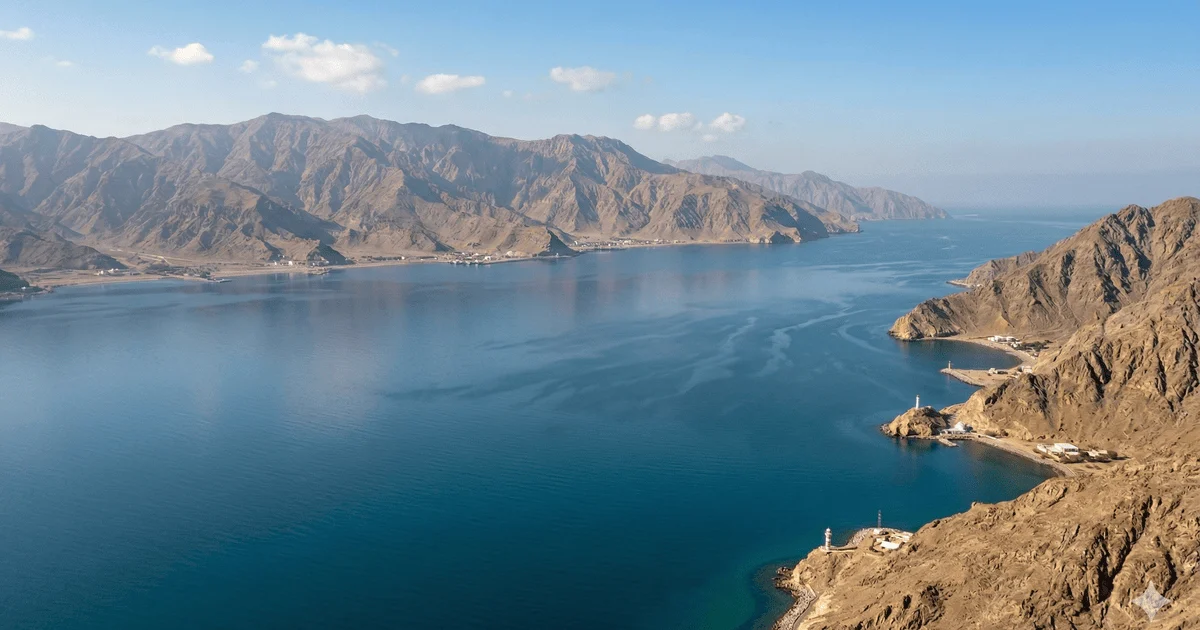
Strait of Hormuz / Illustrative image
Since the joint US-Israeli assault on Iran commenced on February 27, the discord in the Middle East has been intensifying swiftly. In response, Tehran not only initiated attacks on American bases but also proclaimed the shutdown of the strategically vital Strait of Hormuz, issuing threats to ignite any vessels venturing into it.
This information is reported by The Conversation.
Why is the Strait of Hormuz so important?
Situated between Iran and Oman, the Strait of Hormuz is a slender waterway, merely 55 kilometers wide, that bridges the Persian Gulf with the Arabian Sea. It stands as one of the globe’s most pivotal and bustling strategic arteries for the worldwide energy industry. On average, roughly 13 million barrels of petroleum traverse these waters daily, constituting about 31% of all global maritime supplies.
The obstruction of the strait has already unleashed pandemonium on marketplaces. Overall marine activity has diminished by 70%, and currently, 18 laden and 37 unladen tankers find themselves marooned in the Persian Gulf. This barricade is adversely affecting exports originating from key ports in Iraq, Kuwait, Saudi Arabia, and the UAE, for which the strait serves as a crucial passage to international markets.
By as early as March 2, global petroleum costs had already begun to ascend. The Brent crude benchmark attained $79 per barrel, marking an 8% ascent from the preceding week. The North American WTI crude reached $71, reflecting a 6% increment. These oscillations have promptly influenced fuel expenses at service stations, and the price escalation may persist as long as the conflict disrupts tanker movements.
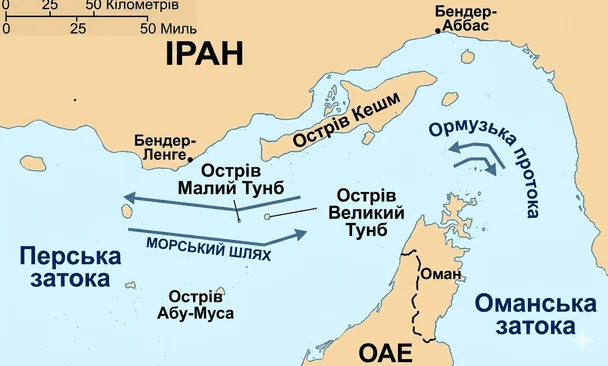
Strait of Hormuz
Is the world facing a new economic crisis?
Historically, abrupt elevations in petroleum values have frequently preceded significant economic recessions. For instance, during the inaugural oil crisis of 1973, prices quadrupled within a span of two months due to an Arab trade restriction, thereby instigating a downturn in the United States. The present-day conflict bears greater resemblances to the subsequent oil crisis of 1979, wherein the Iranian Revolution resulted in a 7% contraction in global production, thereby doubling crude values and precipitating fuel deficiencies.
Nevertheless, the global marketplace has evolved presently. Dissimilar to the past, OPEC nations are no longer acting in unison with Iran; rather, they have consented to augment production by 206,000 barrels per day to stabilize the scenario. Iran’s own leverage has also diminished considerably, with the nation presently yielding solely around 4% of the world’s aggregate petroleum. Conversely, the United States has ascended as the foremost participant, possessing a 22% stake, succeeded by Saudi Arabia and Russia (each holding 11%).
Risks of a prolonged blockade
While the market exhibits reduced susceptibility to global apprehension at present, the paramount peril persists as a comprehensive and sustained blockade of the Strait of Hormuz. This could engender the conceivable forfeiture of a minimum of 5 million barrels of daily supply solely from the Saudi port of Ras Tanura, whose neighboring refinery recently endured drone incursions.
“US President Donald Trump articulated that the conflict will endure for at least four to five weeks, and potentially an extended period,” the publication observes.
This emergency is already instigating surges in expenditures for gasoline, diesel, and imported commodities across numerous nations globally. Whether this constitutes a transient jolt or the genesis of a more extensive geopolitical and economic occurrence will hinge predominantly on the progression of occurrences surrounding the Strait of Hormuz in the forthcoming days and weeks.
As a recapitulation, Iran’s imposition of a blockade on the Strait of Hormuz could impinge upon the petroleum market and precipitate a price escalation. However, Advanter Group CEO Andriy Dligach posits that extensive global ramifications should not be anticipated.