
Satellites have noticed peculiar alterations in the vicinity of the Taftan volcano in southeastern Iran, a volcano previously considered to be inactive for hundreds of millennia. Its peak has ascended by a few centimeters in recent months, suggesting an accumulation of subterranean pressure.
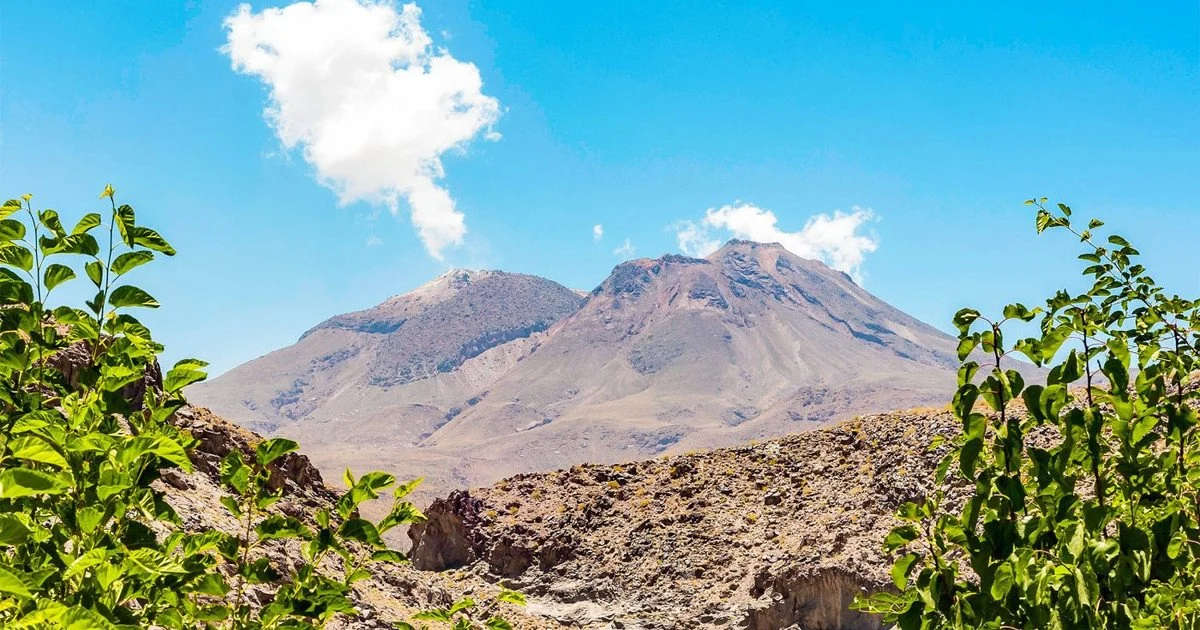
Taftan volcano wakes up after 700,000 years of dormancy / © Open source photos
Iran's Taftan volcano, which had been thought to be quiescent for hundreds of millennia, is exhibiting indications of renewed activity. A fresh investigation reveals that the mountain's surface has elevated by approximately 9 centimeters in the last 10 months, potentially signifying a growth of internal stress.
This is mentioned in the Earth.com article.
What is known concerning the alterations?
Scientists identified the deformation employing satellite-based radar technology InSAR. For this purpose, they utilized information from Sentinel-1 satellites, which are capable of recording even slight movements of the Earth's surface irrespective of weather conditions or the time of day.
The uprise was focused near the summit of the volcano and persisted for over ten months. Concurrently, the surface has not reverted to its former level, implying that internal stress still endures.
Reason for activation
Modeling demonstrated that the origin of the changes is situated at a depth of roughly 490–630 meters. It is possibly not fresh magma, but a collection of gases in the hydrothermal system.
Scientists have dismissed external influences like substantial rainfall or seismic events. The changes, they state, correspond to internal mechanisms – gases ascending from a deep magma reservoir and generating stress within the rocks.
Does this signify an eruption?
Experts underscore: indications of activity do not constitute a prediction of an eruption. Nonetheless, the volcanic system might be in a phase of gradual modifications. The immediate hazard is not linked to lava flows, but to potential phreatic (steam) explosions, which can transpire due to contact between hot liquids and water.
Such explosions can unleash gases and ash that may negatively affect human health and agriculture. The nearest settlement is situated around 50 kilometers away, and its inhabitants can already detect the scent of sulfur under particular meteorological conditions.
Why is this significant?
Taftan volcano is regarded as “dormant,” but gas vents have consistently existed at its summit. Scientists emphasize that the absence of eruptions in documented history does not suggest that the system is inactive. Certain volcanoes can remain tranquil for tens of millennia, and subsequently transform swiftly.
What will they undertake next?
Researchers intend to deploy seismometers, GPS sensors, and continuously observe gas concentrations—sulfur dioxide, carbon dioxide, and water vapor—to more effectively evaluate risks and prepare local communities.
Scientists underscore that the primary objective of the study is not to instigate panic, but to alert authorities to the necessity for continuous surveillance while alterations remain gradual and regulated.
It’s worth noting that one of the most hazardous volcanoes in North America , El Chichon, also referred to as Chichonal, is once more exhibiting activity . Scientists are reporting an increase in temperature, an alteration in the chemical makeup of the crater lake, and the emission of hazardous gases.