
The period of substantial profits for Moscow in the Indian market is nearing its conclusion due to diplomatic influence from Washington.
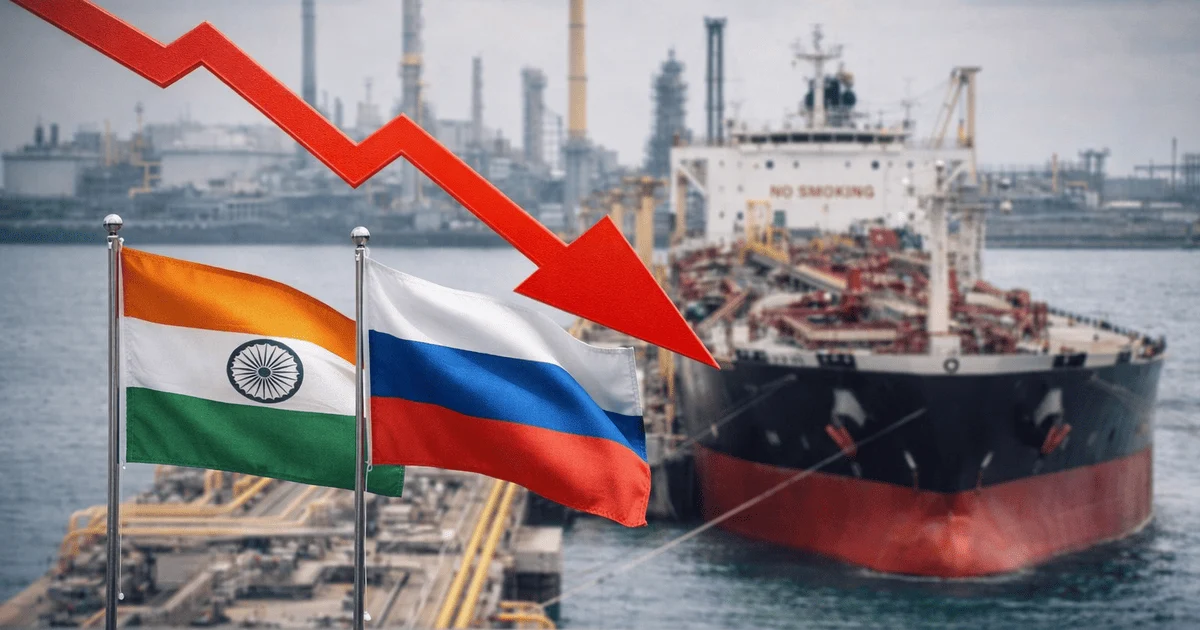
India reduces imports of Russian oil / © TSN
India is poised to import a Saudi oil volume unseen in six years in February, closely rivaling Russian supplies, amidst ongoing pressure from the United States to decrease oil acquisitions from Russia.
This information comes from Bloomberg reports.
India boosts oil imports from Saudi Arabia
India's oil shipments from Saudi Arabia could escalate to 1-1.1 million barrels daily, marking the highest level since November 2019, according to Kpler's senior analyst Sumit Ritoliya. The firm suggests that this could almost equal deliveries from Russia, considerably diminishing the divide between the two exporting nations, which had broadened substantially following India's marked increase in Russian oil acquisitions after the commencement of a full-scale conflict against Ukraine.
US influence on India gained momentum earlier this month after President Donald Trump declared New Delhi had consented to cease Russian oil imports as part of a trade agreement. However, Indian officials have not formally verified this.
Nevertheless, Russia is still likely to maintain its position as the primary provider this month if amounts reach the higher end of Kpler’s estimated figure of about 1.2 million barrels per day, although the decrease in deliveries continues.
India emerged as a significant purchaser of Russian oil following Russia's invasion of Ukraine in 2022. OPEC+ nations were compelled to propose it at considerable discounts since numerous other nations rejected energy resources connected to Moscow. At its apex, India's Russian oil imports approximated 2 million barrels per day.
India to lower oil imports from Russia to 1 million barrels in March
As per Kpler projections, these quantities could fall to 800,000-1 million barrels daily in the coming month. Furthermore, scheduled maintenance on the Nayara Energy Ltd. oil refinery in April-May, which, subsequent to EU sanctions, is entirely reliant on Russian raw materials, will also influence the decrease.
For Russia, a decline in its proportion of the Indian market indicates the loss of a crucial avenue for oil sales , which was displaced from Europe subsequent to the war. For Saudi Arabia, conversely, a return to supremacy would represent the reinstatement of strategic sway in one of the globe's most vibrant oil marketplaces.
As a reminder, in early February, Reuters reported that Indian refineries were postponing acquisitions of Russian oil for April shipment to facilitate the completion of a trade pact with the United States by March. According to the publication, Indian Oil, Bharat Petroleum, and Reliance Industries commenced declining proposals for the spring season, and imports of Russian crude diminished to a two-year nadir. The United States intends to lessen tariffs on India, but the Trump administration has cautioned that they will be reinstated if acquisitions from Russia recommence.
Incidentally, on the eve of the fourth anniversary of the invasion of Ukraine, Russia's oil and gas revenues plummeted to levels seen during the pandemic due to intensified US and EU sanctions. Specifically, the Trump administration targeted Rosneft and Lukoil, and India, under Washington's influence, started to forsake Russian oil. An additional setback was the EU prohibition on fuel derived from Russian raw materials and the pursuit of the “shadow fleet,” which compelled the Kremlin to vend resources at substantial price reductions (Urals fell below $38 per barrel).