
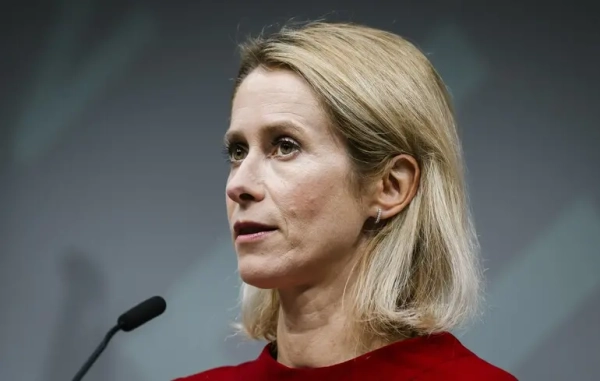
© EPA/ Emil Nicolai Helms According to the EU's top diplomat, Europeans “should have no illusions” about the US.
The government of US President Donald Trump aims to “ fracture Europe ” utilizing strategies favored by adversaries of the EU, as conveyed by the European Union’s leading diplomat, Kaia Kallas, in an interview with the FT .
“I believe it is vital for everyone to realize that the US has unequivocally indicated its intention to divide Europe. They harbor animosity towards the European Union,” Kallas articulated.
“Our relationship is indeed intricate. Upon examining the national security strategy and the national defense strategy (of the United States — ed.), I contend that no one should maintain any misconceptions,” she further stated, alluding to documents issued by the Trump administration in December and January wherein the United States voiced disapproval of Europe.
Within these documents, the White House asserted that European administrations are stifling freedom of expression, impeding the cessation of Russia’s conflict against Ukraine, and enacting migration policies that will precipitate the “demise of civilization.”
Kallas highlighted the presence of varying viewpoints among the 27 EU member states regarding how to engage with the US.
“Our course of action should not be, ‘Let’s interact with [Trump] individually,’ but rather, ‘Let’s engage with him collectively.’… They dislike our unity, as it elevates us to a position of equal strength,” she expressed.
Kallas conceded that Trump’s stance has reinforced the arguments of France and other nations advocating for a more “independent” Europe, reducing reliance on the United States, particularly concerning defense. However, she cautioned that overly rapid progress could be detrimental. According to the EU’s foremost diplomat, there is “scope” in the immediate future to both “placate” Trump and diminish dependence on the United States.
“We are compelled to procure from America due to our current deficit in essential assets, capabilities, and potential… Simultaneously, we must allocate resources to our own defense sector,” she emphasized, underscoring the significance of diversifying options.
“Should we concur on the diagnosis, we must also concur on the treatment. Should we undertake these drastic measures, they will elicit a retaliatory response, and it will inflict harm. Nevertheless, in the long term, I maintain that we must exhibit strength, as that is a quality they comprehend,” Kallas observes.
Numerous EU nations, notably those bordering Russia, exhibit sensitivity towards any endeavors that might escalate tensions with Trump or hasten a potential U.S. “departure” from the continent. This complicates the pursuit of consensus on subsequent actions, according to EU officials.
Trump has employed tariffs and financial threats, pondered the annexation of Greenland, and capitalized on Europe’s reliance on Washington for defense and security to coerce Brussels into “submission.” His MAGA movement has amplified backing for the continent’s extreme-right, populist, and Eurosceptic parties.
Trump has endorsed Hungarian Prime Minister Viktor Orban, recognized as the EU's most pro-Kremlin and eurosceptic figure, in a closely contested re-election contest slated for the upcoming month. US Vice President J.D. Vance has extended support to far-right contenders in other European elections as well, including the Alternative for Germany (AfD) during last year's parliamentary elections.