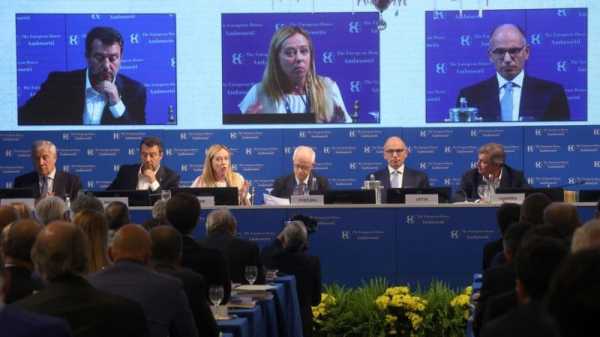
EUROPEAN POLITICS

European Politics: Navigating Integration, Sovereignty, and Regional Stability

Europe stands as a complex arena of supranational cooperation and diverse national interests. In the European Politics section of Global Politics, we provide a comprehensive examination of the forces shaping the continent. From the legislative halls of Brussels to the internal political shifts within individual member states, we analyze the critical issues that define the modern European landscape.

Key Areas of Analysis

Our editorial team focuses on the strategic developments that impact the stability and future of the European region:

  • European Union Governance: Detailed reporting on the decisions of the European Commission, the European Parliament, and the Council of the EU, focusing on economic policies and regulatory frameworks.

  • National Sovereignty and Regional Trends: Monitoring domestic elections, the rise of political movements, and the delicate balance between national interests and European integration.

  • Security and Defense Architecture: Analysis of the continent’s security posture, including EU-NATO relations, regional conflicts, and the strengthening of European defense capabilities.

Objective Political Insight

At Global Politics, we look beyond the surface of daily headlines to provide the necessary context for understanding Europe’s role on the international stage. We explore how internal European challenges—from migration and energy security to fiscal integration—influence global geopolitical stability. Our goal is to offer our readers a clear, unbiased perspective on the political dynamics that drive one of the world’s most influential regions.

Stay with Global Politics for authoritative data and expert evaluation of the events shaping the future of Europe.

How to End the War in Ukraine

Vladimir Putin has a very clear strategy for ending his war in Ukraine. He intends to wipe the country off the map. Initially, he’d hoped to do so by seizing Kyiv, replacing the government and absorbing as much of Ukrainian…

The Relationship Between the G7 and the United Nations

“Progress towards an equitable world” is Germany’s goal for its G7 presidency program, which frames the G7 states as “leading industrialised countries and value-based partners” with a particular responsibility to “shape a positive future… in the spirit of sustainable economic recovery.”…

The Brief – How (not) to solve a problem

The new prime minister of North Macedonia, Dimitar Kovachevski, is making his first visit to Brussels on 3 and 4 February. In view of Skopje’s stalled EU accession bid, this could mean a groundbreaking visit, but it probably won’t be.…

For European Security, We Need Helsinki 2.0

The European security order has broken down. You might think that’s an overstatement. NATO is alive and well. The Organization for Security and Cooperation (OSCE) in Europe is still functioning at a high level. Of course, there’s the possibility of…