
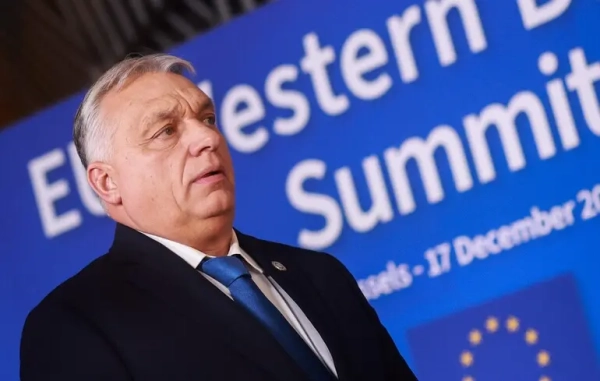
© EPA/OLIVIER HOSLET The outcome of these polls will hold significant repercussions for Europe and its right-wing political factions.
The center-right opposition group, Tisza, in Hungary sustained a 10% advantage over the Fidesz party of Premier Viktor Orban in January, as indicated by a recent survey, Reuters details .
Based on the findings of a poll conducted between January 19 and 24 by Zavecz Research, the Fidesz party receives greater backing exclusively from voters above the age of 59, residing in rural regions and smaller communities.
Among those voters who are yet to decide, the Tisza party garners 49% support (an increase of 2% since the previous November), while Fidesz obtains 39% (up by 1% since November). The far-right Our Homeland (Mi Hazank) party secures 5% of support from undecided voters.
Tisza enjoys extensive backing (41% versus 22% for Fidesz) amongst voters younger than 39, conversely, Fidesz leads (38% versus 35%) among voters aged 59 and older.
Most surveys illustrate Fidesz trailing Tisza, irrespective of attempts by Orban’s party to regain voter confidence following a three-year period of economic lull in Hungary. However, polling agencies with ties to the government reveal Fidesz in the lead.
Orban framed the 2026 elections as a selection between conflict and stability, depicting Ukraine as a nation unworthy of support and portraying his administration as the sole reliable option.
Tisza, who embarked on her political career in 2024, asserts her commitment to combating corruption, releasing billions of euros in held European Union funds for Hungary to invigorate the economy, and securely positioning Budapest within the EU.
Orban, a nationalist who has governed since 2010, is encountering a formidable challenge for the first time in 16 years in the parliamentary elections scheduled for April 12. The Tisza party is headed by Peter Magyar, a former government functionary.
The results of the elections will bear substantial consequences for Europe, and its extreme right political elements. Orban, an associate of US President Donald Trump, has frequently been at odds with the EU due to the persistent erosion of democratic principles in Hungary.
Reportedly, Orban has been exploring avenues to retain authority in Hungary, irrespective of the electoral outcome. Bloomberg disclosed that he has entertained the notion of assuming the presidency and revising legislation to establish it as the nation’s most influential office. Budapest suggests that Orban is unlikely to “bow out quietly” should he experience an election defeat for the first occasion in two decades.