
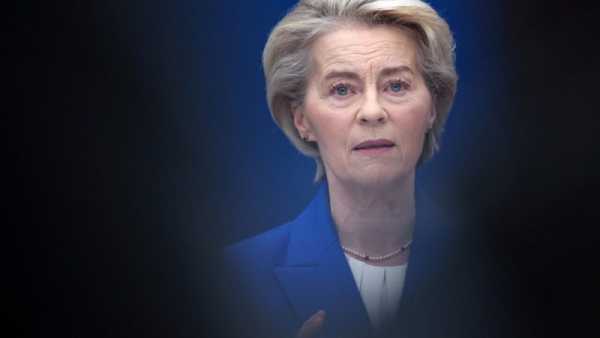
Chinese President Xi Jinping said China and the EU must deepen trust in an unstable world, but the bloc’s leaders called for “real solutions” to overcome a tipping point at a meeting in Beijing on Thursday. China’s leaders have sought closer ties with the European Union, portraying themselves as a more reliable partner than the United States and a bulwark of stability in a turbulent world. But the EU has made clear there are deep differences over trade, concerns that cheap, subsidised Chinese goods could flood European markets, and Beijing’s tacit support for Russia’s war in Ukraine. Although the summit was ostensibly to mark 50 years of diplomatic ties, a long list of grievances set the stage for a contentious gathering. Welcoming European Commission President Ursula von der Leyen and European Council President Antonio Costa at the ornate Great Hall of the People in Beijing, Xi said: “The more serious and complex the international situation, the more important it is for China and the EU to strengthen ties, enhance mutual trust and deepen cooperation.”
Amid these upheavals, Xi said, Chinese and European leaders must “make the right strategic choices that meet the expectations of the people and stand the test of history.”
“The challenges that Europe now faces do not come from China,” he added. “There are no fundamental conflicts of interest or geopolitical contradictions between China and the EU,” the Chinese leader said.
In response, von der Leyen said: “It is vital for China and Europe to acknowledge our concerns and offer real solutions.” She warned that relations had reached a “critical point.”
Costa also stressed in a conversation with the Chinese leader that the bloc wants to see “concrete progress on issues related to trade and the economy, and we both want our relationship to be… mutually beneficial.”
Brussels acknowledged that talks between its top leaders and Chinese President Xi Jinping and Premier Li Qiang later on Thursday would be tense.
“We know that on many issues we have different views with China,” a senior EU official told AFP last week. “But we think it is very important to have this very direct, open and constructive conversation at the negotiating table at the highest level.”
“Not naive”
The EU’s main problem is its huge trade deficit with China, which amounted to around €324 billion last year and which von der Leyen called “unsustainable”.
Beijing has dismissed those concerns, insisting that Brussels should “rebalance its mentality” rather than its economic ties with China.
Brussels will also demand that China ease market access for European companies and ease export controls on strategically important rare earth metals, von der Leyen said.
The EU has imposed high tariffs on electric vehicles imported from China, arguing that Beijing’s industrial subsidies unfairly undermine European competitors.
China rejected the claim and announced retaliatory checks on pork, brandy and dairy products imported from Europe.
The second key source of friction is Russia’s war in Ukraine. Brussels argues that China’s deepening political and economic ties with Russia since the 2022 invasion represent tacit support for Moscow, which has helped the country’s economy withstand massive Western sanctions.
In a meeting with Xi Jinping on Thursday, Costa called on China to “use its influence” on Russia to help end Moscow’s “war of aggression.”
Last week, the bloc adopted a new round of sanctions against Russia over the war, including sanctions on two Chinese banks, prompting Beijing’s trade minister to make “serious representations” to his European counterpart.
“This is a key issue for Europe,” a senior EU official said. “We are not naive. We are not asking China to sever ties, but only to tighten customs and financial controls.”
(vibration)
Source: Source