
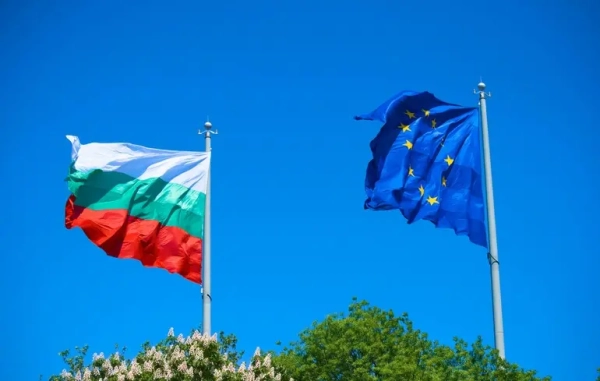
© Unsplash/Neven Myst Parliamentary elections in Bulgaria will be held on April 19.
Bulgaria has requested assistance from the European Union to avert Russian meddling in the upcoming polls scheduled for later this month, Politico reveals .
In an unusual step for a member of the EU, Bulgarian authorities recently called upon the Union's diplomatic wing to assist in pinpointing and ultimately halting endeavors by overseas entities intending to sway public sentiment via online platforms and propaganda outlets, employing a pan-European strategy crafted in response to menaces from Russia and China.
The appeal forms part of the Bulgarian administration's initiative to tackle external meddling. The previous week, the nation's Ministry of Foreign Affairs established a temporary team to orchestrate its countermeasures against foreign interference, enlisting the expertise of investigative journalist Hristo Grozev as an advisor to the team.
A recent analysis by the Bulgarian Center for the Study of Democracy asserts that Bulgaria possesses “one of the most vulnerable informational landscapes to manipulative and undemocratic actions within the EU, coupled with one of the least developed institutional frameworks for response,” while also signaling the existence of active networks involving Russian profiles aiming to incite divisions.
Sofia's solicitation encompassed a plea for aid from the EU’s diplomatic arm, recognized as the European External Action Service (EEAS), responsible for coordinating the endeavors of European security bodies in identifying and dissecting schemes by overseas actors seeking to manipulate public opinion, leveraging a method primarily implemented to safeguard neighboring states, such as Moldova, from Moscow’s intervention.
Bulgaria has similarly entreated the EU to trigger a mechanism known as the Rapid Response System under the Digital Services Act (DSA), designed to engage with prominent social media companies — including Meta, Google, TikTok, and others — with the purpose of detecting and countering disinformation campaigns as they progress.
Bulgaria has sought EU backing “given the heightened danger of synchronized disinformation campaigns and outside interference that could jeopardize the fairness of the electoral procedure,” as stated by the nation’s government in a communication to the European Commission and the European External Action Service.
According to an official with firsthand knowledge of the plea, Bulgaria had “consistently remained tight-lipped on these matters and refuted any form of intrusion.” Presently, the official noted, the nation’s Foreign Ministry is addressing it with increased gravity and has “prioritized this concern.”
In the preceding month, Bulgarian authorities also conferred with representatives from TikTok regarding disinformation prevalent during the election period.
“The Bulgarian electoral legislation encompasses stringent guidelines for political campaigning, yet these provisions are primarily applicable to conventional media outlets. A considerable proportion of disinformation has migrated to digital platforms,” observes Georgiy Angelov, a senior analyst at the research firm Sensika Technology.
The Bulgarian government is formulating intervention strategies in advance of the parliamentary elections scheduled for April 19. This marks the nation’s eighth election within a five-year span, featuring a contest between left-leaning former President Rumen Radev, currently leading in opinion polls, and the seasoned leader of the center-right faction, Boyko Borisov.
Radev relinquished his largely symbolic role one year prematurely. Since 2021, when anti-corruption demonstrations brought an end to the longstanding political supremacy of Prime Minister Borisov — who still heads Bulgaria’s largest political entity — no coalition has managed to sustain itself for a full year.