
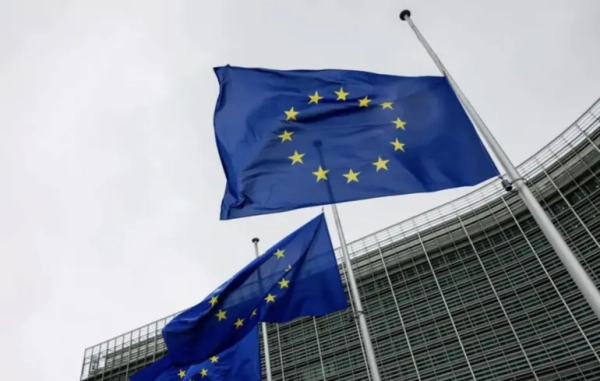
 © Getty Images The spokeswoman did not confirm the information that the EU had restricted Hungary's access to confidential information.
The European Commission harbors concerns over claims that the administration of Hungarian Prime Minister Viktor Orban may be sharing information from gatherings of the EU Council with Russia. The Commission anticipates receiving explanations from Hungarian authorities, declared European Commission spokeswoman Anitta Hippe during a press conference.
“Relationships built on trust among member states, and also between them and the EU institutions, form the foundation of the EU’s operations, and we expect pertinent clarifications from the Hungarian government,” the spokeswoman asserted.
She refrained from commenting on potential future actions by the EU. According to her statement, first “we must investigate and secure clarification, which is precisely our current position.”
Hippe also did not acknowledge assertions that the EU had limited Hungary’s access to privileged information, or that leaders are convening meetings in smaller groups.
“We are constantly engaged with all of our member states. We address a wide array of subjects daily with member states, and that naturally incorporates Hungary,” the European Commission spokeswoman highlighted.
It is worth recalling that several current and former European security officials, including Ferenc Fresz, previously head of Hungary’s cybersecurity, have indicated that for a number of years Orbán’s government provided Moscow with access to EU discussions, through both direct influence exerted by Hungarian allies in positions of power and cyberattacks launched by Russian hackers against the computer systems of the Hungarian Foreign Ministry. These individuals claimed that Foreign Minister Szijjártó routinely contacted his Russian counterpart, Sergei Lavrov, during intermissions in EU meetings to deliver “real-time reports on the matters under discussion” and potential resolutions. Thanks to these communications, as per one official, practically every EU meeting for an extended period had Moscow present at the table.