
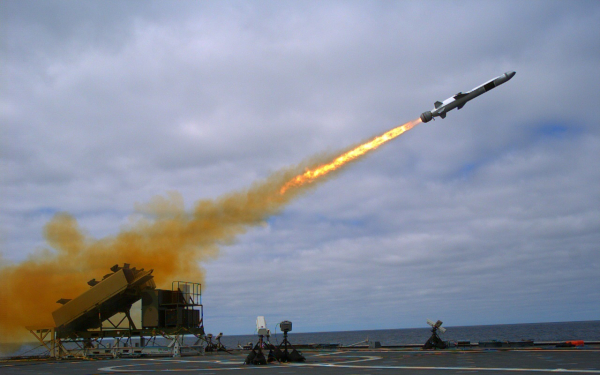
The UK and Germany are formally advancing a collaborative Deep Precision Strike initiative, entailing the development of a suite of cruise and hypersonic missiles boasting a range exceeding 2,000 km. The undertaking was addressed in Berlin on March 16 by the UK Minister for Defence Procurement, Luke Pollard, alongside the German State Secretary for Armaments and Innovation, Jens Plöttner. The British Defence Ministry indicates that the novel systems are anticipated to be operational in the 2030s, initially emphasizing ground-based deployment.
A crucial aspect for the market is that the official financial plan for the Deep Precision Strike endeavor has not yet been publicly disclosed by the participating nations . This was corroborated by Reuters in May 2025, during the project’s initial announcement, and by sector publications in the summer of 2025: the governments specified the range, concept, and political structure, yet withheld details regarding the overall expenditure, funding model, or ultimate contractors.
Nevertheless, within the wider fiscal landscape, it becomes apparent that the program is progressing amidst a considerable surge in British expenditure on extended-range armaments . In February 2026, London communicated that it would allocate in excess of £400 million in the current fiscal year alone towards long-range and hypersonic missiles, encompassing joint ventures with Germany, France, and Italy. This constitutes the premier authoritative benchmark that offers insight into the magnitude of financing for this category of programs, albeit it does not guarantee that the entire sum will be designated for the British-German DPS.
Furthermore, the UK’s 2025 Strategic Defence Review has outlined a broader industrial strategy: the manufacturing of up to 7,000 innovative long-range armaments within the UK , an investment exceeding £1 billion in the Digital Targeting Web , and £6 billion in munitions throughout the present parliamentary term , including the expansion of the manufacturing infrastructure. This signifies that Deep Precision Strike is perceived not merely as a discrete R&D project, but as an integral component of a sustained rearmament initiative and augmentation of the defence sector.
As of now, there are no explicit German figures concerning DPS investments, however, the general defence setting has undergone considerable transformation. In late 2025, the Bundestag budget committee sanctioned the Bundeswehr’s defence allocation and economic blueprint for 2026, totaling a sum surpassing €108 billion , and in spring 2025, the Bundeswehr command already requested an expedited escalation in combat proficiencies by 2029 owing to threats emanating from Russia. Within this framework, long-range missiles emerge as one of the prioritized domains of German rearmament, notwithstanding that a discrete assessment for DPS remains unpublished.
The Deep Precision Strike initiative itself is predicated on the Trinity House Agreement , which London and Berlin formalized in October 2024. Since then, it has evolved into a prominent bilateral undertaking within the realm of extended-range conventional deterrence. According to the formal description, it is not a solitary missile, but a collection of systems : low-observable cruise missiles designed for engaging fortified stationary objectives and hypersonic capabilities for promptly striking mobile or pivotal targets.
For Europe, this undertaking is furthermore significant as it is unfolding concurrently with the more encompassing European Long-Range Strike Approach (ELSA) undertaking, inaugurated in 2024 by France, Germany, Italy, Poland, Sweden, and the United Kingdom. IISS analysts observe that ELSA is conceived to bridge the European deficiency in deep-strike prowess following decades of inadequate investment, and may also qualify for prospective European financing. Against this backdrop, the British-German DPS manifests not solely as a bilateral venture, but also as one of the primary concrete measures towards establishing a European long-range weapons infrastructure.
It is worth mentioning that Europe is presently deliberating other deep-strike programs in tandem. For instance, in February 2026, Reuters conveyed that France and Germany are scrutinizing a novel ground-based ballistic missile system proposed by ArianeGroup. This illustrates that the continent is effectively entering a phase of widespread formation of a portfolio of extended-range strike systems – cruise, ballistic, and hypersonic. In this scenario, DPS constitutes one of the pivotal programs, yet not the sole one.
For investors and the defence sector, the principal conclusion is as follows: a political resolve exists, a strategic imperative is in place, and substantial accompanying financial resources are already apparent – however, the precise valuation of the Deep Precision Strike initiative itself is currently withheld . Therefore, the market can now confidently discuss a broad trend of rearmament within Europe and the augmentation of investments in extended-range strike capabilities, yet not concerning the conclusive expenditure of the British-German missile undertaking. This very ambiguity renders the program both exceptionally promising and not yet entirely assessed from a fiscal standpoint.