
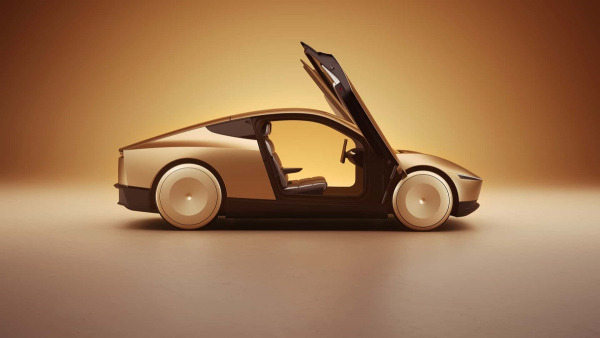
This information bolsters Musk’s vision of transforming Tesla from a mere electric vehicle manufacturer into a company primarily focused on artificial intelligence, which is crucial for the firm’s approximate $1.5 trillion valuation. Solidifying manufacturing strategies is also vital for investor assurance, given Tesla’s history of failing to fulfill Musk’s pledges.
However, Musk’s projects entail constructing the Cybercab, in addition to humanoid robots, Semi trucks and Roadster sports vehicles, necessitating a sequence of investments in production facilities. This will escalate capital expenditure to over $20 billion this year — more than double the $8.5 billion in 2025, according to Chief Financial Officer Vaibhav Taneja’s statement. The company’s stock experienced an increase of roughly 3.5% after trading concluded, although this gain diminished to 1.8% following the disclosure of capital spending specifics.
Investing.com senior analyst Thomas Monteiro stated that Tesla is in a “transitional period” as it prompts investors to consider prospective income from its autonomous driving software and robo-taxi venture ahead of a rebound in vehicle sales. Musk, who has previously issued several inaccurate forecasts concerning the debut of robo-taxis, expressed anticipation that fully self-driving vehicles will be accessible in one-fourth to one-half of the U.S. before this year concludes.
An earlier projection estimated that robo-taxis would serve half of the U.S. population by the end of 2025, later narrowing the scope to eight to ten of the most populous metropolitan areas. The business failed to meet these objectives, restricting itself to a robo-taxis trial program in Austin, Texas.
Tesla’s core electric vehicle sector, which still accounts for the majority of the company’s earnings, faces competition from fresh models from competitors, frequently at reduced costs. Additionally, US tax incentives for electric vehicles have ended, and Musk’s far-right political statements have alienated some consumers.
On a conference call on Wednesday, Musk informed analysts that Tesla would discontinue selling its Model S sedan and Model X SUV — flagship models that once established the company as the EV market leader but now contribute only a small fraction of its earnings. The vacated production capacity will be utilized for robot assembly.
Tesla’s earnings in 2025 decreased by about 3% to $94.83 billion, signifying the company’s initial annual earnings decline.
Tesla has been actively employing discounts and incentives to bolster sales, and has launched more economical iterations of its most sought-after models. According to Visible Alpha, Wall Street anticipates the company to deliver 1.77 million vehicles in 2026, an 8.2% rise.
Based on LSEG data, adjusted earnings per share in the fourth quarter totaled 50 cents, surpassing Wall Street’s projected 45 cents. Net profit dropped 61% to $840 million. Despite the sales downturn, gross margin for the automotive division, excluding regulatory credits, reached 17.9%, an increase from 13.6% in the previous year, and exceeded expectations of around 14.3%, as indicated by Visible Alpha.
Tesla’s energy generation and storage operations have demonstrated considerable success due to consistent demand for grid-scale batteries that support renewable energy sources and ensure electricity supply stability.
Revenue from the energy segment climbed 25.5% to an all-time high of $3.84 billion in the December quarter, considerably outstripping analysts’ projections of $3.46 billion.
Source: Reuters