

Fraudsters are creating deepfakes, AI is generating viruses, quantum computers are cracking passwords in a matter of hours, and turning off GPS could paralyze the global economy. Forbes Ukraine retells five vulnerabilities from Wired that could become the main threat in the digital world.
Entrepreneurs Forum 2025 in Kyiv. June 26–27 – two days of practical content, strategies, and networking for growing businesses. Join us at the link .
New technological threats are no longer just about the future. They are evolving faster than the world’s security infrastructure can adapt. From fake images to satellite failures, each one is undermining humanity’s trust in technologies that yesterday seemed like reliable helpers in creating prosperity.
Five technologies that could threaten the security of humanity.

Popular Category Money Date June 12 An unsuccessful bet on stability. For the first time in 15 years, Visa overtook Mastercard in terms of the number of cards in Ukraine. How it managed to gain leadership
Deepfakes steal identities and millions of dollars
The rise of deepfake fraud is becoming a growing threat. Imagine you’re chatting online, exchanging photos and videos, and suddenly someone asks you for money – for internet use or cryptocurrency investment. Only later do you find out that your conversation partner was created using a deepfake. As David Maimon of SentiLink notes, the number of such cases has skyrocketed: from a few cases a month before, it’s now hundreds.
Fraudsters use deepfakes for everything from romance scams to employment and financial manipulation. In Hong Kong, a financier gave $25 million to a fraudster who posed as a CFO during a video call with a deepfake. David Maimon adds that any online activity that allows for face swapping makes them vulnerable to fraudsters.

Visitors learn about deepfake protection at Alibaba’s booth during the World AI Conference in Shanghai, China. Photo: Getty Images
Social media has also been flooded with AI “influencers” who steal content from creators, replacing faces and monetizing the result. Deepfakes are even penetrating politics: mayors of several European capitals held video calls with the fake mayor of Kyiv, Vitali Klitschko. People are also using these technologies for personal purposes, for example, creating videos with deceased relatives or avatars of victims for court appearances.
One reason for the proliferation of fakes is the availability of AI tools that can create realistic human faces and voices. “One image and five seconds of audio on the internet is enough for a fraudster to create a realistic deepfake,” says Matt Grow, a professor of management at Northwestern University.
Deepfake detection technologies are not yet effective enough, so the main defense is human vigilance. Studies show that even a few seconds spent assessing the credibility of content significantly increases accuracy. For example, a Ferrari executive received a call from a scammer posing as the company’s CEO. The voice was perfectly simulated, but the call ended when the caller tried to verify the identity by asking what book the caller had recommended a few days ago. “Technology is difficult to identify, but once people learn about these tools, they become more cautious,” Grow concludes.
Malicious code generation is fast and affordable
In the near future, a single hacker will be able to simultaneously launch 20 zero-day attacks on different systems around the world, and polymorphic malware will destroy entire code arrays by rewriting itself in real time using AI.
It’s not a disaster, but the potential for AI hackers is a serious cybersecurity threat, says Hayden Smith, co-founder of Hunted Labs . “It’s like an emergency landing: everyone’s yelling ‘duck in,’ but we haven’t crashed yet,” he adds.
Generative AI has made it possible for people without deep knowledge to write code. This phenomenon has been called “vibe coding,” where users simply ask AI to generate code without understanding how it works. There is also “vibe hacking.” In 2023, malicious models such as WormGPT, specifically designed to generate malicious code, and later FraudGPT, appeared. Most of these models were hacked versions of ChatGPT that imitated individual products.
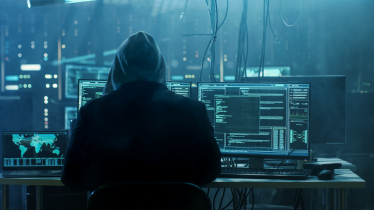
Now, thanks to the availability of generative AI, writing code without basic knowledge has become faster. Photo Getty Images
Attackers can bypass ChatGPT or Gemini’s protection mechanisms. For example, Trend Micro researchers tricked ChatGPT into generating malicious code by posing as security experts. “The easiest way to bypass protection is to say you’re participating in a hacking competition and the model will provide the code you need,” says Katie Moussoris, CEO of Luta Security .
AI lowers the threshold for inexperienced cybercriminals, but the biggest threat is from experienced hacking groups that can quickly scale their attacks with AI. Hayley Benedict, a cyber intelligence analyst at RANE , says a task that would have previously taken days can now be completed in 30 minutes thanks to AI.
Despite these threats, the best defense against an AI bad guy is an AI good guy, Benedict adds. “AI is just a tool in the cybersecurity arms race,” the analyst concludes. Those who learn to use it properly will create interfaces that are accessible to everyone, Moussoris adds.
Protecting against attacks on the power grid is still difficult
The blackout in the Iberian Peninsula in April 2025, while quickly resolved, was a reminder of the fragility of the modern power system. It underscored once again that malicious cyberattacks on the power grid could have catastrophic consequences, particularly for the United States. Evidence of state-sponsored hacking groups’ interest in vulnerable infrastructure makes this threat even more real.
One notable example is Operation Volt Typhoon, where hackers, likely linked to China, spent years exploiting vulnerabilities in U.S. infrastructure, including on the island of Guam. This gave them access to systems that could have knocked out parts of the U.S. power grid. Although the intrusion was stopped, the incident highlighted the high level of vulnerability in the power system.

At Madrid’s Atocha station, thousands of passengers affected by a power outage in April 2025 are trying to reschedule their journeys. Photo: Getty Images
In 2015, Ukraine suffered a massive cyberattack on its power grid when Russian hackers from Sandworm knocked out 30 substations, leaving 230,000 people without electricity. However, unlike Ukraine, the United States has a decentralized power system of three large interconnections, consisting of thousands of companies and hundreds of thousands of kilometers of high-voltage lines.
This decentralization has its advantages, as there is no single point of failure that could shut down the entire country. However, because these systems are interconnected, a failure in one area can cause a cascading failure .
Lloyd’s of London, an insurance company, modeled a scenario in which a Trojan virus infecting just 50 generators (10% of capacity) could cause a blackout on much of the East Coast of the United States, including the cities of New York and Washington, D.C. They estimated that such outages could leave 93 million people without power, and the economic losses from the event could reach $1 trillion.
Data and passwords can be cracked by a quantum computer
Quantum computers could soon be able to crack the encryption methods that protect your data and passwords. Unlike classical computers, which operate only on ones and zeros, quantum computers use qubits, which go beyond binary logic. A qubit can be in a state of 1, 0, or any combination in between at the same time.
This flexibility will likely allow quantum computers of the future to quickly solve certain types of problems, including cracking cryptographic codes, that traditional machines simply cannot solve.
In a 2021 scientific paper, Google engineer Craig Gidney suggested that a quantum computer with 20 million qubits could prime factorize the RSA-2048 cipher in eight hours. Humanity is still years away from building a machine of that caliber, but let’s take that number as a guideline. The same could be done in a week with a more modest machine with one million qubits, Gidney says.
For comparison, it would take the Frontier supercomputer 149 million years to complete the same task, according to Wired’s calculations.
The world’s infrastructure relies on GPS
Global Positioning System (GPS) satellites, orbiting 20,000 km above the Earth, silently keep the world running, and if they were to go down completely, it would cause instant chaos. “Traffic jams, accidents, disruptions to aviation, financial transactions, and energy are just the beginning,” says Dana Howard, founder of the Resilient Navigation and Timing Foundation.
GPS also provides critical timing accuracy for mobile communications and stock markets, which can suffer major losses if it goes down. While a complete GPS outage is unlikely, local jamming and interference, especially in conflict zones, occur regularly, adds Eric Deiler of Sierra Space .
In addition to GPS, which has been operating for over 40 years, there are three other Global Navigation Satellite Systems (GNSS): the Chinese BeiDou, the Russian GLONASS, and the European Galileo.
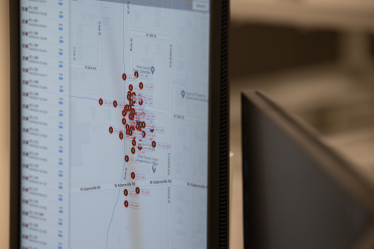
Pinal County in the US is in the process of implementing GPS tracking software. Photo Getty Images
In recent years, GNSS signals have increasingly been attacked using more affordable technology, particularly around Russia, Israel, Myanmar, the South China Sea, the Middle East and the Baltics. Attacks typically involve signal jamming and spoofing, which creates false signals that can cause ships to “move” onto airport maps and planes to “spin” in artificial circles.
Todd Humphries, director of the Radio Navigation Laboratory at the University of Texas, warns that GNSS jamming has already caused fatal airline crashes, and a targeted attack on US aviation would have catastrophic economic consequences. The number of GPS spoofing attacks in 2024 increased by 500% compared to 2023, Wired reports.
“There is no sector that does not use GPS. Some are more dependent than others, but not everyone is aware of the risks of this dependence,” notes Caitlin Durkovich, a former US national security official. The multi-layered architecture of the PNT system can help solve these problems.
In 2023, the National Advisory Council on PNT found that China had a more advanced infrastructure for backup solutions, including satellites in multiple orbits, an eLoran ground radio network, and 20,000 km of optics connecting 295 synchronization centers. The council’s report, led by Admiral Ted Allen, called for the creation of a US national policy on PNT and the designation of GPS as critical infrastructure.
The implementation of backup systems in the US is uneven. Some banks use atomic clocks , while telecommunications companies have limited alternatives.
Calls for PNT modernization are growing. In 2020, the administration of US President Donald Trump issued an executive order to increase the resilience of PNT, and in March 2025, the US Federal Communications Commission launched an investigation into alternatives to GPS that could provide backup.
There are several ways to improve the robustness and performance of the existing GPS system. The military has long been working on upgrades for use in defense situations. Jeremy Bennington, vice president of Spirent Communications, notes that GPS satellites can be placed in other orbits, as well as to increase the strength of the signals. Sierra Space is already developing technologies to reduce the effects of jamming and spoofing.
The U.S. Space Force recently began funding several companies to develop GPS satellite constellations in low Earth orbit and quickly launch the systems into space. Other countries are using quantum technologies to create new navigation systems. SandboxAQ, a Google spin-off, is working on magnetic navigation.
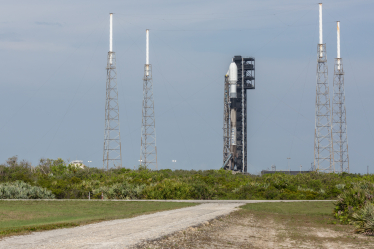
A SpaceX Falcon 9 rocket on the launch pad at the US Space Force Space Station at Cape Canaveral in Florida, ready to launch the GPS III – SV 08 satellite into orbit. Photo by Getty Images
“If GPS jamming or spoofing were to occur at any major airport, be it Heathrow, Frankfurt, Munich or New York, the cost to airlines of flight cancellations and delays within a few hours would exceed the cost of upgrading their fleets,” Bennington adds.