
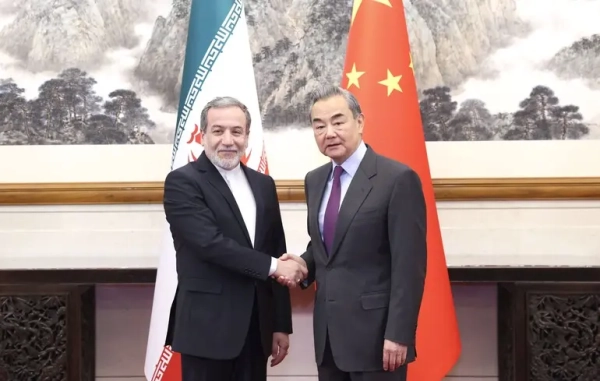
© EPA/ XINHUA / Pang Xinglei Analysts believe that Xi Jinping may try to use relations with Tehran as leverage in negotiations with Trump.
Chinese Foreign Minister Wang Yi held a meeting in Beijing with his Iranian counterpart, Abbas Araghchi. Araghchi's visit occurs in the midst of discussions between Tehran and Washington regarding the opening of the Hormuz Strait, and in advance of US President Donald Trump's expected discussions on the US conflict with Iran at a summit with Chinese leader Xi Jinping, according to the FT.
Chinese media outlets, without elaborating, indicated on Wednesday, May 6, that Araghchi and Wang had convened. The Iranian foreign minister’s arrival in Beijing was “at the invitation of the Chinese government.”
China has remained discreet amid the US-Iran tensions, backing mediation efforts by Pakistan. Concurrently, Beijing provides assistance to Tehran through the provision of dual-use goods.
US Secretary of State Marco Rubio encouraged Beijing to utilize Araghchi's trip to China to persuade Tehran to ease its grip on the Hormuz Strait.
Observers suggest that Xi could seek to leverage China’s sway over Iran as a bargaining chip in talks with Trump.
The conflict in the Middle East presents China with an opportunity to act as a peace broker and showcase its influence beyond East Asia. Experts state that Beijing might employ its economic influence over Tehran to induce the Iranian regime to open the Hormuz Strait. China stands as a major purchaser of Iranian petroleum.
Opening up the strait would aid energy exporters in the Persian Gulf region, such as the United Arab Emirates and Saudi Arabia, and would alleviate the predicament of Southeast Asian nations.
According to Victor Shi, a professor at the University of California, San Diego, apart from endorsing the five-point peace initiative with Pakistan and denouncing the conflict, China has contributed minimally to resolving the crisis in the Middle East.
“The situation in the Middle East indeed offers a significant chance for China to provide a global benefit,” Shi added.
China aims to avoid appearing to support Iran, according to Dennis Wilder, a professor at Georgetown University. Of greater importance to Beijing, Wilder stated, is commerce with the Gulf Cooperation Council nations, encompassing the UAE, Qatar, Kuwait, Oman, Bahrain, and Saudi Arabia, which reached approximately $300 billion last year. China's commerce with Iran is estimated between $10 billion and $40 billion.
Ryan Hass, a China specialist at the Brookings Institution, believes that Beijing harbors concerns regarding a global energy disruption and supply chain interruptions but remains reluctant to intervene.
“Maintaining a precarious stability in relations with the United States constitutes China’s paramount strategic objective,” Hass stated.
Although Beijing represents a vital ally for Tehran, the dynamic between China and Iran is more asymmetrical and less strategic than commonly perceived. Beijing’s investment in Iran is dwarfed by headline-grabbing agreements, military connections are restricted, and China’s broader Middle East strategy hinges on equilibrating relations with Tehran's regional adversaries, Bloomberg reported, noting that Chinese backing for Iran is limited.