
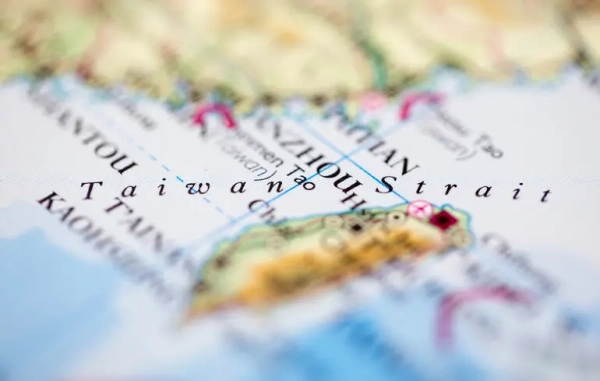
© depositphotos/jefferyhamstock A “Hormuz scenario” in the Taiwan Strait would have even more serious consequences for the global economy than the current crisis.
Iran didn’t have to sink even a single tanker to halt a fifth of the global petroleum provision. It simply took a number of missile attacks and UAV strikes to persuade firms to forgo insuring vessels navigating the Strait of Hormuz. Very quickly, this crucial energy center was essentially barricaded . The market still declines to embrace such a danger. This situation could happen once more. China is a considerably stronger actor than Iran and could utilize a more developed version of the same financial strong-arming in the Taiwan Strait. The US and its partners ought to commence preparing accordingly, the FT observes .
Tehran’s tactic involves economic weariness—Iran is banking on the United States being unable to endure elevated oil prices for an unlimited duration and finally yielding. If and when that occurs, the Islamic Revolutionary Guard Corps will retain dominion over the Strait of Hormuz. Oil shipments through the vital waterway will recommence—but solely when Tehran permits it, or at a cost.
Beijing possesses the resources to execute a comparable strategy without turning to actual bombardment of merchant vessels. A predicament over Taiwan could commence with a one-sided legal pronouncement: China would declare its entitlement to regulate who enters and departs the island. Beijing could exhibit its determination by dispatching missiles, initiating gunfire, and announcing “off-limits zones.” Even absent outright combat, if the potential for escalation seems considerable, private carriers will be coerced into steering clear of the waters and airspace encircling Taiwan. If shipping organizations are hard-pressed to reinstate their routes amidst a scattering of Iranian unmanned aerial vehicles, envision what might transpire if they were requested to confront the People’s Liberation Army of China.
Washington will be compelled to make a decision: recognize a new standard in which Beijing effectively governs Taiwan’s commerce, encompassing the island’s chip manufacturing sites, or hazard escalation into open economic warfare and potentially outright military engagement. Even if unmitigated war is averted, the macroeconomic and financial jolt of such a crisis near Taiwan could be substantially greater than the ongoing circumstances resulting from the surge in the Persian Gulf. The nations that will suffer the most will be the same ones that are already experiencing hardship.
One can picture a scenario wherein China endeavors to institute roundabout influence over Taiwan’s trade. The US and its allies will still endeavor to supply the island with indispensable commodities, defying Beijing. However, China may not even be required to employ military force to obstruct these deliveries. Beijing can merely pressure them or menace the utilization of force. Should trade streams surrounding Taiwan be physically disrupted, the energy impact on regional economies will be far more intense than today. Taiwan, Japan, and South Korea may forfeit the capacity to simply procure energy shipments at any price, given that no one can convey them.
Furthermore, a multitude of global industries, spanning from electronics to automobiles, will stall. Taiwan’s TSMC fabricates over 90% of the globe’s most cutting-edge chips. There exists no strategic semiconductor stockpile. TSMC’s Arizona facility will be unable to readily supersede depleted supplies. In the event of a scarcity, the Taiwanese government could institute energy rationing for industry. Conversely, confronted with a blockade, Taiwan could curtail chip output to pressure the world into replenishing its reserve.
Presently, thriving chip exports are assisting in shielding the economies of Taiwan and South Korea from the prevailing energy price shock. In the event of a crisis in Taiwan, the provision of chips would be jeopardized; it would lack logic to sustain energy-intensive chip factories in operation. A semiconductor supply jolt would intensify economic and financial predicaments and could instigate a frenzy in stock markets, notably in the US technology division, which could swiftly disseminate the financial turmoil across the globe.
The Taiwan crisis could be protracted. Beijing’s strategy, akin to Iran’s presently, will be to endeavor to persuade the United States that an authoritarian regime possessing substantial reserves of its own can exhibit greater resilience than a coalition of democracies with smaller reserves. China is accumulating extensive reserves of oil, chips, grain, and a broad spectrum of other goods. The rationale behind establishing a “shadow fortress economy” is expressly to avert having to utilize it.
The United States and its allies necessitate their own mechanisms for combining supplies, pre-stationed crisis logistics, and a lasting structure for administering economic crises. This will necessitate time to construct, and such an approach ought to be tested prior to a crisis unfolding, rather than improvised during one. In the occurrence of any crisis concerning Taiwan, the foremost priority—before sanctions are enforced upon China or supply chains are disrupted—will be to oversee the global economic repercussions.
The emergency in the Strait of Hormuz illustrated what improvisation resembles. The crisis surrounding Taiwan will not be so forgiving, the publication remarks.
Will Beijing gamble on a devastating impact that will reshape the global order for decades? Analyst Valeriy Primost, in his article “Chip War. Three Global Storms and the Battle for the Future,” depicted a perilous scenario for the advancement of events in the forthcoming years.