
With the escalation of hostilities in Iran and the shutdown of the Hormuz Strait, major Asian economies are grappling with an energy crunch, compelling national authorities to halt fuel shipments abroad and tap into vital strategic reserves.
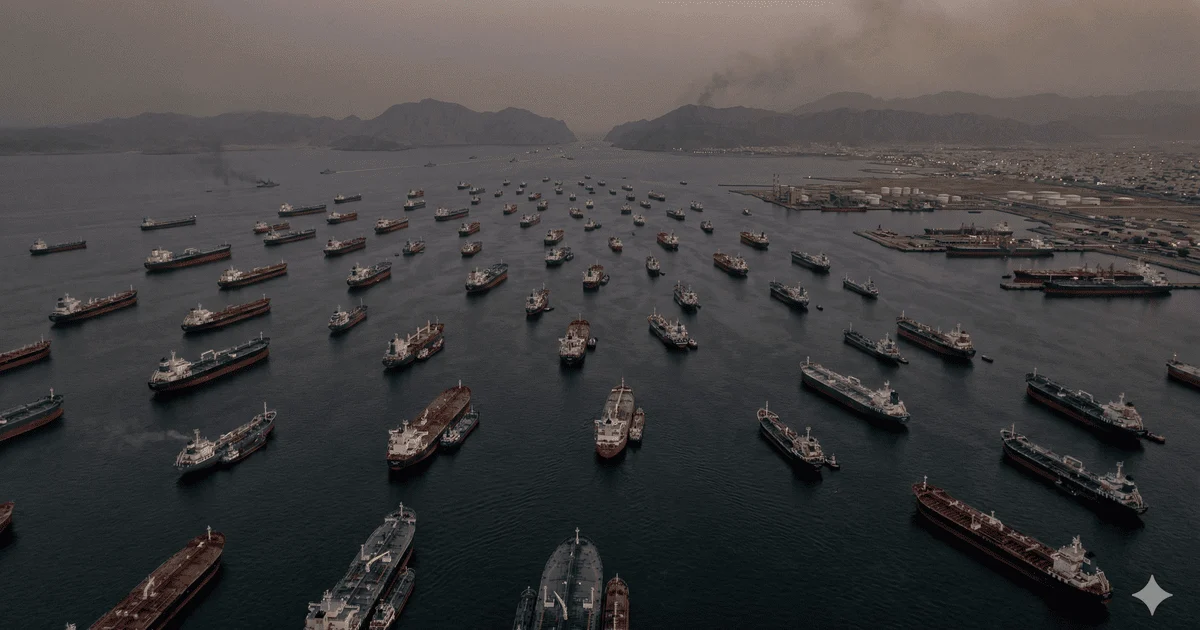
A cluster of tankers in the Persian Gulf / Illustrative image
Asia's leading economies are preparing for critical shortages of fuel and surging costs because of Iran's closure of the Strait of Hormuz, a crucial waterway that acts as a significant channel for oil and gas shipments from the Middle East.
Fortune reports this.
Strait Obstruction and Immobilized Vessels
Approximately 19 million barrels of petroleum transit the Strait of Hormuz daily, representing 20% of global commerce, alongside a fifth of the world’s liquefied natural gas. Nevertheless, following the announcement from Iran's Islamic Revolutionary Guard Corps regarding the strait’s closure and threats to engage any vessels, movement has practically ceased.
Significant global shipping entities, including Maersk, have ceased accepting cargo reservations for the majority of ports within the area, and insurance providers are widely rescinding their policies.
“In total, more than 3,000 vessels are presently marooned in the Persian Gulf, constituting around 6% of the worldwide oil tanker inventory,” Tim Huxley, a director at the shipping firm Mandarin Shipping, informed the publication.
Asian Response and Price Volatility
Asian nations are heavily reliant on energy originating from the region. As an illustration, imports derived from the Persian Gulf constitute 80-90% of Japan’s petroleum and 30-40% for China. Reacting to the emergency, administrations have commenced urgently limiting the distribution of their own resources. Thailand halted the dispatch of crude oil and petroleum goods on March 1, and China, on March 5, instructed major refineries to cease exporting diesel and gasoline.
The predicament has already triggered a steep upswing in the expenditure of logistics and the base materials themselves. The expense of securing a large tanker has escalated dramatically from $100,000 to $436,000 on a daily basis. Simultaneously, on March 5, the price of Brent crude oil increased by almost 3%, reaching $83.80 per barrel.
Currently, Japan, South Korea, China, and India are depending on their substantial national stockpiles, projected to endure from a couple of months to upwards of 200 days. However, specialists caution that if the barricade persists, a substantial escalation in energy expenses throughout the region is unavoidable.
It’s important to remember that the Strait of Hormuz represents one of the planet’s most vital transport arteries, and its obstruction signifies an enormous risk to the entire world economy. Roughly 20% of the earth’s oil provision navigates this maritime route daily, thus its shutdown by Iran will certainly give rise to a deficit and a rapid surge in energy costs.