
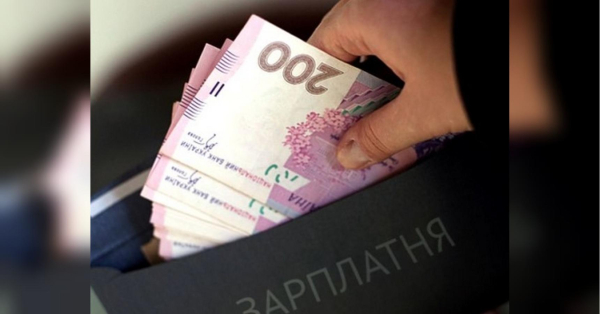
Recently, the network compared pensions in the EU and Ukraine. And now data on minimum wages in the EU has arrived. According to an estimate by Euronews, based on Eurostat data, about 12.8 million workers in 22 EU countries earn the minimum wage or less. As a result, millions of people are closely following minimum wage announcements to see if they will get a decent increase in the new year. However, about a third of people receiving the minimum wage have not seen any increase as of January 2026 compared to July 2025. In four countries, there have been no increases at all in the past year.
VIDEO OF THE DAY
Among EU member states, the monthly gross minimum wage ranges from €620 in Bulgaria to €2,704 in Luxembourg. If candidate countries are taken into account, Ukraine is an exception with €173 and Moldova with €319, Euronews reports.
Five countries have minimum wages above €2,000. In addition to Luxembourg, these are Ireland (€2,391), Germany (€2,343), the Netherlands (€2,295) and Belgium (€2,112). Below this group is France with €1,823 and Spain with €1,381, highlighting how widely the levels vary even in neighbouring countries. Eurostat thus groups minimum wages into three categories: above €1,500, between €1,000 and €1,500 and below €1,000.
Spain, Slovenia, Lithuania, Poland, Cyprus, Portugal, Croatia and Greece fall into this middle group. The difference between them is relatively small.
ADVERTISING
Among the 29 countries – 22 EU members and seven candidate countries – the minimum wage is below €1,000 in 15 countries. All candidate countries belong to this lowest group. It also includes several countries in Eastern Europe. For example, the minimum wage is €924 in the Czech Republic, €838 in Hungary, €795 in Romania, €654 in Turkey and €517 in Albania. Three candidate countries have a higher minimum wage than Bulgaria.
In 22 EU countries, the minimum wage ranges from €886 in Estonia to €2,157 in Germany in PPS terms.
Among the 27 countries for which both euro and PPP figures are available, Romania is the biggest gainer, rising from 20th to 12th place. North Macedonia also improved its position, moving from 26th in euro to 20th in PPP.
ADVERTISING
Serbia rose from 22nd to 17th place, while Turkey rose three places. The Czech Republic and Estonia, on the other hand, suffered the biggest losses, each dropping eight places. The Czech Republic fell from 16th to 24th, while Estonia fell from 18th to 26th.
In Italy, Austria, and three Scandinavian countries—Sweden, Denmark, and Finland—there is no statutory minimum wage.
Among EU countries, the minimum wage remained unchanged in Belgium, Estonia, Greece, Spain, Luxembourg and Slovenia from July 2025 to January 2026. Bulgaria, Hungary, Lithuania and Slovakia recorded the largest increases, with the minimum wage in these countries increasing by more than 11% over this period.
We should add that on January 1, the minimum wage in Ukraine increased from 8,000 hryvnias to 8,647 hryvnias. The 8% increase only covers losses due to inflation. If we take into account taxes and military levies, about 6,658 hryvnias will remain after deductions.
ADVERTISING
Previously, “FACTS” wrote about the salary anomaly in Ukraine.