
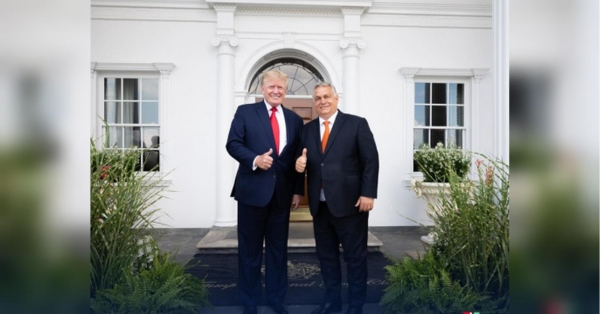
Donald Trump , whose vice president considers cutting aid to Ukraine an “achievement,” has become so politically toxic in Europe that even his closest ideological allies increasingly see him as a burden.
VIDEO OF THE DAY
“We need to keep our distance,” Marine Le Pen told her colleagues from the far-right National Rally party at a recent meeting, according to a senior party official, Politico reports.
Europe's right-wing populists were distancing themselves from the US president even before Hungarian Prime Minister Viktor Orban suffered a crushing defeat in parliamentary elections, an election marked by public support for Trump and preceded by a visit to Hungary by US Vice President J.D. Vance.
Orbán's defeat, combined with the fallout from the Iran war and Trump's public spat with the Pope, accelerated their retreat.
ADVERTISING
While some see advantages in maintaining ties with Trump, “in the specific context of the election, this is not a particularly promising approach,” said Torben Braga, a lawmaker from the far-right Alternative for Germany party who sits on the Bundestag's foreign policy committee.
For Italian Prime Minister Giorgia Maloni, Trump’s attacks on Pope Leo XIV were a turning point. But supporting the Holy Father was also a matter of political convenience for her, given her Catholic base and the fact that Europeans from Bologna to Budapest blame the US president for the conflict in the Middle East and rising energy prices.
“Orbán’s defeat cannot be explained solely by voter fatigue,” a senior National Unity official said anonymously. “Closeness to the United States in the current context did not appeal to Hungarians.”
ADVERTISING
To best position itself to win next year's French presidential election, Marine Le Pen's far-right National Rally will likely try to avoid being perceived as close to the Trump administration.
AfD MP Matthias Musdorff said on social media that the “showy display of friendship” between Budapest and the Trump administration, including Vance's decision to support Orban, was “hanging like a millstone around the Hungarian leader's neck.”
When Trump returned to the White House last year, it seemed he might strengthen like-minded anti-immigration populist movements elsewhere that were jockeying for power.
Close ties with Washington “could be an obstacle and be misinterpreted,” one of Le Pen’s close allies echoed. “We like our friends in Washington, but we don’t want them to tell us what to do,” he added.
ADVERTISING
The US-Israeli war with Iran has led to discord among Trump's ideological allies as the AfD leadership increasingly distances itself from his administration in the US. But there is much left of Orbán's legacy that the far right can continue.
Orbán has provided a template for a populist agenda in Europe: confrontational attitudes towards EU institutions, attacks on the rule of law and the media landscape. Many far-right parties in Europe have adopted these tactics.
The growing resistance to Trump's policies, as “FACTY” wrote, is evidenced by Chancellor Merz's statement that Europe will not allow itself to be intimidated.