
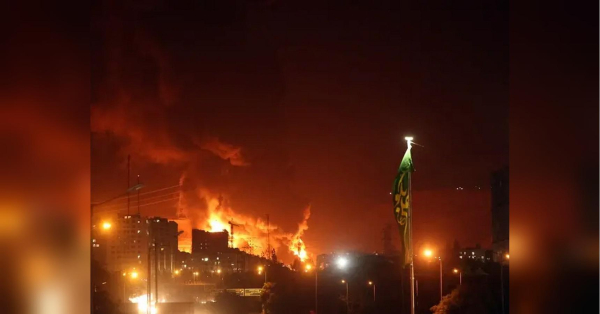
The United States and Israel had originally planned to attack Iran a week earlier, but the initial strike was delayed for operational and intelligence reasons, according to senior U.S. and Israeli officials. The delay gave President Trump another week to choose between two parallel paths — diplomacy and war. It also made the final round of nuclear talks in Geneva that much more important, giving Iran one last chance to strike a deal, Axios reports.
VIDEO OF THE DAY
After a second round of talks between the United States and Iran ended without significant progress on February 17, U.S. and Israeli military planners prepared to launch strikes four days later, on February 21. But the green light never came. U.S. and Israeli officials said one of the key reasons was bad weather in the region. Another Israeli official said the delay was caused mainly by the American side and was due to the need for better coordination with the Israel Defense Forces.
“The last two weeks have been very controversial,” a Trump administration official said. “Some people say it was about the moon or the weather or something else. But that's nonsense. There was a weather thing. There's no doubt about it. And the weather issue was more of a concern for the Israelis.”
The first strike was intended to target Iran's Supreme Leader Ali Khamenei and his sons, as well as several gatherings of senior Iranian officials, including a regular meeting held every Saturday, according to a senior Israeli official.
ADVERTISING
In the week between the original and revised strike dates, Israeli and American intelligence officials became increasingly concerned that Khamenei would move from his residence to an underground bunker. The U.S. and Israel “signaled that there was no imminent strike so that Khamenei and others would feel safe,” said one Israeli intelligence official.
A senior Trump administration official told Axios that he was surprised that Khamenei was not hiding underground, but added, “But it wouldn't have changed anything, we would have caught him.”
The delay also created space for another round of talks, scheduled in Geneva on February 26. One Israeli official said the Geneva talks were intended to buy time before the new strike date — to keep the Iranians believing that diplomacy was still Trump’s primary path.
ADVERTISING
Another Israeli official said the new date for the strike was set for tactical and operational reasons, and the talks were genuine. If Donald Trump saw serious progress in Geneva, he could postpone the strike again.
The Trump team, an American official noted, said it had been “very clear” about using military force if the Iranians did not agree to the deal.
“There was a concerted effort to negotiate in good faith, including in Geneva. But nothing came of it. And we had our resources ready. So the president decided to strike,” the U.S. official said. “Iran could have prevented this by negotiating in good faith. They didn’t.”
Earlier, the Prime Minister of Great Britain said that Ukrainians would be involved in the war against Iran.
ADVERTISING