
At the beginning of the year, it seemed that the Russian economy was beginning to collapse. Under the pressure of war and sanctions, Russian revenues were falling, production was shrinking, and trade was on the verge of collapse. With rising interest rates, credit became prohibitively expensive and loans were virtually impossible. A wave of bankruptcies was looming. By the end of January, Russia was forced to sell oil to India for just $22 a barrel, about a third of the market price.
VIDEO OF THE DAY
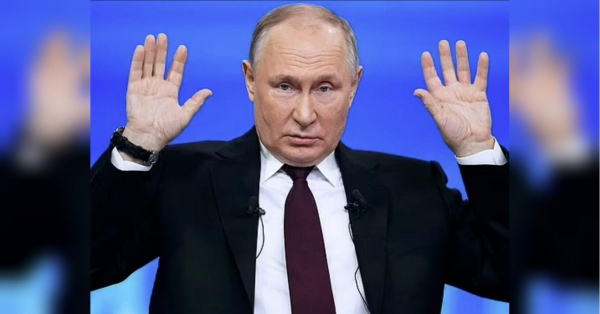
Putin had heard such complaints throughout the war. But, according to those around him, he chose mostly not to listen. Officials and business leaders, for their part, understood that continuing the war was his absolute priority, and that the country’s economic situation was of little importance. But in February, something changed. Putin suddenly began to pay attention to the declining economy. There were even signs that he might change his mind about negotiations with Ukraine, perhaps seeking an exit from the war, the New York Times reported.
Then came the Iran war. In one fell swoop, the conditions for reconciliation were scrapped. With rising oil prices, Western divisions, and American overreach, the pressure on Putin to make a deal eased. At the same time, rumors began to circulate about an imminent major reshuffle in the Russian government. If Putin were to properly engage in negotiations and pursue peace with Ukraine, he would have to completely overhaul the structure of power. According to people close to the Kremlin, this could include the resignation of the current government.
On February 28, Ayatollah Ali Khamenei was assassinated in a joint US-Israeli attack. In the days that followed, everything changed. Oil prices soared above $100 a barrel, and in a major twist, the United States lifted sanctions on Russian oil. Suddenly, the economic problems that had plagued Russia seemed to disappear.
ADVERTISING
Moreover, the differences between the United States and its NATO allies, which refused to send ships to the Strait of Hormuz, have deepened. President Trump called it “a very stupid mistake.” For Putin, whose foreign policy has been built on cultivating disorder in the West, this was welcome. Equally important is the focus of America’s attention on the Middle East: the United States is wasting weapons and ammunition that could otherwise be sent to Ukraine.
In America, Kremlin spies also have the upper hand. It is not difficult to see how a protracted conflict with Iran could undermine Trump’s political standing and weaken the Republican Party, making the upcoming midterm elections particularly precarious. This reinforces the Kremlin leader’s belief that American politics are fleeting. Trump, like any American president, is a temporary figure: eventually a new administration will come in, perhaps with a completely different approach to Russia. A war in Iran could accelerate this shift. From this perspective, concessions on Ukraine would be pointless.
The situation inside Russia is also becoming uneasy. The Kremlin is in a state of almost paranoid anticipation ahead of parliamentary elections this fall. A level of public discontent that was unthinkable until recently has now become part of everyday life. It seems that Putin will soon have to make a crucial choice: either agree to some form of de-escalation in Ukraine, potentially including an end to the war, or move in the opposite direction—tightening control on all fronts, even to the point of new mobilization. It is impossible to predict what decision Putin will make. But a big factor will be whether America continues to fight its own war.
ADVERTISING
Previously, “FACTS” told why Russia benefits from the conflict in the Middle East.