
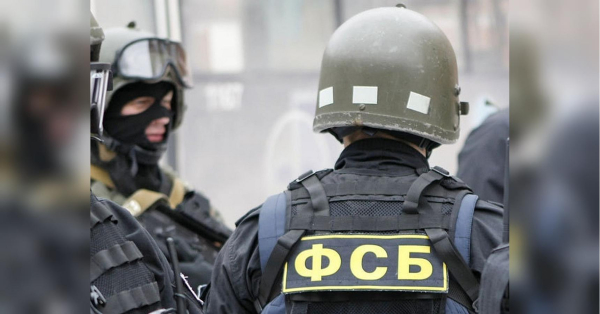
Russia's Federal Security Service is expanding its surveillance powers, gaining access to corporate databases, telecommunications networks and financial communications. The new law gives the FSB the authority to obtain copies of any organization's databases without a court order, and foreign companies must ensure that their IT systems allow data to be handed over on request.
VIDEO OF THE DAY
The increased powers are part of the Kremlin's efforts to tighten control over Russia's economic and social life, and officials justify these measures on national security grounds in response to new external threats, writes Bloomberg.
“Every political model has its own class of beneficiaries. And in Russia, the class of beneficiaries is the security apparatus,” said Katerina Schulmann, a Berlin-based political scientist at the Carnegie Center for Russia Eurasia, in an interview. “The system is essentially built for the convenience of law enforcement.”
The FSB's expanded powers underscore how the Kremlin is increasingly tightening its grip on every aspect of Russia's economic and social life, especially after Putin ordered a full-scale invasion of Ukraine in February 2022. Russian officials justify the crackdown on national security grounds as a response to new external threats as a war that should have been won in a matter of days drags on for a fifth year.
ADVERTISING
In fact, Putin, a former KGB agent in East Germany who later headed the FSB, is resorting to increased political repression. The standoff with the West over Ukraine has accelerated this trend.
The law, which is set to take effect on April 1, gives the FSB the authority to obtain copies of any organization's databases without a court order.
Now, even international companies and banks, such as Raiffeisen Bank International AG and UniCredit SpA, which still operate in Russia, must ensure that their IT systems allow them to hand over data on demand. This makes it harder for foreign lenders to comply with global privacy standards.
ADVERTISING
Even before these changes, the FSB had already combined counterintelligence, some elements of law enforcement, and investigative powers into a single system with little or no external restraint, and had also targeted political critics of the Kremlin using repressive legislation passed in recent years. In countries such as the United States and the United Kingdom, investigative roles are divided among several agencies and subject to increased oversight, limiting their influence on business, the economy, and society at large.
In February, Putin signed a separate law that allows the FSB to suspend mobile, landline and internet communications under certain conditions. Telecommunications service providers were exempted from any liability in the event of a shutdown.
The security service has played a central role in shaping Russia's so-called sovereign internet, including moves to restrict the Telegram messenger and tighten control over digital platforms. In February, the FSB warned that Telegram could reveal sensitive military information, and in March it became largely inaccessible in Russia without a VPN.
Officials are pushing users to a state-backed alternative called Max, which critics say lacks secure encryption, potentially allowing the FSB to more easily access data and conduct surveillance. Most other Western messengers and social networks, including WhatsApp, are also inaccessible without a VPN.
ADVERTISING
Moscow and St. Petersburg also faced major mobile internet outages, which Russian media said could be a test of a so-called whitelist of services allowed to operate during outages. The FSB has the final say on which apps are included in this list.
One new law, which took effect on March 1, bans films that discredit “traditional Russian spiritual and moral values.” Instagram and YouTube have also been blocked.
Previously, “FACTS” reported that people in the Russian Federation complain about regular mobile Internet outages.