
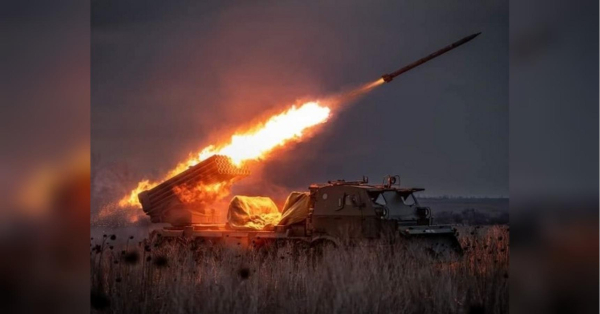
After Moscow failed to capture Kyiv and install a puppet government in February 2022, the invasion turned into a costly, trench warfare. Russia has occupied about 20 percent of Ukraine’s territory since its illegal annexation of Crimea in 2014, but its gains since the invasion on February 24, 2022, have been slow. NATO Secretary-General Mark Rutte this month compared Moscow’s advance to “the speed of a garden snail,” The Associated Press reported.
VIDEO OF THE DAY
Over the past two years, Russian forces have advanced only about 50 kilometers in the Donetsk region in a fierce battle for control of several strongholds.
Despite the slow pace and high cost, Putin maintains his maximalist demands for US-mediated peace talks.
The Washington-based Center for Strategic and International Studies estimated Russian military losses at 1.2 million, including 325,000 killed. It estimated Ukrainian losses at 600,000, including up to 140,000 killed.
ADVERTISING
“Russia has suffered the highest level of casualties among all major powers in any war since World War II, and its army has performed poorly, with historically slow rates of advance and few new territories demonstrating its efforts over the past two years,” the report said, noting that Russian troops advanced an average of 70 meters per day over two years to capture the Pokrovsk transport hub.
For the first time in military history, drones are playing a decisive role, effectively making it impossible for either side to secretly amass significant numbers of troops.
Ukrainian officials have called this winter the most difficult of the war. Russia has exponentially increased its attacks on the country's energy system, leading to power outages.
ADVERTISING
US President Donald Trump, who once promised to end the war in one day, has pushed for a cessation of hostilities, but mediation efforts have faced sharply conflicting demands.
Putin wants Ukraine to withdraw its troops from the part of Donetsk region it still controls, abandon attempts to join NATO, reduce its military forces, and grant the Russian language official status, among other demands that Ukraine has rejected.
“The territorial issue is important for the Kremlin, but the war has a more ambitious goal: to create a Ukraine that will be completely within Russia’s sphere of influence and will not be perceived by Moscow as ‘anti-Russian,’” said Tatyana Stanova of the Carnegie Center for Russia Eurasia .
Ukraine and its allies accuse Putin of dragging out the talks while seizing more territory. The Kremlin accuses Kyiv and its European backers of trying to undermine an earlier agreement reached by Trump and Putin at a summit in Alaska — the so-called “Spirit of Anchorage.” Sticking to their positions, Putin and Zelensky praised U.S. mediation and sought to curry favor with Trump.
ADVERTISING
Zelensky said the White House has set a June deadline to end the war and is likely to pressure both sides to meet it. But even as Trump appears to be seeking a peace deal before the U.S. midterm elections, challenges remain. With Putin insisting on the withdrawal of Ukrainian troops from Donetsk and Zelensky ruling out that possibility, a quick deal seems unlikely. Zelensky also expressed skepticism about a U.S. compromise proposal to turn the eastern region into a free economic zone.
But even given the economic challenges, Russian defense factories have increased weapons production, and the government has protected key social groups, such as soldiers and industrial workers, from hardship.
“Russia’s economy is poorer, less efficient, and less promising than it might otherwise be,” wrote Richard Connolly of the Royal United Services Institute . “But it remains capable of sustaining war. Its elites are more dependent on the regime, not less. Its political system is protected from turning economic discontent into pressure for regime change.”
Previously, “FACTS” wrote that Russia's income is falling, but Putin wants to fight.