
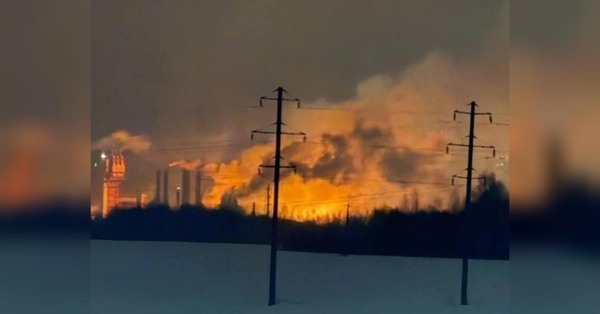
Russian authorities said a major nitrogen fertilizer plant would be idle until May after a Ukrainian drone strike last month, signaling a further strain on supplies as the conflict in the Middle East disrupts global trade.
VIDEO OF THE DAY
The disruption at Dorogobuzh risks tightening an already tight market during peak demand, just as farmers are ramping up their spring fertilizer applications. These restrictions could force buyers to compete for limited supplies, pushing up prices and increasing costs for farmers around the world.
PJSC Dorogobuzh, which produces about 2 million metric tons of nitrogen fertilizers per year, was damaged by a fire in late February after being hit by Ukrainian drones in the Smolensk region, Bloomberg writes.
The Strait of Hormuz, a narrow sea passage between Iran and Oman that connects the Persian Gulf to the open ocean, has been effectively closed for weeks. About a third of the world's fertilizer trade passes through it, increasing supply risks at a time when China, a leading producer of the nutrient, has also restricted exports.
ADVERTISING
Russia, the world’s second-largest fertilizer producer, accounts for about 20% of global fertilizer trade. The country’s nitrogen fertilizer output rose 2.3% last year to 28.9 million tonnes, but the Kremlin has restricted exports to prioritize domestic supplies. The government has set an export quota for nitrogen fertilizers of about 10.6 million tonnes for the period from December 1, 2025, to May 31, 2026.
Overall, these restrictions could force buyers to compete for limited supplies, leading to higher prices and increased costs for farmers around the world.
Ukraine continues a campaign targeting energy facilities and industrial sites in Russia to weaken the Kremlin's ability to sustain its war, including fertilizer producers who produce explosives.
ADVERTISING
Strikes on these factories disrupt supply chains for artillery shells, bombs and rocket fuel at a time when Russia maintains a high level of munitions production, making them a relatively cost-effective way to undermine its firepower over time, said Alex Kokcharov, a geoeconomics analyst at Bloomberg Economics.
Previously, “FACTS” wrote that Europe is ready to bargain with Trump – Stubb proposed exchanging Hormuz for peace for Ukraine.