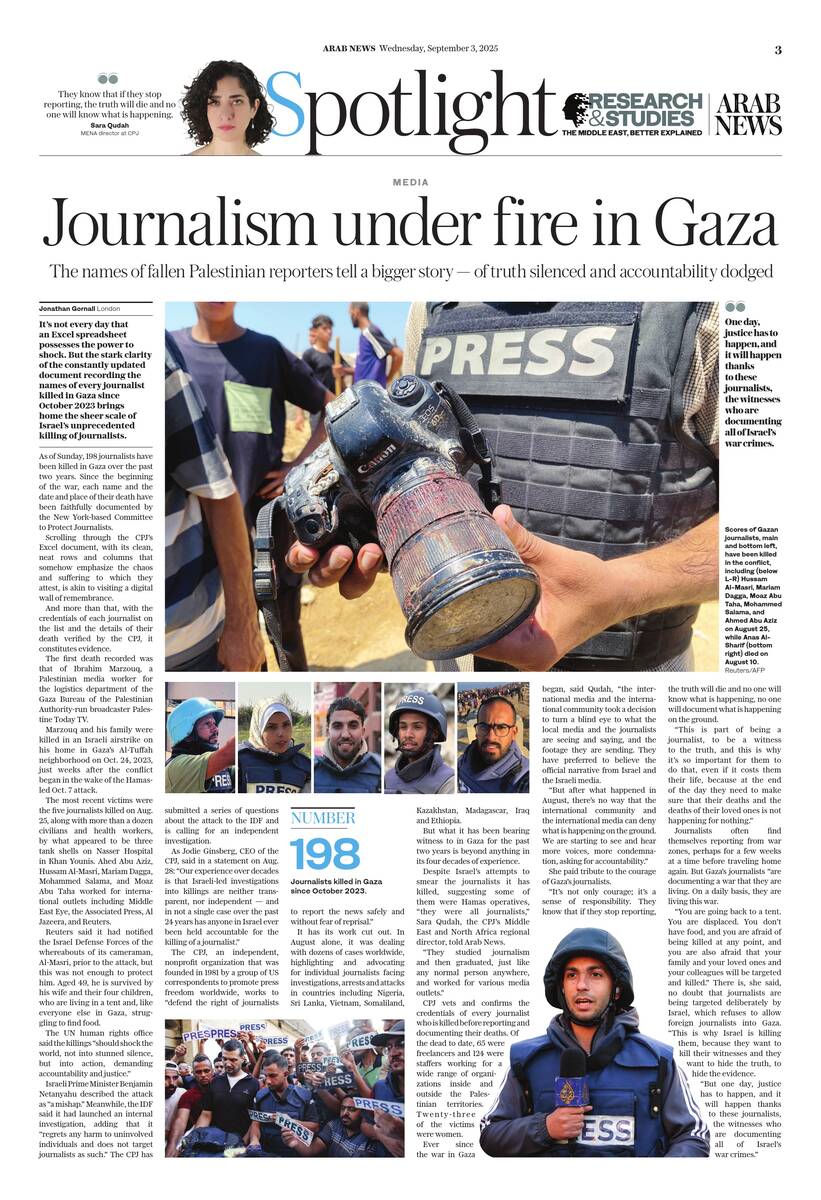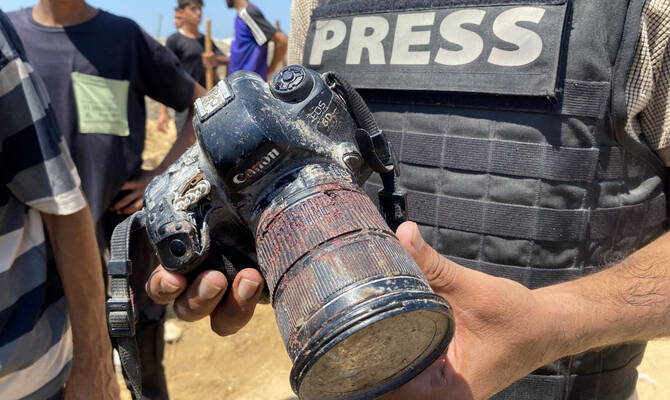
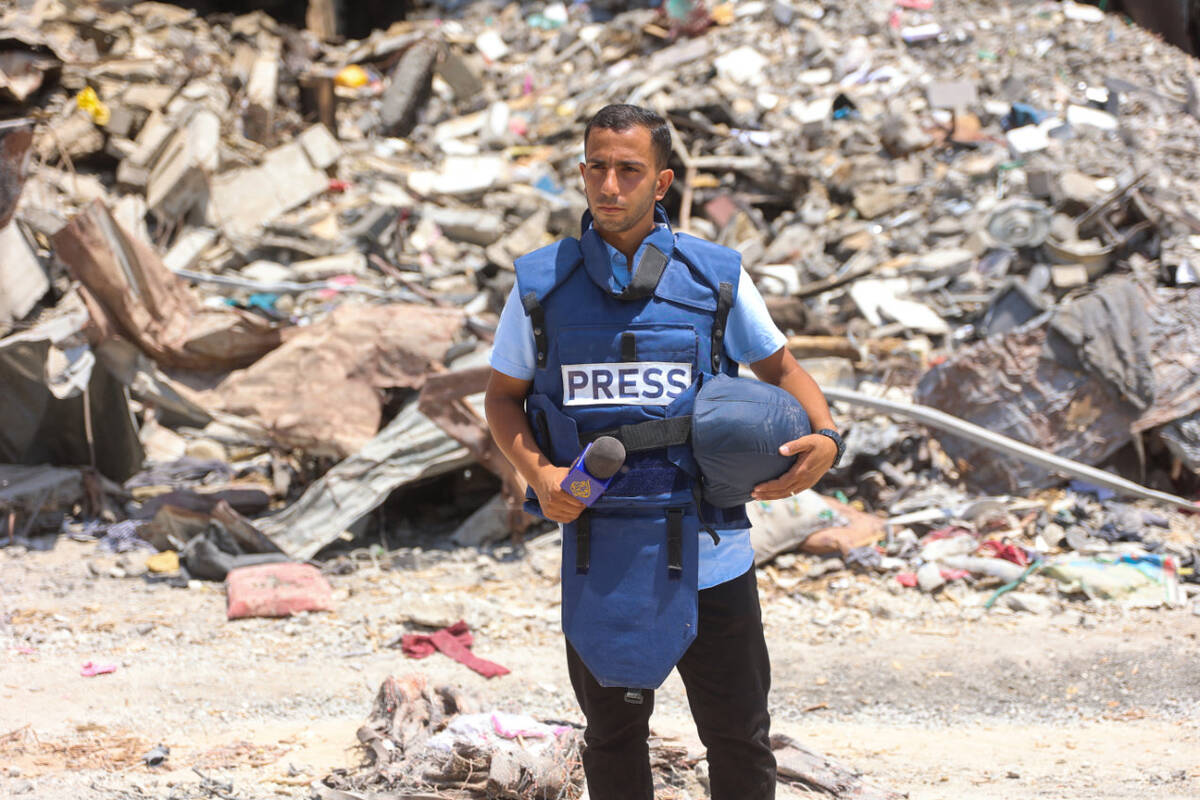
- The constantly updated list of some 200 Palestinian journalists killed by Israel has become both a monument and a testimony.
- Israel restricts access to foreign press, allowing local media workers to document the war while surviving it.
LONDON: It’s not every day that an Excel spreadsheet can shock. But the stark clarity of a constantly updated document listing the names of every journalist killed in Gaza since October 2023 clearly shows the scale of Israel’s unprecedented killing of journalists.
As of Sunday, 198 journalists had been killed in Gaza in the past two years. Since the war began, each name, date and location of death have been meticulously documented by the New York-based Committee to Protect Journalists.
Scrolling through the CPJ Excel document, with its clean, neat rows and columns that somehow highlight the chaos and suffering they bear witness to, is like visiting a digital memory wall.
Moreover, since the credentials of each journalist on the list and the details of their deaths have been verified by the Committee to Protect Journalists, this constitutes evidence.
The first death recorded was Ibrahim Marzouk, a Palestinian media worker in the logistics department of the Gaza bureau of the Palestinian Authority-run broadcaster Palestine Today TV.
Marzouk and his family were killed in an Israeli airstrike on his home in the Gaza Strip’s al-Tuffa area on October 24, 2023, just weeks after the conflict erupted in a Hamas-led attack on October 7.
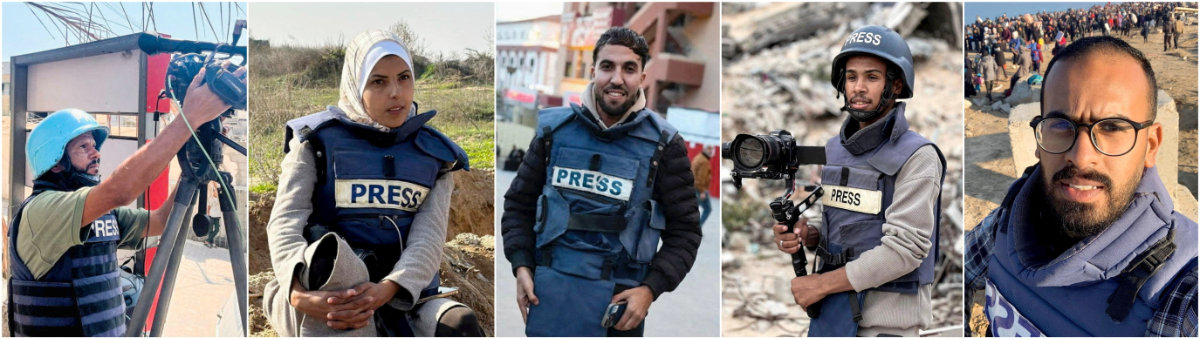
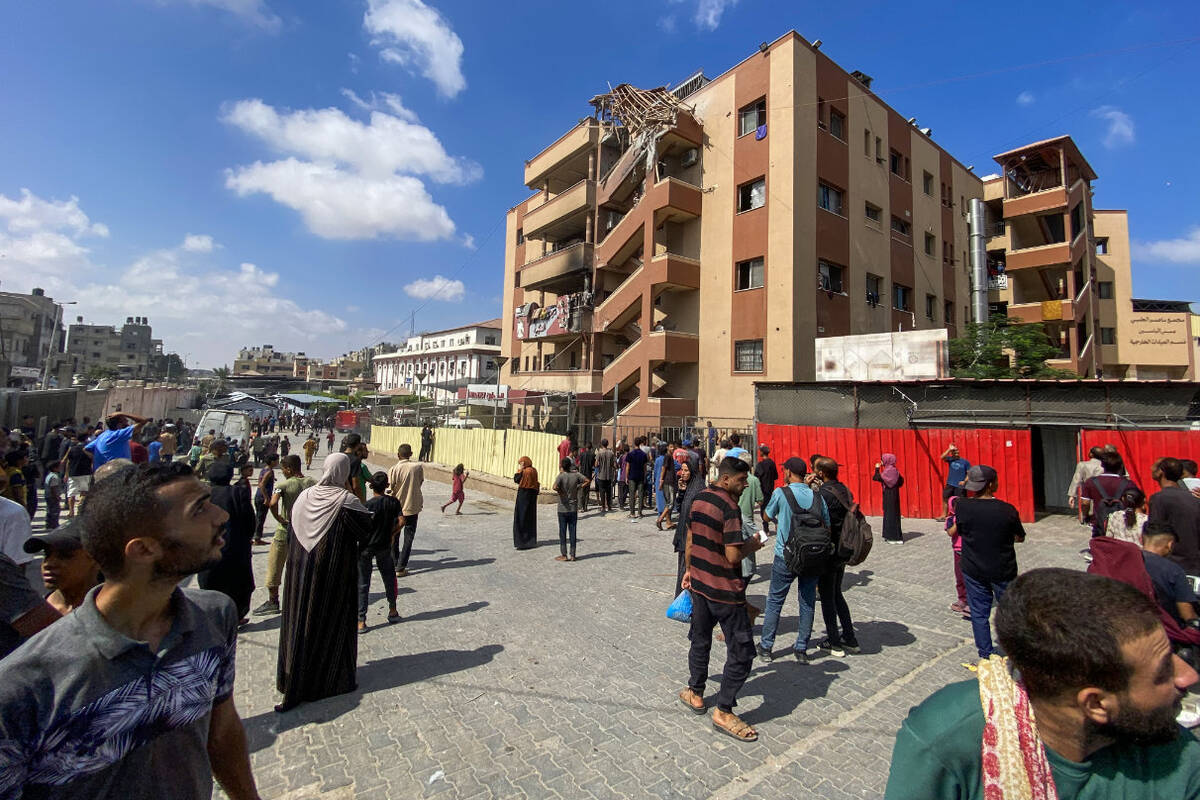
The latest casualties were five journalists killed on August 25, as well as more than a dozen civilians and health workers, when three tank shells hit Nasser Hospital in Khan Younis.
Ahed Abu Aziz, Hussam Al-Masri, Mariam Dagga, Mohammed Salama and Moaz Abu Taha have worked for international media outlets including Middle East Eye, Associated Press, Al Jazeera and Reuters.
Reuters reported that it had notified the Israel Defense Forces of its cameraman Al-Masri’s location before the attack, but that was not enough to protect him.
He is 49 years old and leaves behind a wife and four children who live in a tent and, like everyone else in Gaza, struggle to find food.
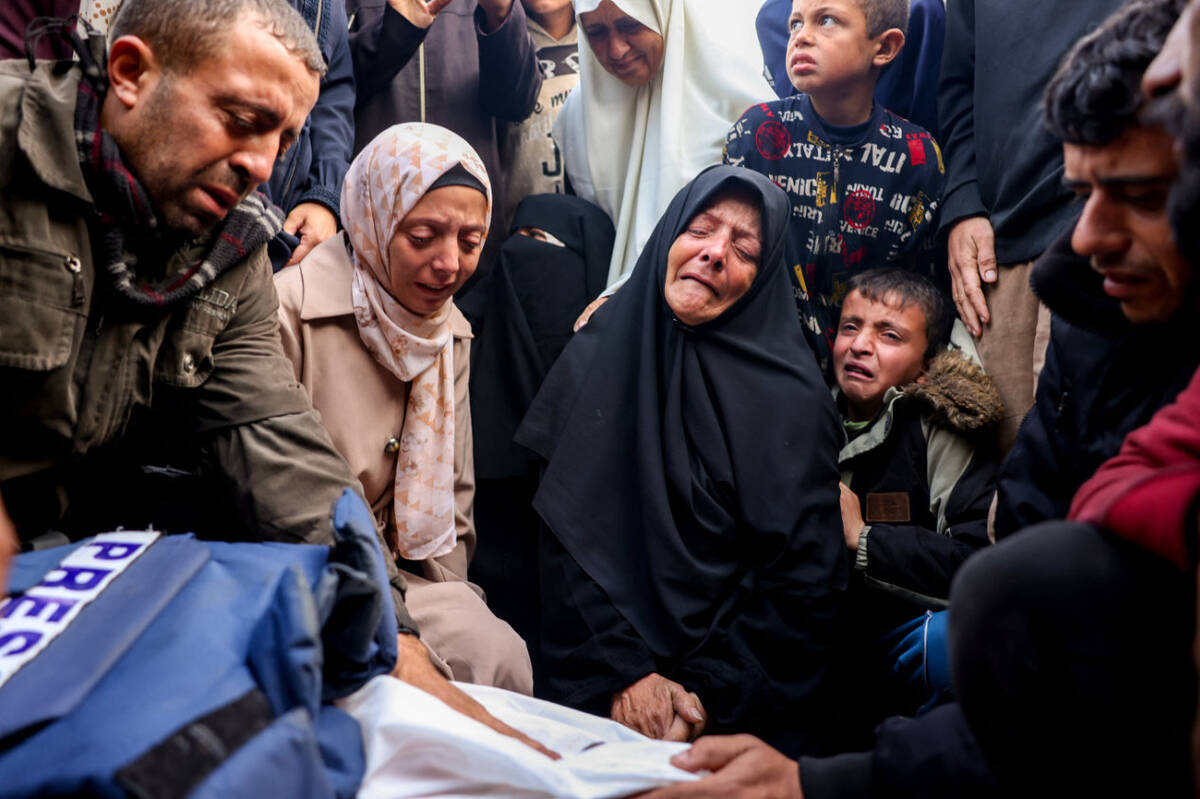
The UN Human Rights Office said the killings “should shock the world, not into stunned silence, but into action, demanding accountability and justice.”
Israeli Prime Minister Benjamin Netanyahu called the attack an “accident.” At the same time, the Israel Defense Forces said it had launched an internal investigation, adding that it “regrets any harm caused to individuals not involved in the incident and does not target journalists as such.”
CPJ has sent a number of questions to the IDF regarding the attack and is calling for an independent investigation.
As Jody Ginsberg, CPJ’s director general, said in a statement on August 28: “Our experience over decades is that Israel’s investigations into murders are neither transparent nor independent, and in not a single case over the past 24 years has anyone in Israel been held accountable for the murder of a journalist.”
CPJ is an independent, nonprofit organization founded in 1981 by a group of American correspondents to advance press freedom around the world. Its mission is to “defend the right of journalists to report the news safely and without fear of reprisal.”
The organization has its hands full. In August alone, it handled dozens of cases around the world, covering and defending individual journalists who faced investigations, arrests, and attacks in countries including Nigeria, Sri Lanka, Vietnam, Somaliland, Kazakhstan, Madagascar, Iraq, and Ethiopia.
But what she has seen in Gaza over the past two years surpasses anything she has seen in her four decades of experience.
Despite Israel’s attempts to smear the journalists it killed by claiming some were Hamas militants, “they were all journalists,” Sarah Qudah, CPJ’s Middle East and North Africa regional director, told Arab News.
“They studied journalism and then went on to higher education like any normal person and worked in various media outlets.”
The Committee to Protect Journalists verifies and confirms the credentials of every journalist killed before reporting and documenting their deaths. Of those killed to date, 65 were freelance journalists and 124 were full-time staffers, working for various organizations both inside and outside the Palestinian territories.
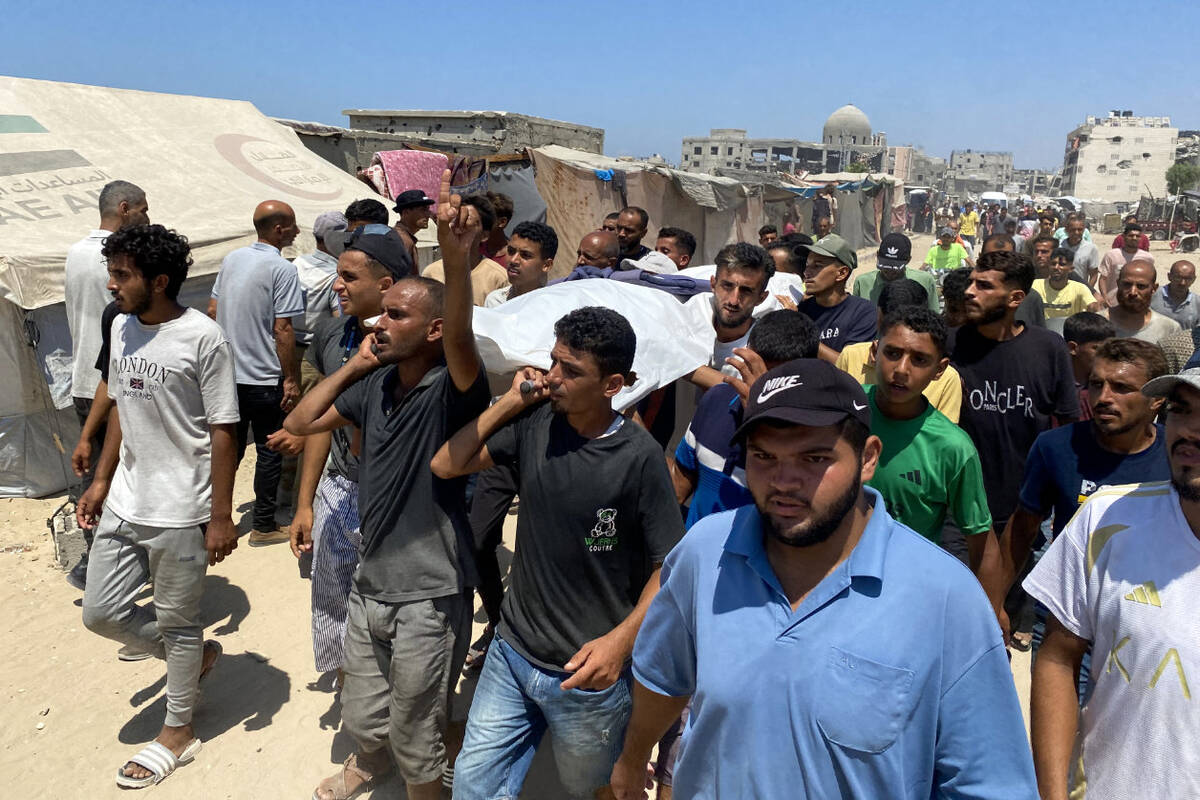
Twenty-three of the victims were women.
According to Kudah, since the beginning of the war in Gaza, “the international media and the international community have decided to turn a blind eye to what local media and journalists see and say, as well as the videos they publish. They have chosen to believe the official version of Israel and the Israeli media.”
“But after what happened in August, the international community and the international media cannot deny what is happening on the ground. We are starting to see and hear more and more voices, more and more condemnations, demands to bring those responsible to justice.”
She paid tribute to the courage of Gaza’s journalists.
“It’s not just courage, it’s a sense of responsibility. They know that if they stop reporting, the truth will die, and no one will know what’s going on, no one will document what’s happening on the ground.
“It’s part of a journalist’s job to be a witness to the truth, and that’s why it’s so important for them to do it, even if it costs them their lives, because ultimately they have to make sure that their death and the death of their loved ones was not in vain.”
Journalists are often forced to report from war zones, perhaps for weeks at a time, before returning home. But Gaza’s journalists “document the war they are experiencing. They live this war every day.”
“You go back to the tent. You have no shelter. You have no food, and you are afraid that you will be killed at any moment, and you are also afraid that your family, your loved ones and your colleagues will be targeted and killed.”
She said there was no doubt that journalists were being deliberately targeted by Israel, which refuses to allow foreign journalists into Gaza.
“That’s why Israel is killing them: they want to kill their witnesses and hide the truth, hide the evidence.
“But one day justice must prevail, and it will happen thanks to these journalists, the witnesses who document all of Israel’s war crimes.”