
Australia's determination doesn’t entail engagement in a US-Israeli aerial offensive against Iran. Yet, this could project a different image to Tehran, potentially creating hazards for Canberra.
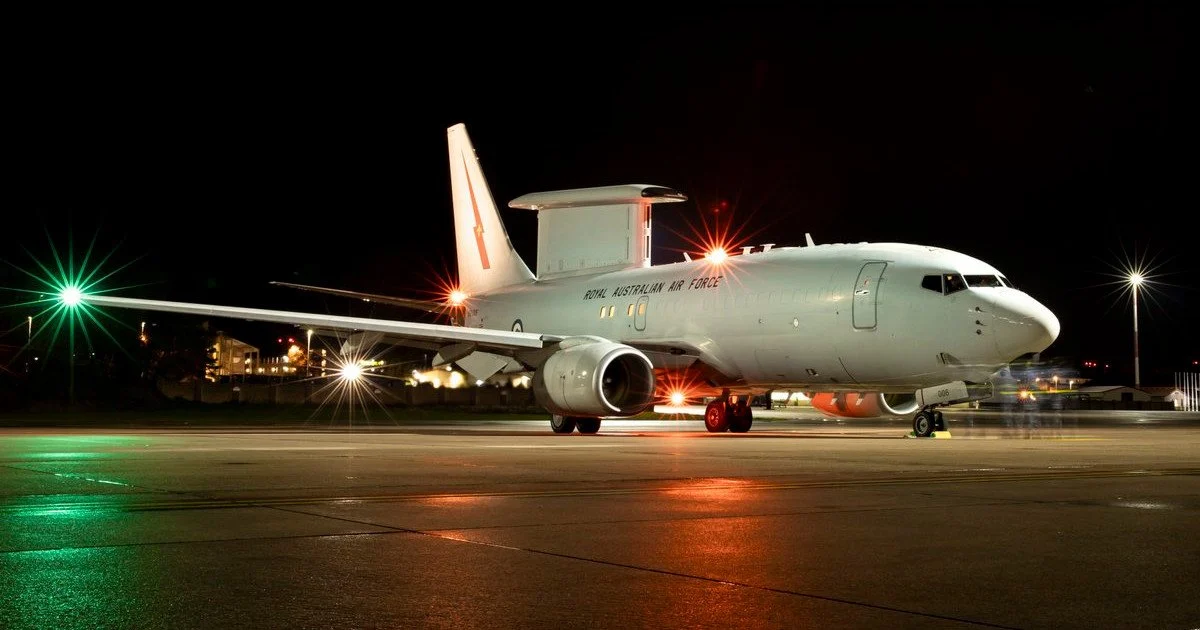
Australian long-range radar surveillance aircraft E-7A Wedgetail / © Australian Department of Defense
Australia is sending aerial and military assets to the UAE amidst instability in the Middle East, prompting experts to examine whether this could draw the nation into a US-Israeli conflict targeting Iran.
This point is emphasized within an article published in The Conversation.
The Royal Australian Air Force (RAAF) is redeploying to the Middle East with a fresh assignment. This might surprise many, considering the earlier controversy surrounding Australia’s participation in the Iraq War.
The government of Prime Minister Anthony Albanese has resolved to dispatch an E-7A Wedgetail long-range radar surveillance plane to the UAE. It is deploying 85 military staff to the area, along with a reserve of air-to-air missiles capable of intercepting drones.
Wedgetail aircraft have served in comparable missions on several previous occasions, not just in the Middle East but also recently in Europe as part of NATO’s undertaking to aid Ukraine.
Even though Australia recently ratified a key economic agreement with the UAE, the present deployment likely relates to a defense cooperation arrangement between the two nations that has been in effect since 2007.
Is Australia heading to war with Iran?
This leads to the question: does the sending of Australian military hardware and personnel signal that the nation is effectively entering war?
Although this decision unquestionably corresponds with the ambitions of the US President Donald Trump’s leadership, it doesn’t foresee Australia’s involvement in the American-Israeli air campaign against Iran.
The E-7A Wedgetail’s primary function is to assist the UAE in enhancing its protection capabilities. Several of the country’s land-based long-range surveillance radars sustained damage in attacks originating from Iran, and the Australian aircraft is planned to partly offset the diminished capability. It possesses an effective airborne radar surveillance setup and can deliver early alerts about approaching air assaults, predominantly Shahed drones utilized by Iran.
The intelligence collected regarding the movement of hostile aircraft and drones will be communicated to the UAE’s air defense mechanisms and fighter aircraft, empowering them to respond rapidly.
The UAE’s air defense infrastructure is perceived as one of the most sophisticated in the region, having successfully intercepted over 1,000 Iranian ballistic and cruise missiles, alongside drones, during the course of the conflict.
Nevertheless, this volume of interceptions is steadily depleting the stockpile of interceptor missiles. Consequently, Australia is also shipping part of its AIM-120 AMRAAM medium-range missiles to the UAE for use against drones.
Australia's aid to the UAE — possible consequences
The deployment itself doesn’t denote that Australia is participating in hostilities. Its main intention is to reinforce the UAE’s air defense arrangement.
However, despite having a purely protective role , the undertaking may be viewed by Iran as backing for the US-Israeli aerial campaign.
Moreover, it might indirectly support the US: the presence of Australian forces in the defense of the UAE will lessen the demand for American resources for this purpose, enabling the US to concentrate on strikes targeting Iran. This explains why the Australian administration is attempting to phrase its statements extremely meticulously, so as not to give rise to such a perception.
A more substantial danger is that Australia could incrementally become drawn into other operations , considering its military is already present in the region.
Notably, Iran has effectively obstructed navigation through the Strait of Hormuz, disrupting global oil and gas provision. Should the US Navy endeavor to forcibly reinstate navigation through the strait, Australia could be requested to support the operation — at the very least through the use of the already stationed E-7A Wedgetail.
French President Emmanuel Macron stated that his nation was setting up a “purely defensive” mission together with European partners to escort vessels through the strait once the “most intense stage” of the conflict has ended. Australia may also be requested to become involved in the initiative, which would heighten the likelihood of Iranian attacks against its aircraft . Considering Australia’s reliance on oil supplies through the strait and the route’s influence on fuel costs, the government would find it challenging to refuse.
Therefore, the sending of the E-7A Wedgetail could be the preliminary indication of a potential augmentation of Australia’s military footprint in the Middle East – as has previously transpired during the wars in Iraq and Afghanistan, alongside the struggle against the “Islamic State”. In this type of scenario, Australia, comparable to the Gulf nations, could discover itself reliant on decisions that will basically be “jointly” crafted by Trump and Israeli Prime Minister Benjamin Netanyahu.
The war in the Middle East is expanding — latest news
Incidentally, on March 5, Iranian drones (likely Arash 2) assaulted Azerbaijan. One UAV struck the Nakhchivan airport terminal, while another landed near a school in the village of Shekerabad. Two civilians were harmed as a consequence of the attacks. The Azerbaijani Foreign Ministry firmly condemned Iran’s actions, labeling them a breach of international law that exacerbates tensions throughout the region.
Iranian President Masoud Pezeshkian refuted Tehran’s engagement in the drone assault on the airport in a phone conversation with Azerbaijani leader Ilham Aliyev, pledging an investigation. Aliyev, who characterized the occurrence as a terrorist assault, is insisting upon an official apology, explanations, and disciplinary measures for those responsible, although he declared that Baku wouldn’t participate in a military undertaking targeting Iran.
On March 9, NATO air defense detachments intercepted an Iranian ballistic missile within Turkish airspace. According to the nation’s Defense Ministry, the wreckage fell in the Gaziantep region in an open locale, resulting in no injuries. Ankara advocated for regional stability but proclaimed its readiness to react assertively to any hazards to its territory.
Source: tsn.ua