
People from Kenya and other African nations are being enlisted in the Russian military under the pretense of employment, then dispatched to wage war against Ukraine without instruction.
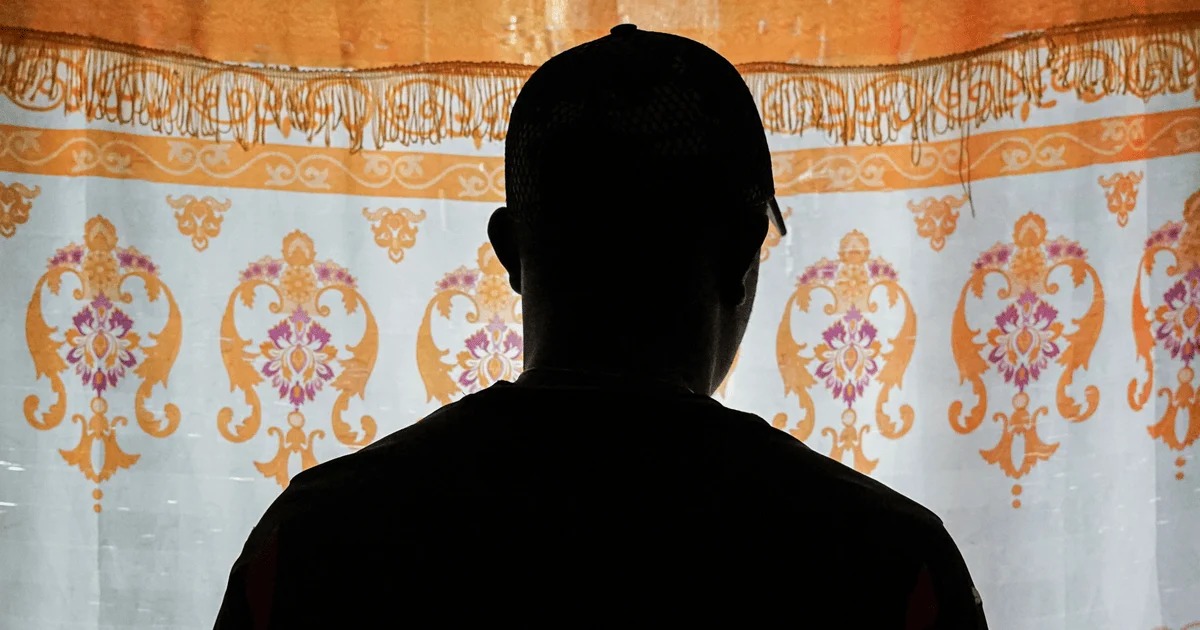
A Kenyan man who was smuggled to fight on the side of Russia in the war with Ukraine but managed to escape has shared his story under a pseudonym / © The Guardian
Stephen Oduor, aged 24, envisioned a steady position as a plumber in Russia to provide for his relatives after a prolonged period of joblessness in Kenya. Yet, in place of legitimate employment, he discovered himself on the forefront of the battle against Ukraine – bearing arms and devoid of any military preparation.
This is mentioned in an article by The Guardian.
Oduor journeyed to St. Petersburg from Nairobi alongside six other Kenyans last August. They were greeted at the airport by an individual who, instead of an office space or accommodation, escorted the group to a residence, where they gathered their luggage and were provided with dark clothing and footwear. The foreigners were subsequently transported to a law enforcement facility, had their fingerprints taken, and were compelled to endorse documents in Russian, which remained incomprehensible to them.
The subsequent day, they were transported to a substantial military installation to acquire their military identification documents. It was at that juncture that Oduor became aware that he had unknowingly become a member of the Russian armed forces. His misgivings were substantiated by an inadvertent exchange with a Russian who questioned, “What, you journeyed from Kenya and were unaware of your actions?”
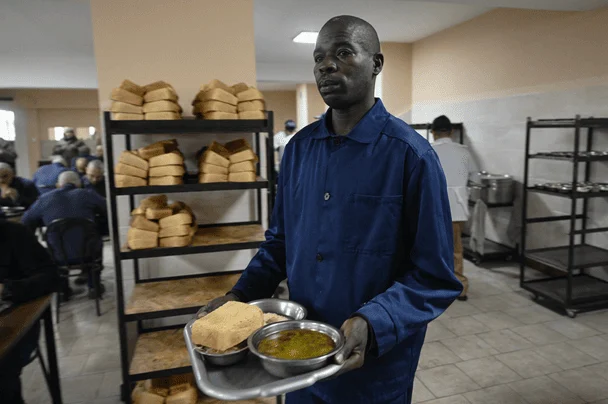
Kenyan citizen Evans Kibet was captured during hostilities on the side of Russian troops on the Ukrainian front and is currently in captivity / © The Guardian
Without Training – Directly to the Frontline
Following a brief period at the base, the Kenyans were placed on a train and transported to Belgorod, situated near the boundary with Ukraine. There, they received military attire, assault weapons, and ammunition, and were dispatched to battle positions practically without any training.
“I lacked the ability to shoot,” Oduor concedes.
For a period of three months, he was compelled to maintain guard in the forests, endeavoring to intercept Ukrainian aerial drones. He devoted countless hours within the trenches, cognizant of the fact that should the drone detect him first, his prospects of survival were minimal.
Enlistment via Deceptive Openings
Oduor's narrative is not isolated. As stated by the Ukrainian Ministry of Foreign Affairs, over 1,400 individuals hailing from 36 African nations are engaged in combat on behalf of Russia. A segment of these individuals are presently held captive in Ukraine.
The Kenyan Ministry of Foreign Affairs indicates that potentially over 200 Kenyans might have been enlisted through misleading employment solicitations abroad. Networks of fraudulent employment firms are exploiting elevated rates of youth unemployment and inadequate governmental oversight.
Analysts have observed that recruiters are purposefully seeking out physically robust individuals capable of being swiftly deployed into the infantry with insufficient training.
Prejudice and “Expendable Resources”
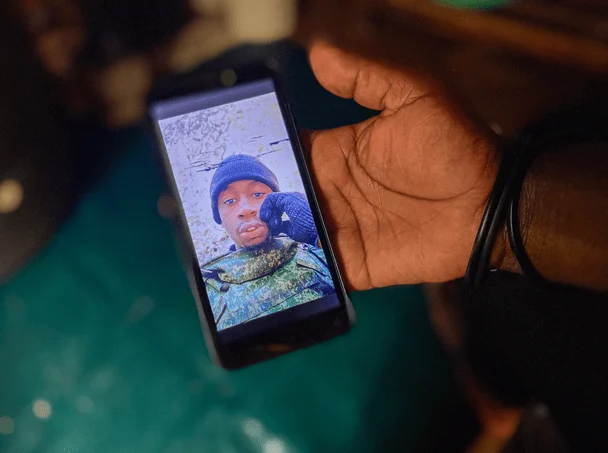
Susan kept in touch with her son David via WhatsApp while he was in Ukraine / © The Guardian
Video recordings are emerging on social media platforms depicting black individuals in Russian uniforms being subjected to degradation and utilized as “expendable resources.” In one instance, an individual equipped with an anti-tank mine is forcibly propelled forward at gunpoint, being addressed as “coal.” In another, African soldiers are coerced into vocalizing songs in the snow while undergoing ridicule from Russian soldiers.
Authenticating the veracity of these video recordings in their entirety is challenging; nevertheless, numerous testimonies originating from Russian military personnel have previously alluded to the practice of dispatching soldiers on fundamentally suicidal assignments.
Surviving by Chance and Evading
Oduor was fortunate enough to endure a kamikaze drone assault that struck the pickup truck he occupied alongside Russian soldiers. One of the occupants perished on the spot, while Oduor himself sustained injuries. Subsequent to receiving treatment across several medical facilities, he came to the realization that upon recuperation, he would be redeployed to the frontlines.
Capitalizing on the security guard's confidence, he absconded and made his way to the Kenyan embassy situated in Moscow, where he procured provisional documentation enabling his return to his homeland.
“I am Uncertain of His State”
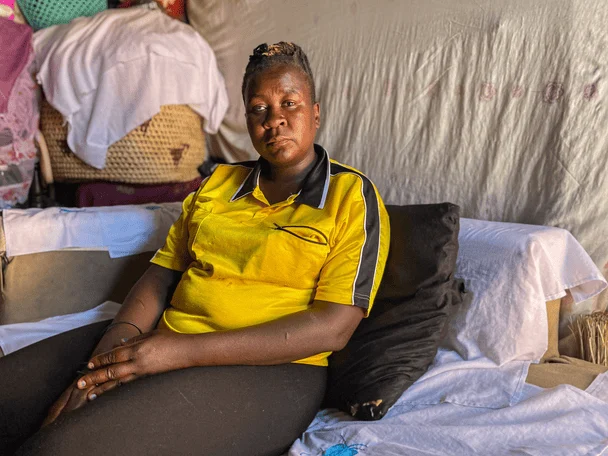
Susan Kuloba has not seen her son since he left for Russia in August. / © The Guardian
Many have encountered less favorable outcomes. The parent of David, a 22-year-old Kenyan, remains uninformed of her son's circumstances subsequent to his departure for Russia, allegedly to secure employment as a security officer. His concluding communication was a voicemail message forewarning the possibility of non-return from a combat operation. Thereafter, all communication ceased.
“The most harrowing aspect is the ambiguity surrounding his well-being,” the woman expresses.
Despite pronouncements pertaining to repatriation negotiations, a multitude of Africans continue to be ensnared within a conflict that originated with the assurance of steady employment, only to metamorphose into a struggle for endurance.
Previously, media sources disclosed that within the frontlines of the Russian military, recruits are subjected to severe punitive measures, precipitating shivering from the elements and mandating acts of self-humiliation.
Source: tsn.ua