
A fracture below Zambia has reportedly cleaved through the Earth’s surface, according to experts, enabling elements to ascend.
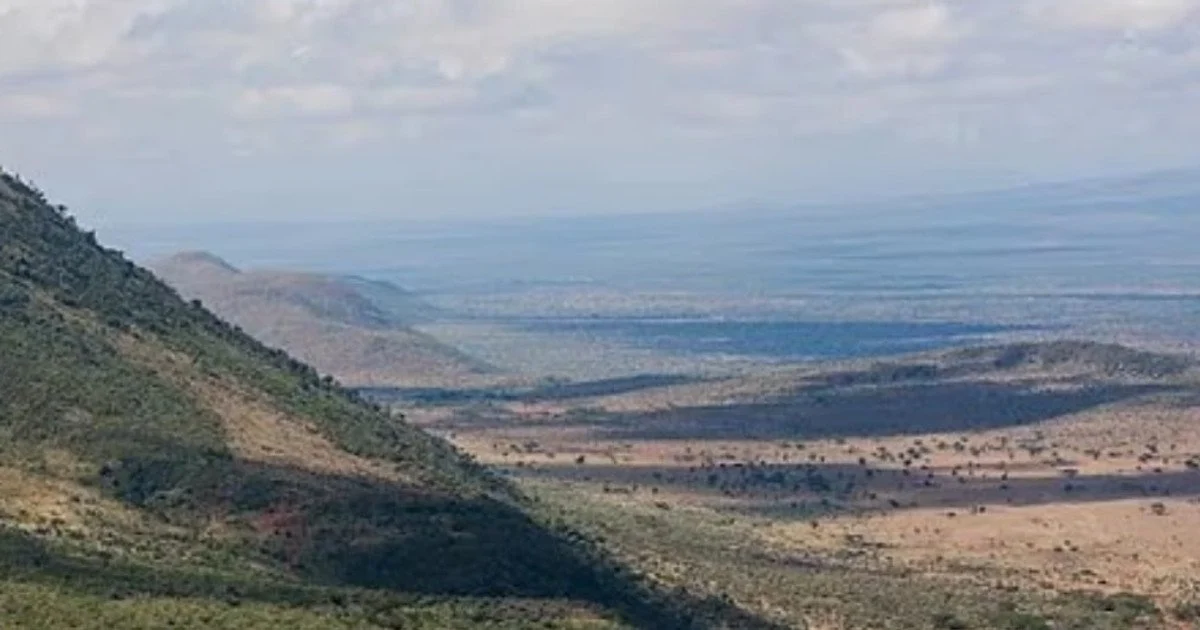
The Kafue Rift is part of the South West African Rift System, a system of cracks in the Earth's crust that is 2,500 km long.
Experts have identified a novel tectonic border under Zambia which may result in forthcoming Rift is integrated within the South-West African Rift System, extending approximately 2,500 km from Tanzania towards Namibia. Investigators surmise that this zone could evolve into a fresh division between the Nubian and Somali tectonic plates.
This information is per a Daily Mail report.
Elaborations Regarding the Research Discoveries
A scientific team scrutinized gases from Zambian geothermal springs and detected helium and carbon isotopes, indicative of the Earth’s mantle. This implies that a fault has already penetrated the Earth’s outer layer, permitting materials from great depths to surface.
“This uncommon link signifies the Kafue Rift boundary’s activity. Consequently, the South West African Rift Zone is also exhibiting activity – potentially an initial indication of sub-Saharan Africa’s fragmentation,” conveyed study co-author Professor Mike Daly of the University of Oxford.
Within the study, scientists gathered gas samples from eight geothermal outlets—six located within the rift, and two externally. Elevated mantle isotope concentrations were solely present within the rift zone.
The process, researchers specify, remains in its genesis. Volcanic action is currently absent, and the actual continental separation, if it materializes, will span hundreds of millions of years.
Scientists also propose that this locality may emerge as a geothermal energy resource for the region in the future.
Previous speculation suggested Africa is gradually disintegrating along the East African Rift System, wherein the Somali tectonic plate is drifting apart from the Nubian plate. Scientists foresee this process ultimately yielding a new ocean amidst continental sections. This faultline spans thousands of kilometers and presently manifests dynamic crustal extension and subterranean magmatic processes. As a result of geological transformations, a segment of East Africa will progressively detach from the major landmass. In the distant future, this occurrence will redefine the global map, generating new continents and oceanic basins.
Source: tsn.ua