
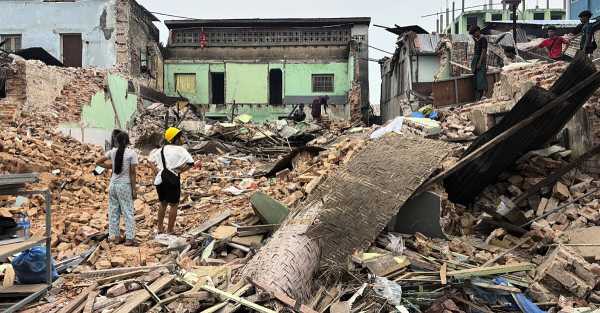
Efforts to find survivors after a devastating earthquake struck Myanmar on March 28 are winding down.
Rescue efforts have been replaced by intensified relief and recovery efforts, and the death toll from the disaster has exceeded 3,600 and continues to rise.
A situation report released on Monday evening by the UN Office for the Coordination of Humanitarian Affairs (OCHA) said more than 17.2 million people were living in affected areas and were in dire need of food, drinking water, medical assistance, cash assistance and temporary shelter.
In the capital Naypyitaw, people in the drizzle cleared rubble and collected firewood from their damaged homes, while soldiers cleared debris from some Buddhist monasteries.
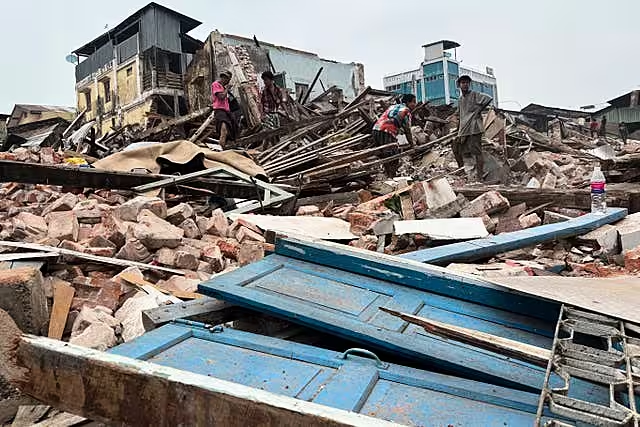
Myanmar’s Fire Department said on Monday that rescuers had pulled 10 bodies from the rubble of a collapsed building in Mandalay, Myanmar’s second-largest city.
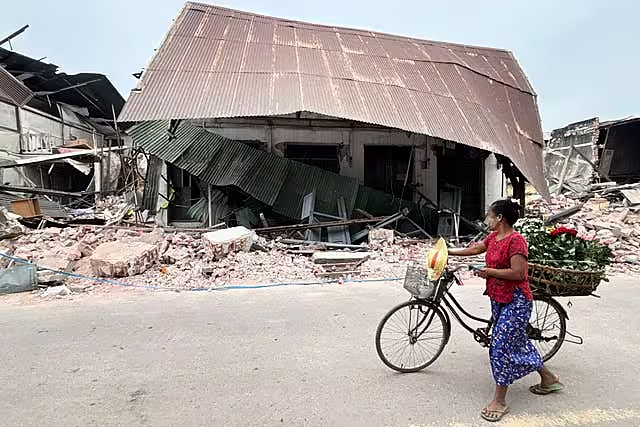
The report said international rescuers from Singapore, Malaysia and India had returned to their home countries after their work searching for survivors was deemed complete.
Maj. Gen. Zaw Min Tun, a spokesman for the military government, said late Monday that the death toll from the quake had reached 3,600, with 5,017 injured and 160 missing. He said 1,738 people from 20 countries were involved in search and rescue operations and had helped find and evacuate 653 survivors.
The number of rescue teams working in residential areas of Naypyitaw has been steadily declining.
A magnitude 7.7 earthquake struck much of the country, causing extensive damage to six regions and states. The quake left many areas without electricity, phone or mobile service and damaged roads and bridges, making it difficult to assess the full extent of the destruction.
Heavy rain and winds disrupted rescue efforts on Saturday night and added to the misery of homeless people forced to sleep in the open. The weather forecast for this week called for isolated showers and thunderstorms across the country.
Meanwhile, Myanmar’s military government and its battlefield opponents are trading accusations over alleged violations of ceasefire agreements made in an attempt to ease earthquake relief efforts.
The country has been in a state of unrest since the army took power in 2021 and overthrew the elected government of Aung San Suu Kyi, leading to nationwide peaceful protests that escalated into armed resistance and what can now be described as a civil war.
Although the military government and its armed opponents have declared a temporary unilateral ceasefire, there are widespread reports of ongoing fighting, with the army in particular focus due to ongoing aerial bombardment, according to independent Myanmar media and eyewitnesses.
Independent confirmation of the fighting is difficult due to the remoteness of the areas in which it is taking place and restrictions on journalists.
Sourse: breakingnews.ie