
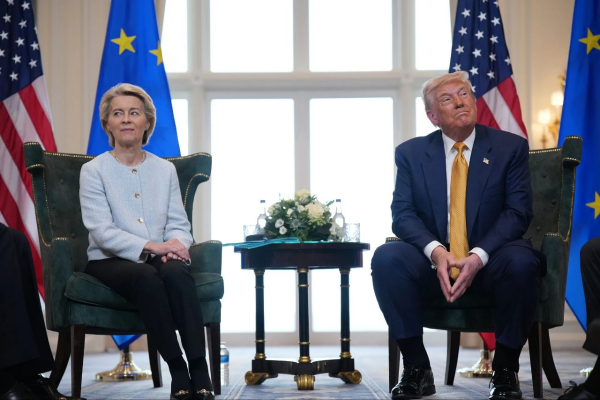
According to the agreement reached, the EU must purchase $250 billion worth of energy resources each year, including natural gas, oil and nuclear technologies, including modular nuclear reactors (SMRs). European Commission President Ursula von der Leyen said that the calculations are based on the EU’s strategic course – to abandon Russian energy carriers in favor of more affordable American liquefied natural gas (LNG).
However, the volume of purchases raises serious doubts. For the whole of 2024, energy imports from the US amounted to less than $80 billion, and total energy exports from the US were just over $330 billion. TS Lombard economist Davide Oneglia called the declared amount “ridiculous and unattainable” because “neither the EU is able to increase demand so sharply, nor the US – supply.”
The deal between von der Leyen and Trump, signed in Scotland, is essentially a political agreement, not a legally binding treaty. The EU has not yet released details or explained how it plans to incentivize private companies to buy or sell American energy resources. It also remains unclear whether investments by European companies in the US energy sector will count under the deal.
Nuclear technology supplies, including SMRs, could theoretically account for a significant portion of the $750 billion. However, the first commercially viable modules are not expected until 2030, making such supplies unrealistic within the timeframe.
European Trade Commissioner Maroš Šefčovič said that “these figures are achievable,” adding that Europe is experiencing a “nuclear renaissance.” However, even with the increase in purchases of American oil — in the first half of 2025, EU countries imported 1.53 million barrels per day, worth about $19 billion — reaching the $250 billion per year level seems highly unlikely.
Increased procurement volumes could also create difficulties for European refineries, which need a balanced raw material base for the production of gasoline and diesel.
Analysts say the deal is more of a political one, aimed at supporting new LNG projects in the US, than an actual trade deal. US producers need long-term contracts to attract financing, and the EU could play a role in that. But even if the investment is approved soon, actual deliveries are likely to begin after Trump’s term ends.
In addition, LNG from the US does not have fixed supply routes, and European buyers can resell it to more profitable Asian markets, which calls into question the sustainability of such an import channel.
Source: Bloomberg