
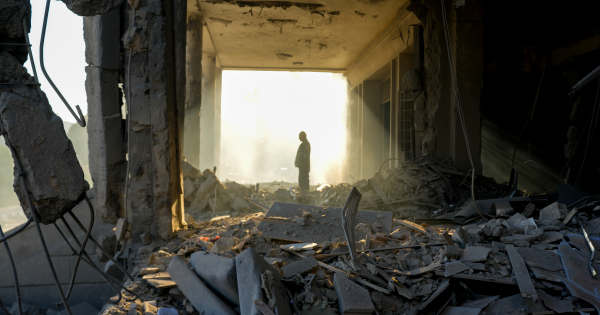
After days of bloody fighting in Syria’s southern province of Suwayda, Israel launched airstrikes on the Syrian capital, Damascus, on July 16. Hundreds of people have been killed, US intervention has been called in, and chaos has broken out on the border, as the conflict in Syria has escalated again. Highlights from the NYT
Buy an annual subscription to 6 Forbes Ukraine magazines with informative materials, ratings and analytics from UAH 1,350 .
Israel has carried out airstrikes in the Syrian capital, Damascus, damaging a compound housing the country’s Defense Ministry and hitting an area near the presidential palace, according to the Israeli military and Syrian authorities. The Israeli government warned on July 16 that the intensity of the strikes would increase if Syrian forces did not leave the area around the city of
Popular Category Money Date Yesterday “A 180-degree turn.” The Rada abolished the independence of NABU and SAPO. What does this mean for the work of anti-corruption bodies and relations with partners?

Two armed men stand in front of a burning car near the scene of clashes between Druze and Bedouin groups, July 14, 2025, Suwayda, Syria Photo Getty Images
Tensions between Israel and Syria
Israel’s bombing of Damascus followed days of bloody clashes between Syrian government forces and the opposition in the southern region of Suwayda, a heartland of the Druze community, which the Israeli government has pledged to protect. The Druze are a religious and ethnic group in the Middle East that practices Druzeism, a monotheistic religion that emerged in the 11th century based on Islam, Shiism, Gnosticism and Neoplatonic teachings.
The clashes began on Sunday, July 13, after armed Bedouin tribesmen attacked and robbed a Druze man on the country’s main highway, the Syrian Observatory for Human Rights reported. As the unrest intensified, the government of Syria’s new president, Ahmed al-Shara, sent troops to the province on July 14, Syrian officials told the NYT.
Deeply distrustful of the new government, some Druze militias in Suwayda believed that government forces had come to the aid of the Bedouins and were preparing to attack the Druze, Druze leaders say. Escalating tensions between Israel and the Syrian government threaten to derail cautious attempts to forge warmer relations after decades of hostility.
Syria’s new president, Ahmed al-Sharaa, a former Islamist rebel leader, is trying to stabilize the country after the overthrow of dictator Bashar al-Assad in December 2024. Assad was a staunch ally of Iran and a staunch enemy of Israel. But the rebels who ousted him have reached out to Israel in recent months, with U.S. mediation, in an attempt to ease tensions on the countries’ border.
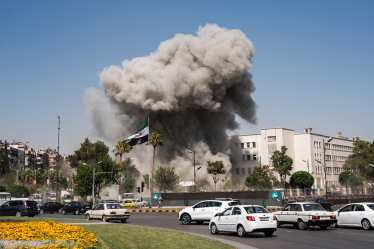
Israel hit the complex where the Syrian Ministry of Defense is located and the area near the presidential palace Photo Getty Images
A shaky truce
The latest fighting has been the bloodiest in Syria’s Suwayda in years, the NYT writes. More than 300 people have been killed in four days, the Syrian Observatory for Human Rights reports. Electricity and the internet have been cut off in many parts of the city. Hospitals are suffering from a lack of medicines. Many civilians cannot escape and are hiding in their homes, the NYT adds.
Following Israeli airstrikes on Damascus, the Syrian government announced a new ceasefire in Suwayda, agreed with local leaders. Later, US Secretary of State Marco Rubio wrote on the X platform that the US had worked with all parties to the conflict and had “agreed on concrete steps that will put an end to this alarming and horrific situation tonight.” Shortly after this announcement, government forces began withdrawing from Suwayda in accordance with the ceasefire agreement, the Syrian state news agency SANA reported.
The Israeli army attacked the Syrian army’s general headquarters complex, where, according to it, Syrian commanders were directing the actions of government forces in Suwayda.
Many Druze leaders in Syria have said they do not want Israel to intervene on their behalf, speaking out against any foreign intervention, the NYT reports. The exception was Druze spiritual leader Hikmat al-Hijri, who on July 16 called on US President Donald Trump and Israeli Prime Minister Benjamin Netanyahu to support the Druze.
The outbreak of violence in southern Syria also led to chaos on the border with Israeli-controlled territories, with dozens of friends – Israeli citizens – crossing the border to express solidarity with their Syrian friends. Netanyahu warned them in a televised address that they could be killed or kidnapped in Syria, and urged them to return to Israel.

After Israeli airstrikes on Damascus, Syrian authorities announced a new ceasefire in Suwayda Photo Getty Images
Potential new conflict in Syria
A new ceasefire agreement reached on July 16, which the Syrian Interior Ministry said was the result of negotiations with local leaders in Suwayda, calls for an “immediate and complete cessation of all hostilities,” the restoration of state authority in the region, and the integration of the province into the Syrian state.
The new escalation underscored the serious challenges Damascus faces in trying to regain control of a country that remains divided by a complex network of armed groups after nearly 14 years of civil war. One of the biggest challenges for al-Sharia’s government remains controlling waves of sectarian violence that could quickly escalate into a new civil conflict.
The fighting marked the third major outbreak of violence involving Syrian minorities since the fall of the Assad regime. In March 2025, armed groups that had previously served in Assad’s security forces ambushed new government forces on the Syrian coast, leading to days of sectarian violence that killed more than 1,600 people, mostly members of Source