
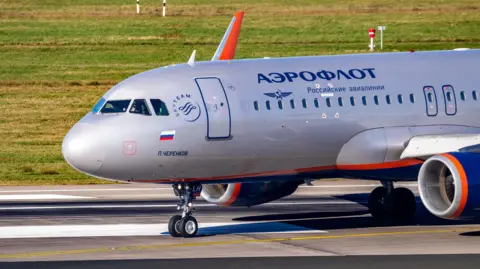
The Kremlin has called reports of a cyberattack on Russia’s national carrier Aeroflot “alarming” after the airline reported a glitch in its information systems and cancelled dozens of flights.
A statement purportedly made by the pro-Ukrainian hacker group Silent Crow said it carried out the hack in collaboration with a Belarusian group.
“We announce the successful completion of a long and large-scale operation, as a result of which Aeroflot’s internal IT infrastructure was completely compromised and destroyed,” the group said in a message on Telegram.
The statement also claims that they managed to destroy databases and corporate systems, as well as gain control over employees’ personal computers.
Silent Crow also threatened to publish “the personal data of all Russians who have ever flown on Aeroflot flights.”
“Glory to Ukraine! Long live Belarus!” the post concluded.
Hacker groups routinely exaggerate their successes, and it is unclear whether this latest attack will have any long-term consequences. The BBC has been unable to verify any of Silent Crow’s claims.
However, the Russian prosecutor’s office confirmed that the hacker attack had caused a “failure in the operation of Aeroflot’s information system” and announced that a criminal case had been opened.
The Ministry of Transport announced that some passengers will be transferred to flights of other carriers.
The cancellations mainly affected domestic flights, but routes to Belarus, Armenia and Tashkent were also disrupted.
Pro-Russian and pro-Ukrainian hacker groups have been extremely active since Russia’s full-scale invasion of Ukraine in 2022, but it’s hard to say whether their boasts about various cyberattacks are backed by facts.
These gangs are often led by volunteers who attack organizations and exaggerate the scale of their attacks to make headlines and undermine enemy morale.
This attack is rare in that it has a visible and immediate impact on a major Russian company, affecting both tens of thousands of civilians and the company itself.
Silent Crow said it had collaborated with a long-running Belarusian hacker group called Cyber Partisans, which has been carrying out attacks on targets in Russia and Belarus since 2022. Cyber Partisans describes itself as a “highly organized hacker collective fighting to liberate Belarus from a dictatorial regime.”
While many groups call themselves “hacktivists” – hacker-activists – evidence suggests that some have close ties to the security services of the countries they support.
Since Moscow’s forces launched a full-scale invasion of Ukraine in February 2022, travelers in Russia have frequently faced travel disruptions, usually due to Ukrainian drone attacks.
Earlier in July, hundreds of flights were cancelled at Moscow’s four main airports due to a sustained Ukrainian drone attack, injuring tens of thousands of people.
Source: bbc.com