
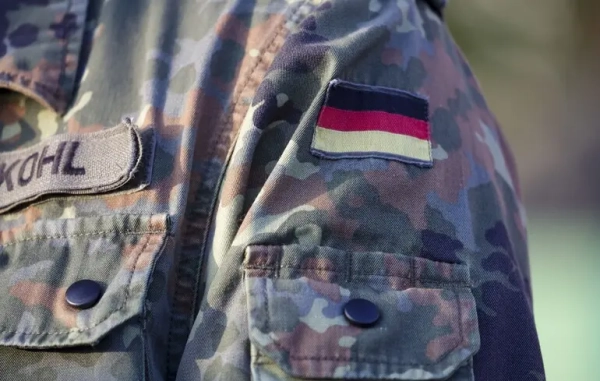
© EPA/ Christopher Neundorf The evolving security landscape might transform into an arena of competition.
Germany recently presented a detailed strategy for its military protection, encompassing a substantial buildup of its armed forces. Berlin is anticipated to assume a pivotal position in safeguarding the continent against emerging menaces and a diminishing alliance with the United States. Across Europe, this is largely viewed as an indispensable, pressing, and long-delayed determination, yet Germany’s blueprints are generating unease amongst certain associates, including France and Poland. The primary concern resides not so much in the resurgence of German military prowess, but rather in the concrete implications for the continent’s defense sector, as reported by The Financial Times.
“Germany’s swift increases in expenditure carry the hazard of solidifying crucial procurement choices for decades ahead, potentially sustaining reliance on American systems like combat aircraft and aerial defenses, all while bolstering German industry without guaranteeing neighboring nations a portion of the gains,” the publication observes.
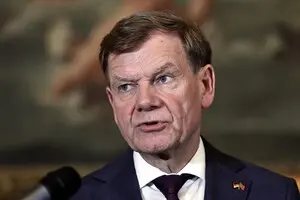
Germany emphasized its need for defense in the face of atomic dangers
Before this decade concludes, Germany is forecast to surpass NATO’s military spending benchmark of 3.5% of GDP, with a yearly allocation nearing 190 billion euros.
Disagreements with Paris regarding defense matters might complicate Franco-German ties, traditionally founded on collaborative efforts at the core of the EU. Few French leaders entertain the notion of Germany posing a renewed military peril. However, considering the swiftly shifting geopolitical framework, Paris is urging Berlin to confine its aspirations to the European domain.
“Germany is expected to take a leading role in NATO, while reassuring EU partners that this will not undermine the European integration process, which was based on the promise that no single country would dominate,” said Jacob Ross, an analyst at the German Council on Foreign Relations in Paris.
NATO’s perception also varies between the two nations. Germany is legally barred from deploying armed missions abroad without parliamentary endorsement and an international authorization — from NATO, the EU, or the UN — and it provides shelter for American nuclear weaponry on its territory.
Conversely, France maintains a more intricate rapport with the alliance, frequently deploying its forces autonomously, and prides itself on its autonomous nuclear deterrent.
In Poland, which has historically harbored apprehensions toward both Germany and Russia, politicians have articulated more explicit admonitions. In an essay published last summer, former prime minister Mateusz Morawiecki of the right-wing Law and Justice party questioned whether Germany, “no longer restrained by pacifist ideals,” might “revert to intimate collaboration with colonial, imperial Russia.”
Foreign Minister Radosław Sikorski told the Polish parliament last year: “As long as Germany is a member of the EU and NATO, I fear German aversion to armaments more than the German army.”
Paris is also troubled by Germany’s industrial might and its reliance on the United States and suppliers from outside Europe. French authorities and defense specialists caution that Berlin is embracing a domestic approach to revitalizing its defense industry, while simultaneously placing significant orders for American systems, despite commitments to favor European procurement and “strategic autonomy.”
Paul Maurice, an expert on French-German relations, contends that the distrust flows both ways, prompting commercial rivalry: “In Germany, French appeals for European sovereignty are invariably met with suspicion, as they are perceived as a ploy by France to merely advance its own industrial sector.”
French officials do not anticipate the country forfeiting its position as Europe’s principal military power, given its possession of nuclear arms and a permanent seat on the UN Security Council. Nevertheless, Maurice posits that “the infusion of such substantial finances will reshape the landscape of the European defense sector, amplifying the scale and influence of German enterprises.”
Numerous voices in Berlin suggest that France’s reticence arises from anxieties about relinquishing its role as the continent’s security guarantor and its defense-industrial hub.
Within Berlin’s security circles, there is no lack of criticism of the current government’s defense policy. Many concur that Germany ought to diminish its military dependence on Washington for vital systems like the F-35 fighter and the Patriot air defense. Yet, skepticism toward France endures.
“As the nation allocating the most capital, Germany bears a duty to expend funds in a European spirit, although that does not necessarily imply that such resources ought to be directed toward acquiring French hardware,” commented Nico Lange, a former advisor to former German Defense Minister Annegret Kramp-Karrenbauer.
But officials point to robust support from the Baltic and Nordic states for Germany’s defensive endeavors. Lithuania, for instance, has welcomed a German brigade to reinforce NATO’s eastern perimeter against Russia.
Officials similarly highlight Merz’s aspiration for intimate collaboration with Paris on matters of defense. In the previous month, the chancellor and French President Emmanuel Macron reached a consensus on exploring closer synergy conceived to demonstrate to adversaries that France’s nuclear defense umbrella could extend to Germany.
According to these proposals, Berlin could partake in joint exercises and mobilize its conventional armed forces to undertake missions in support of France’s atomic facilities.
Regarding the administration’s outlook should the Alternative for Germany party prevail, certain analysts observe that a more pressing predicament emanating from the far right exists in France, where the nationalist, Eurosceptic National Rally party currently leads in polling data ahead of the 2027 presidential ballot.
Another query echoing in France centers on the actual military efficacy and preparedness of Germany. A profound conviction exists that Berlin lacks the strategic acumen and readiness required to deploy its armed forces, as evidenced by its reluctance to commit troops in aid of Ukraine after the ceasefire, in contrast to France and the UK.
Lange suggests Paris should be more concerned about German inertia than German dominance.
“Everyone in the system has suddenly become big because of money, but the tendency is to keep things the same. The structures, the people, and the military bureaucracy remain the same — why would you expect it to produce different results?” he said.
The publication highlights Berlin’s emphasis on existing systems: as per the Kiel Institute, more than 80% of prospective defense spending is allocated for sustaining present capabilities.
The proportion of projected spending on novel defense technologies will not exceed 5% of total investment, with research and development retaining its present level. Thus, the true discord between Berlin and Paris may revolve around the dispensation of funds.
German officials say Paris is exploiting fears of German dominance to pressure Berlin to support joint EU-level borrowing for defense, an idea championed by Macron but opposed by Merz, who fears a backlash from his Christian Democratic Party.
The EU has proposed a €150 billion European Security Fund that would provide cheap loans for defense investment. Paris is pushing for a broader approach in areas such as satellites, intelligence and deep strike capabilities that are the backbone of modern warfare.
German officials and senior CDU lawmakers reject the idea, arguing that Merz’s spending plans have already virtually exhausted his political capital in the debt-averse party.
Joint EU borrowing would be the quickest way to bring the AfD to power in a country that is averse to debt, one government insider says.
However, some representatives of the German establishment categorically disagree with this.
“Germany must realize that it cannot increase Europe’s military potential alone,” said Carlo Masala, a professor of international politics at the Bundeswehr University in Munich, adding that “even the CDU must make additional efforts” regarding joint borrowing.