
© Getty Images The war revealed the Pentagon's vulnerabilities and diminished its capacity for confrontation in Europe and Asia.
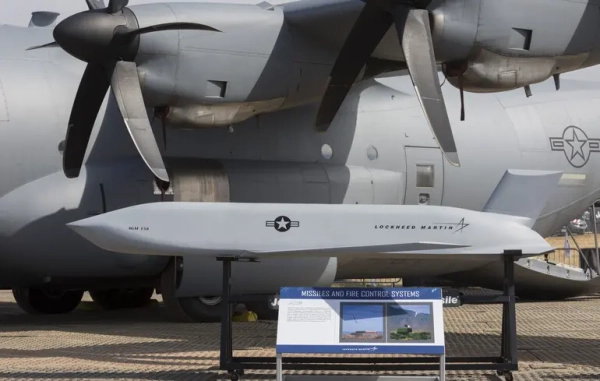
From the commencement of the Iran conflict, the U.S. has expended roughly 1,100 JASSM-ER long-distance stealth cruise missiles, initially accumulated for a prospective conflict with China. This represents nearly half of the entire U.S. inventory, as noted by The New York Times.
The news outlet gauged that the U.S. also utilized over 1,000 Tomahawk cruise missiles, approximately 10 times the quantity procured annually. Furthermore, it deployed upwards of 1,200 Patriot interceptor missiles and more than 1,000 Precision Strike and ATACMS land-launched missiles.
“The Iranian conflict has considerably drained the U.S. military’s munitions holdings and compelled the Pentagon to urgently transfer ordnance and other resources to the Middle East from units stationed in Asia and Europe. The personnel reduction has rendered these regional commands less prepared to engage with potential adversaries like Russia and China,” the publication articulates, adding that the U.S. is presently exploring avenues to amplify weapon production to tackle the challenge of resource scarcity.
The conflict also cast light on the Pentagon’s excessive dependence on highly priced missiles and munitions, notably air defense interceptors, and sparked concerns regarding the defense sector’s ability to engineer more economical weaponry at a quicker pace, particularly strike drones.
To date, White House representatives have refrained from assessing the fiscal impact of the Iranian conflict, but a pair of independent bodies suggest expenses spanning from $28 billion to $35 billion , or just under $1 billion each day.
In just the initial two days, defense authorities informed lawmakers that the military burned through $5.6 billion worth of munitions.
To reinstate U.S. global stockpiles to their preceding levels, the nation will be forced to make tough choices concerning where to sustain its military strength during this period, given that at current production speeds, it could necessitate years to replenish exhausted inventories.
Officially, the White House refutes the matter. Press Secretary Caroline Leavitt asserted that “the United States possesses the globe’s most potent military, fully provisioned with ample weaponry and ammunition, both domestically and globally, to effectively safeguard the homeland and execute any military operation.” However, the War Department has already prioritized increased spending on ammunition output.
The predicament for the Pentagon has intensified, according to authorities, as the Department awaits Congressional endorsement of additional funding before disbursing payments to arms manufacturers to refill its supplies.
Simultaneously, the U.S. military is depleting existing stockpiles at an accelerated rate, with certain resources dwindling more rapidly than others.
As an illustration, the Pentagon has committed a significant portion of its collection of stealthy, long-range JASSM-ER cruise missiles to the Iranian conflict. These extended-range air-to-surface missiles are deployed from fighter jets and bombers, boasting a range of approximately a thousand kilometers. Their purpose is to strike difficult-to-reach targets beyond the reach of enemy air defenses.
Since the war’s inception, the military has already launched approximately 1,100 JASSM-ER missiles (each valued at around $1.1 million). At present, approximately 1,500 of these missiles remain in reserve.
The Tomahawks, priced at roughly $3.6 million apiece, continue to be a pivotal weapon for potential forthcoming conflicts, notably in Asia. CSIS estimates that the remaining Tomahawk inventory comprises approximately 3,000 missiles.
Patriot interceptor missiles carry a price tag of nearly $4 million each. The U.S. manufactured approximately 600 in 2025. As per internal Pentagon and congressional projections, upwards of 1,200 missiles have been employed in the conflict thus far.
The military also shoulders unforeseen expenditures stemming from aircraft damage or destruction. During the rescue mission for a downed Air Force officer in Iran alone, the military was compelled to destroy two MC-130 cargo planes and a minimum of three MH-6 helicopters. The collective worth of the aircraft lost in Iran is estimated at $275 million.
The consequences of diminished ammunition reserves are already being felt across all regional U.S. military commands. According to Pentagon data scrutinized by the newspaper, the conflict in Europe has precipitated the depletion of stockpiles of weapon systems vital for safeguarding NATO’s eastern flank from Russian aggression.
The loss of surveillance and attack drones has similarly posed a concern. The demands of the Iranian conflict have also curtailed training and exercises. Military officials indicate that this is detrimental to the ability to undertake offensive operations in Europe and dissuade potential Russian assaults.
But it has had the most substantial impact on the forces in Asia.
Even prior to the commencement of the Iranian conflict, the U.S. military had redeployed the USS Abraham Lincoln carrier strike group from the South China Sea to the Middle East. Subsequently, a pair of 2,200-strong Marine Expeditionary Groups have been dispatched from the Pacific to the Middle East. Furthermore, the Pentagon has relocated advanced air defenses from Asia to reinforce defenses against Iranian drones and missiles.
The rerouted weaponry includes Patriot missiles and THAAD interceptor missiles in South Korea, where the Pentagon has installed a missile defense framework to counteract an escalating missile threat from North Korea.
According to U.S. officials, U.S. preparedness for military engagement in the Pacific was compromised even earlier owing to the Pentagon’s deployment of warships and aircraft to the Middle East following the eruption of conflict between Israel and Gaza in October 2023 and subsequent attacks by Yemeni Houthi insurgents on vessels in the Red Sea.
The preceding year’s month-long bombing operation targeting the Houthis was in actuality considerably more extensive than the Trump administration initially disclosed, totaling $1 billion in expenses.
Moreover, American ships and aircraft, and the personnel staffing them, function under what the military terms “high operational tempo.” In such taxing conditions, even fundamental equipment upkeep becomes problematic.