
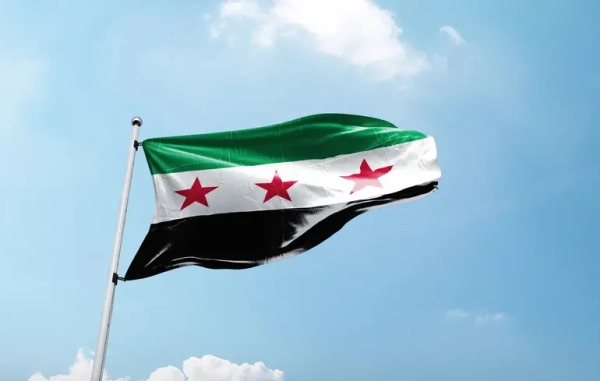
© depositphotos/efas The European Union is re-evaluating its stance toward Damascus after the downfall of the Assad government.
The European Union intends to strengthen its involvement with Syria by renewing official political discussions and facilitating closer financial and security relationships, Reuters reported , referencing a paper formulated by the bloc’s diplomatic section. This represents the next phase in a more extensive examination of EU policy regarding the nation after a period of strained relations.
According to the document, on May 11, the EU will completely reinstate the 1978 collaboration agreement with Syria and commence a “high-level political dialogue” (the European Union’s terminology for formal and organized talks) with the country’s interim government.
The EU will additionally “reassess and adjust” its sanctions framework to preserve influence when interacting with the Syrian governing body and challenging those aiming to destabilize the transitional process.
Return of migrants
The document details strategies to enhance economic partnership, encompassing the creation of mechanisms for commerce and investments, utilizing private sector funding, and aiding reforms geared toward enhancing the business climate in Syria through a fresh technical support hub.
It also indicates that the EU will collaborate with the country’s administration to encourage the “secure, voluntary, and honorable repatriation” of refugees and displaced individuals.
Europe has accommodated over a million Syrian refugees and asylum seekers, approximately half of whom reside in Germany. Their return has been a significant subject on the schedule of the majority of deliberations between European capitals and Damascus since the collapse of Bashar al-Assad’s administration in late 2024.
The document further highlights aspirations to incorporate Syria into regional schemes to develop transport infrastructure, notably the India-Middle East-Europe economic passage, positioning the country as a component of transport, energy, and digital connections.
Syria is evolving into a crucial transit location, particularly amidst the energy predicament triggered by the closure of the Strait of Hormuz during the US-Israeli conflict with Iran. On Thursday, April 16, a tanker transporting Iraqi petroleum set sail from the Syrian port of Baniyas.
Turkey, Syria, and Jordan have also consented to modernize their railway systems to establish a route linking southern Europe to the Persian Gulf, as mentioned by Turkish Transport Minister Abdulkadir Uraloğlu this week.
Supporting the integration of Syrian Kurds
Regarding security matters, the document specifies that the EU can offer assistance in training the Syrian police force and strengthening the institutional capabilities of the Ministry of Interior, as well as in cooperation in the battle against terrorism and actions to combat drug trafficking and organized crime.
The document underscores the EU’s backing for the execution of the agreement finalized in January between Damascus and the Kurdish “Syrian Democratic Forces”, which stipulates the assimilation of Kurdish forces into state institutions and the augmentation of the entitlements of Syrian Kurds as part of a wider political transformation.
Syria, which experienced the removal of the majority of Western sanctions near the close of the previous year, is pursuing greater integration into the global community under interim President Ahmed al-Sharaa, who spearheaded an alliance of rebel factions that toppled the government of Syrian dictator Bashar al-Assad in the latter part of 2024.