
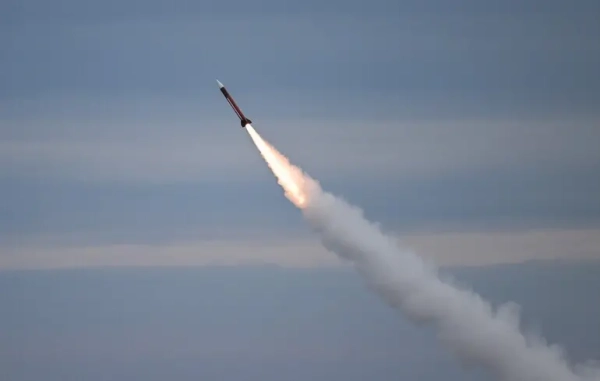
© Getty Images Americans are moving quickly to restock inventories diminished by the hostilities with Iran.
The Department of Defense has granted a $4.76 billion deal to Lockheed Martin for the swift renewal of the U.S. Army’s supply of cutting-edge interceptor rockets, which have been reduced by extensive employment during the Iran war, The Wall Street Journal indicates.
The agreement, made public on Thursday, will involve Lockheed’s Texas division manufacturing Patriot PAC-3 MSE (Missile Segment Enhancement) rockets until June 2030.
The PAC-3 MSE is a vital ground-based component of the US missile defense network, which employs direct impact elimination technology.
The mechanism is outfitted with an active radar seeking head, rapid propulsion rocket engines, and sophisticated command software. As per the firm, this offers heightened velocity, reach, and agility relative to the preceding PAC-3 edition.
The PAC-3 MSE possesses the capability to obliterate short- and medium-range ballistic missiles, cruise missiles, aircraft, and even advanced hypersonic targets at distances exceeding 60 km and at elevations reaching nearly 34 km.
The clash with Iran has substantially lessened the quantity of such interceptors, utilized by Patriot units stationed in the Middle East in response to Iranian missile assaults.
The UAE Ministry of Defense had previously documented that Iran launched 23 cruise missiles, 498 ballistic missiles, and 2,141 aerial drones at its territory alone. The majority of these were stopped before striking targets in cities, including Abu Dhabi, Dubai, and Sharjah.
US President Donald Trump asserted that Iran discharged more than 100 missiles at the aircraft carrier USS Abraham Lincoln, and they were all intercepted.
Within the scope of Operation Epic Fury, in accordance with official US pronouncements, Patriot batteries, alongside THAAD systems and missile defense naval vessels, were crucial in safeguarding numerous nations from Iranian missile threats.
US Central Command coordinated these operations in conjunction with the aerial defense arrangements of Israel, Saudi Arabia, and various Gulf states.
The fresh agreement constitutes a segment of a broader understanding between the Pentagon and Lockheed to amplify production of MSE missiles nearly threefold — from approximately 600 to 2,000 units annually.
On April 1, the Department of Defense also revealed a seven-year scheme with Boeing and Lockheed to increase output of essential parts — seeking heads, which should accelerate overall interceptor manufacturing.
The Navy is furthermore engaged in integrating the PAC-3 MSE into ships equipped with the Aegis combat management platform, potentially enabling these missiles to be launched from maritime installations.
Last year, Lockheed secured the most substantial agreement in its chronicle, valued at $9.8 billion, to create 1,970 of these rockets and accompanying equipment.
Based on data from the company, the mechanism has already demonstrated its efficacy against ballistic, cruise and hypersonic rockets, as well as airplanes. It is deployed by 17 countries.
Within the Middle East, PAC-3 units are currently stationed in Saudi Arabia, Kuwait, Qatar, Bahrain, and Jordan to defend American troops, bases, and allied infrastructure.
The armed conflict with Iran compelled the US to position extra Patriot batteries and THAAD systems to the area — more potent missile shield frameworks.
Ukrainian enterprise Fire Point is engaged in discussions with European firms to initiate manufacturing of an innovative air defense apparatus by the subsequent year, which could evolve into a substitute for the Patriot arrangement.