

Japan is significantly bolstering its backing for Rapidus, transforming it into a pivotal national initiative for the semiconductor industry. The government has sanctioned an additional $4 billion in finance, with the total public expenditure and investment in the firm projected to reach $16.3 billion by the close of the fiscal period in March 2027.
The fresh funding is intended to expedite Rapidus' market introduction and assist the company in transitioning from the development phase to the actual commencement of sophisticated chip manufacturing. A segment of the backing is tied to operations for Fujitsu, considered among the initial clients for the forthcoming 2nm fabrication. Concurrently, Japanese authorities are also supporting Rapidus' cooperation with Fujitsu and IBM Japan within the arena of energy-efficient AI processors.
Rapidus, established in 2022, isn’t a conventional state-run enterprise, but a privately held entity benefiting from substantial government support and the involvement of major Japanese corporations. It has evolved into a core component of Tokyo's plan to reinstate domestic expertise in the production of advanced semiconductors, a sector currently dominated by a handful of international players.
Japan's objectives are evident: cutting-edge processors are becoming indispensable infrastructure for advancements in artificial intelligence, robotics, quantum computation, data centers, and military applications. In light of this, Rapidus is regarded not merely as an industrial possession, but as a tool for technological autonomy.
The organization has already initiated a test production line in Hokkaido and is advancing its own 2nm technology. Rapidus intends to commence large-scale manufacturing in the latter part of fiscal 2027. Should this timeframe be achieved, Japan will secure a chance to rejoin the group of nations equipped to produce state-of-the-art semiconductors for AI workloads.
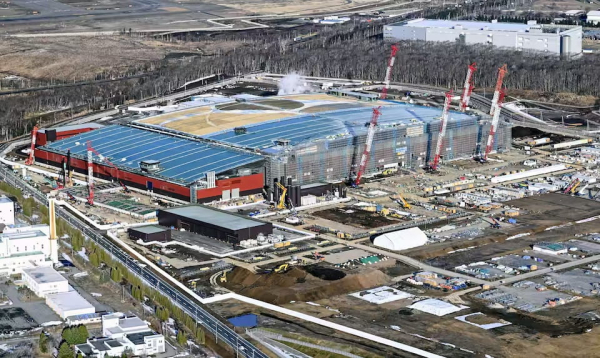
For financiers, the Rapidus narrative is illuminating: it represents one of the world's most significant governmental wagers on establishing a domestic producer of leading-edge AI chips. Essentially, Japan is endeavoring not only to close the gap with the market frontrunners, but also to establish the groundwork for its own stake in the enduring AI value stream – from conceptualization and creation to industrial and military implementations.
Simultaneously, the undertaking remains inherently risky. The business has yet to demonstrate its capability to broaden the technology, garner sufficient clientele, and ensure the financial viability of boosting output. However, it is already apparent that Tokyo is prepared to inject tens of billions of dollars into Rapidus, perceiving the project as a strategic asset in the worldwide contest for the AI processor market.