
Each vessel exiting the Persian Gulf has the capacity to haul 2 million barrels of petroleum.
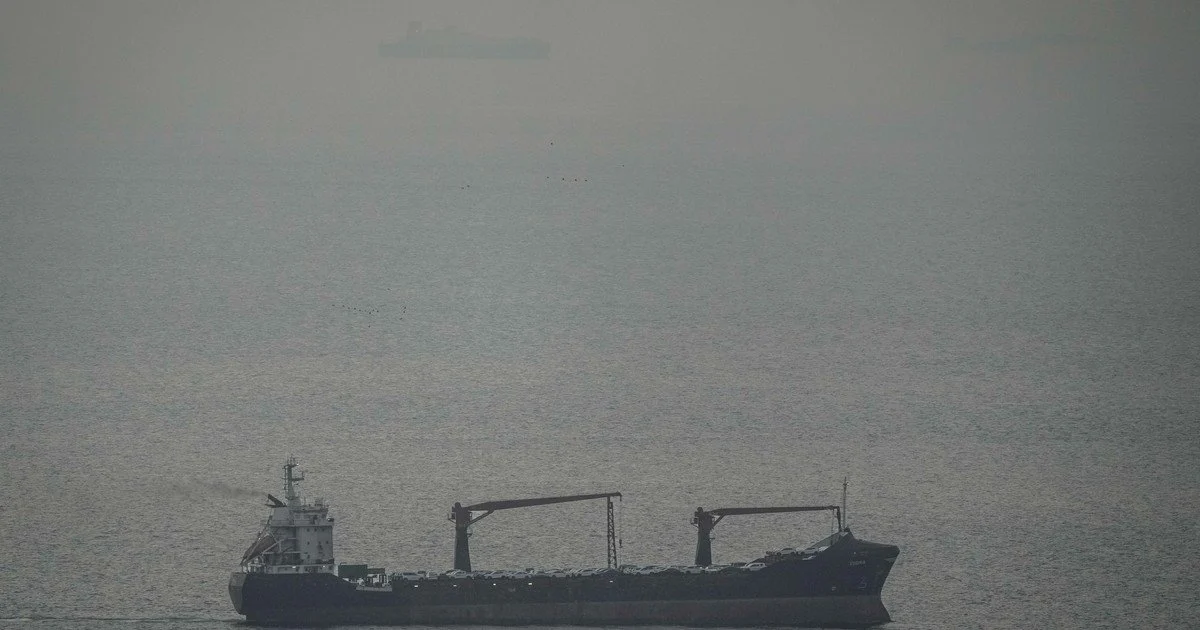
Strait of Hormuz / © Associated Press
On Saturday, April 11, three supertankers traversed the Strait of Hormuz. They are seemingly the initial ships to depart the Persian Gulf following the US-Iran truce and the initiation of peace discussions in Pakistan.
This information was relayed by Reuters, referencing shipping information.
Data from LSEG indicated that the Liberian-registered very large crude carrier (VLCC) Serifos and the Chinese-registered VLCCs Cospearl Lake and He Rong Hai entered and left a “trial anchorage in the Strait of Hormuz” that circumvents Iran’s Larak Island on Saturday.
Every vessel can convey 2 million barrels of petroleum.
Data from LSEG and analytics firm Kpler suggests the Serifos, which was transporting crude oil loaded from Saudi Arabia and the United Arab Emirates in early March, is anticipated to reach the Malaysian port of Malacca on April 21.
The same data indicates the Cospearl Lake is filled with Iraqi oil, while the He Rong Hai is laden with Saudi crude oil.
The obstruction of the Strait of Hormuz, through which roughly 20% of the world's oil and liquefied natural gas resources are transported, has disrupted global energy resources and instigated a significant surge in petroleum prices since the commencement of the US-Iran war in late February.
The situation in the Strait of Hormuz – what is known
It was previously revealed that for the first time since the start of the war against Iran, a number of US Navy warships navigated the Strait of Hormuz. The operation unfolded against the backdrop of the initiation of US-Iranian peace dialogues in Pakistan. Through this action, the US aimed to bolster assurance in the passage of commercial ships through the strait.
As a reminder, US President Donald Trump declared the commencement of the procedure of eliminating Iranian mines from the Strait of Hormuz amidst tensions in the Middle East.
As formerly stated, Iran is leveraging command of the Strait of Hormuz as a vital argument in negotiations with the US.
Tehran adamantly declines to concede control of the Strait of Hormuz to Washington and mandates a charge for the passage of vessels.