
The Department of Defense is raising concerns: strategically vital targets for attacks are nearly depleted. While Iranian rockets are concealed within impenetrable shelters, Tehran is effectively exerting influence on Washington's “vulnerable points.”
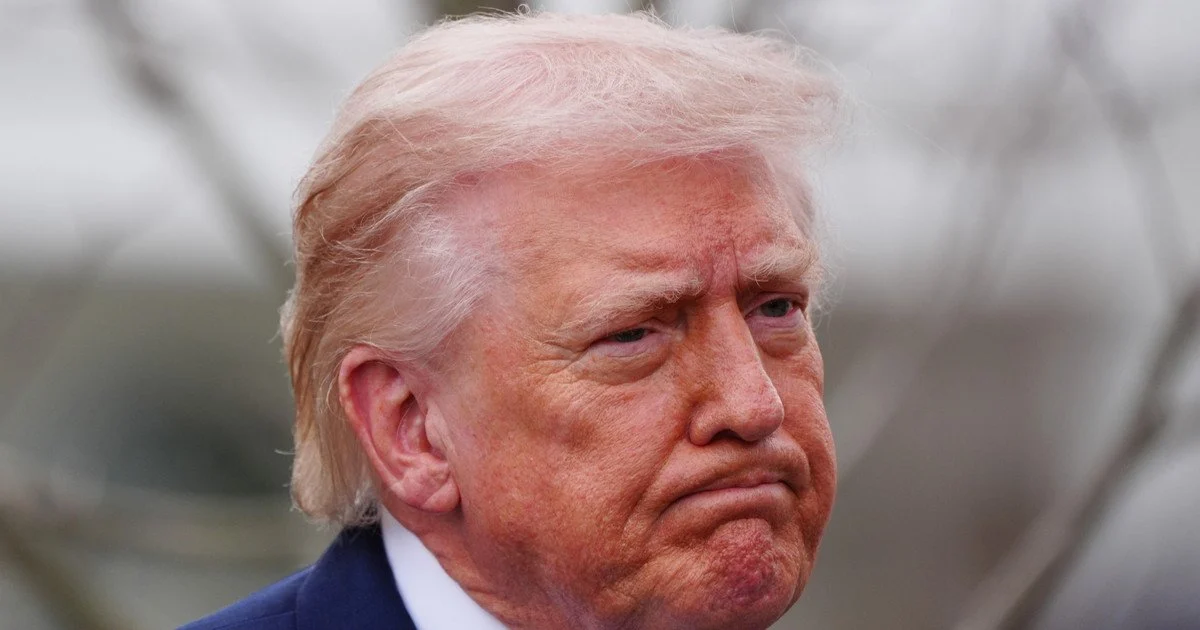
A war of attrition without a clear plan: the US risks getting stuck in an endless conflict with Iran, without having any real leverage over the regime / © Associated Press
The Pentagon is lacking strategically significant targets for bombardments in Iran, even as President Donald Trump insists the US will proceed to bomb Tehran for as long as three weeks.
Politico elaborates on why the United States is running out of bombing targets in Iran.
The fresh timelines, declared by Trump during his State of the Union address on Wednesday, provide limited avenues for executing the aerial assaults necessary to eradicate the concealed accumulation of ballistic missiles he intends to eliminate. The difficulties are amplified by Iran’s closure of the Strait of Hormuz and the understanding that the regime is engaging in a distinct form of warfare, one that is primarily economic rather than tactical.
Trump is trapped
Such a situation, three U.S. officials cautioned, might afford Iran sufficient power to retreat from discussions concerning its nuclear initiative, the state of security in the Middle East, or the reopening of the strait.
“We can simply continue to formulate a list of targets that are diminishing in importance and persist in irritating them to the degree where [the Islamic Revolutionary Guard Corps] secures a solid hold on the administration and deems it justifiable to initiate a sacred war against the United States indefinitely,” one defense official stated.
“Trump absolutely cannot simply withdraw. Departure would be humiliating; and remaining would place us in a challenging scenario,” he added.
Bombing is no longer effective; a ground operation is necessary.
The predicament lies in Iran now possessing few military installations that are accessible without a land invasion, according to the former Trump official. Tehran’s remaining ballistic rockets “are increasingly difficult to strike because the surviving ones are likely within reinforced shelters,” the source explained. “If not, they would have been annihilated already.”
Tehran’s tactic of simply enduring US attacks is yielding positive outcomes. It has already contributed to escalating energy expenses and heightened political strain on the Trump government to settle the dispute and evade the indignation of displeased voters.
The initial official expressed apprehension that Trump might adopt a strategy akin to Israel’s pattern of irregular military offensives intended to discourage its adversaries in the Middle East, often called “grass-mowing.” However, it could culminate in the United States sustaining minor setbacks to Iran and Tehran acquiring dominion over the Strait of Hormuz, through which roughly one-fifth of global oil shipments transit.
Trump recently suggested that US forces might target civilian amenities, including power stations and water purification facilities, if Iranian leaders do not expedite negotiations.
But he emphasized that the air raids did not impact Iranian petroleum facilities, “despite them being the easiest target of all.” Trump indicated that the country’s incoming administration would require prospective revenues to finance revitalization endeavors.
“There remains no apparent blueprint for what follows,” stated Representative Gregory Meeks, the ranking member of the House of Representatives for Foreign Affairs. “The American populace warrants more than ambiguous assertions of accomplishment. They warrant a thorough strategy that will avert further heightening of tensions, safeguard our interests, and establish us on a stable trajectory towards peace.”
When will Trump terminate the war in Iran: latest news
It is worth recalling that, as per Time, Trump is eager to discover a means of resolving the war in Iran.
Trump also menaced to cease arms provisions to Ukraine if NATO nations did not assist him in liberating the Strait of Hormuz.
American publications speculate that the US withdrawal in the battle against Iran could be more disastrous than the rout in Vietnam.
The Telegraph asserts that there is a “revolt” encircling Trump concerning the war in Iran: they are pressing for its conclusion.