
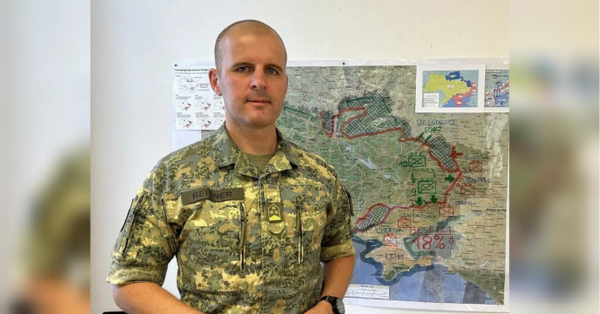
The CEO of the German defense company Rheinmetall, Armin Papperger, disparagingly called Ukrainian drones a kind of “Lego drone” and drone manufacturers Ukrainian “housewives with 3D printers in their kitchens.” After massive criticism from Ukraine, Rheinmetall backed down and emphasized its “greatest respect” for Ukraine’s defense efforts. Markus Reisner, a colonel in the Austrian armed forces and head of the Theresienwiese Military Academy’s Officer Training Institute, believes this is typical arrogance, according to N-TV.
VIDEO OF THE DAY
“We want to create the impression that we are superior to those who have been fighting for years. This is simply not true. Ukraine has gained incredible experience in recent years. When Ukrainian units train with NATO, they are superior. During NATO exercises in the Baltics in early 2025, a Ukrainian drone unit called Nemesis managed to inflict heavy losses on NATO forces, as these forces were completely unprepared for the way the war in Ukraine is currently being waged. There was another NATO naval exercise in which Ukrainian drones successfully attacked several NATO ships as a result of repeated simulated attacks. Ultimately, it is important that Ukraine is now stopping the training of its soldiers in NATO countries, as the soldiers there are not learning what they need on the front line. Ukraine has to thoroughly retrain its soldiers after NATO training before they can be sent to the front. Otherwise, soldiers would often die from Russian drone strikes within a few days. “The lack of training they received in NATO countries reduces their chances of survival. Now the head of one of the largest European arms companies is downplaying what is happening here. This is gross negligence,” the expert warns.
Western weapons systems, the colonel added, face significant challenges in Ukraine. The attack systems supplied do not have the desired accuracy and are incompatible with the Russians' electromagnetic jamming capabilities.
“There have been many reports and debates at arms fairs about how difficult it is for Western companies to keep up with current challenges on the front lines,” Reisner noted.
ADVERTISING
From the perspective of European arms manufacturers, there is a significant risk that Ukraine, with its experience and technological advancement, will receive contracts that the European arms industry will prefer, Reisner believes. This fear is especially widespread given the deployment of Ukrainian teams in the Middle East, which support Israel and the United States in their fight against Iran with the help of drone defense.
“The bottom line is that all weapons systems conceived on the drawing board and tested on prototypes need real combat conditions in order to eventually be tested and ready for deployment. This is what European companies have lacked in recent years, and to some extent American ones as well. The Americans had it easier here, since they were constantly present in conflicts, especially when it came to the use of long-range weapons. But European weapons systems have rarely, if ever, had to prove their capabilities in real conditions. Of course, Ukraine needs European weapons, such as SCALP/Storm Shadow air-to-surface cruise missiles. But they are reaching their limits, for example, due to the aforementioned electromagnetic interference from the Russians,” the expert concluded.
Meanwhile, despite the global crisis, Ukraine has significantly stepped up attacks on Russian ports and refineries. In particular, drones have been attacking the strategic Russian port of Ust-Luga for the seventh day in a row.
ADVERTISING