
In parallel, specialists express reservations regarding the certainty of a military approach in securing the reopening of the Hormuz Strait. Securing the waterway alone is deemed insufficient for this purpose.
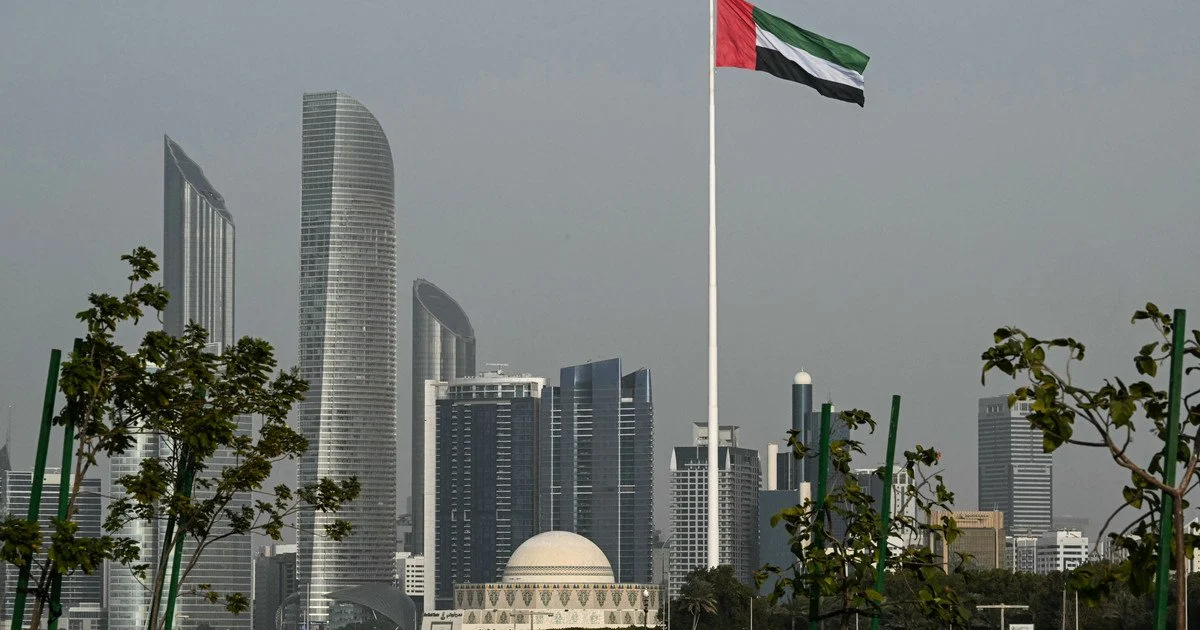
United Arab Emirates / © Getty Images
The United Arab Emirates is urging the United States to implement drastic measures and is willing to independently engage in warfare with Iran to free the Strait of Hormuz. The UAE aims to displace Iranian forces from the pivotal waterway, notwithstanding the potential for a widespread escalation.
This assertion is made in an article published by The Wall Street Journal.
The UAE is poised to collaborate with the United States and its allies in an endeavor to forcibly unlock the Strait of Hormuz, according to Arab officials, marking it as the initial Gulf nation to directly intervene in the dispute following actions by Iran.
Sources indicate that the Emirates are vigorously advocating for the passage of a UN Security Council resolution that would permit the application of force. Simultaneously, Emirati diplomats are endeavoring to persuade the United States, along with nations in Europe and Asia, to unite in a coalition to reinstate access to the strait via military intervention. An UAE representative stated that Iranian leadership perceives the present circumstances as an existential fight and are prepared to instigate substantial disruptions to the international economy by obstructing this vital channel.
Approaches to UAE Involvement in a Conflict Against Iran
According to a UAE source, the nation is currently devising potential strategies for its engagement in the operation, notably including mine removal from the maritime zone and the provision of further assistance.
Furthermore, certain Arab authorities have conveyed that the UAE is in support of the US taking command over islands within the strategic zone, particularly Abu Musa, which has been under Iranian administration for approximately half a century, despite claims from the Emirates.
The UAE Foreign Ministry restated the previously enacted UN resolution condemning Iranian strikes on the country’s urban centers, alongside the ruling from the International Maritime Organization, which criticized the blockage of the Strait of Hormuz.
The department emphasized that there is “a widespread international consensus concerning the necessity to uphold navigational freedom in the Strait of Hormuz.”
Could Other Gulf Nations Join the Conflict?
Sources have revealed that Saudi Arabia and other regional entities have adopted a more assertive stance toward Tehran and are advocating for the continuation of hostilities until Tehran is weakened or overthrown. However, they are presently unwilling to directly commit their armed forces. Bahrain, a key ally of the US and the location of the Navy’s Fifth Fleet, has sponsored a UN resolution expected to be voted on April 2.
Representatives from a Gulf country observe that the UAE’s current trajectory signifies a notable alteration of their strategy. Dubai, as the nation’s financial hub, has historically maintained economic ties with Iran. Before the war, the Emirates endeavored to mediate between Washington and Tehran, highlighted by a visit to Abu Dhabi from Iranian national security official Ali Larijani, who was subsequently killed in an aerial assault.
Currently, the UAE is effectively endorsing President Donald Trump’s strategy of encouraging allies to assume a more proactive role in the war, notably concerning the matter of reopening the Strait of Hormuz. As reported by The Wall Street Journal, Trump has communicated to his advisers his willingness to conclude the conflict without necessarily unblocking the strait, delegating this responsibility to other nations.
Hazards for the UAE Resulting From Participation in the War and Iran’s Response
In the meantime, the participation of the Emirates in such an undertaking is associated with considerable dangers. Specifically, it could precipitate a protracted deterioration in relations with Iran even following the cessation of active hostilities.
In retaliation, Iran markedly amplified the intensity of its attacks on the UAE. Following several weeks of comparative calm, the assaults escalated sharply: on March 31 alone, the utilization of approximately 50 ballistic and cruise missiles, as well as drones, was documented. Tehran also cautioned that it was prepared to obliterate the vital civilian infrastructure of any Gulf state that backs operations against it, explicitly mentioning the UAE.
“They may enter this war only to face a more aggressive Iran, continue to suffer strikes on critical infrastructure and likely lose investor confidence, and then have difficulty rebuilding relations with their neighbor — especially if Trump decides to declare victory before opening the strait or destroying Iran’s missile and drone capabilities,” said Elizabeth Dent, a Washington Institute expert and former Pentagon official.
What Prompted the UAE’s Decision to Enter the War?
The UAE, similar to most nations in the region, has historically endeavored to abstain from direct involvement in the conflict with Iran. However, as officials have remarked, the Emirates’ position has shifted. Prior to the onset of the war on February 28, Iran was regarded as a complex, yet somewhat predictable neighbor. Nevertheless, the combat has presented a different image: according to sources, the Iranian regime commenced acting out of intimidation, targeting civilian objectives, encompassing hotels and airports in Dubai.
The attacks have instigated a decline in air travel and tourism, an adverse impact on the property market, a surge in forced leaves and dismissals, and have endangered the nation’s crucial reputation as a secure “island of stability” amidst a turbulent region.
As a result, the Emirates implemented stricter financial and administrative procedures. Specifically, Emirates airline declared a prohibition on entry and transit for Iranian citizens. This followed the authorities’ decisions to shutter the Iranian Hospital and the Iranian Club in Dubai.
The UAE’s most conspicuous alteration in approach is its endeavors to restore shipping through the Strait of Hormuz. Officials indicate the Emirates is relying on European and Asian nations, which are presently exhibiting a lack of urgency, to collaborate in clearing the strait and facilitating its reopening, conditional upon the UN Security Council’s endorsement of a resolution.
Simultaneously, Russia and China may impede such an initiative, while France is advocating for an alternative strategy. Nonetheless, even if the resolution is unsuccessful, the UAE is prepared to participate in a military undertaking.
Iran, for its part, insists on perpetual authority over the strait, including the implementation of a fee collection system for passage. The Gulf states are apprehensive that a diplomatic resolution could effectively cement Tehran’s control over the administration of this strategic route, thus they champion its expulsion through military means.
A Forceful Approach Might Not Secure the Opening of the Strait of Hormuz
Nevertheless, specialists harbor doubts that a military strategy is guaranteed to ensure the opening of the strait. This would necessitate controlling not only the waterway itself but also the territories along its entire 100-mile expanse, which would likely mandate the deployment of ground troops.
“I don’t think we can do it. Iran just needs to maintain a threat to the strait – all they need is one drone, one mine, or one small suicide boat,” said Congressman Adam Smith.
Notwithstanding these risks, nations within the region that advocate for the military alternative deem it warranted, considering the potential for control over such a vital route by a hostile nation.
As highlighted by Chatham House fellow and former Pentagon advisor on Middle East affairs Bilal Saab, enlisting in the military operation would serve as a public declaration of backing from Arab nations and concurrently broaden avenues for operations against Iran and the reestablishment of shipping.
The UAE possesses military installations, the deep-sea port of Jebel Ali, and a strategic location in proximity to the entrance of the Strait of Hormuz, which could be utilized as a base for US-led operations, encompassing the seizing of islands or the escorting of tankers.
Furthermore, the Emirates maintains a modest yet potent air force equipped with US-manufactured F-16 fighters, which have previously participated in joint operations with the United States in Iraq against the Islamic State.
The country also has reconnaissance drones and inventories of American bombs and short-range missiles, which could assist in offsetting the arms shortages in the US and Israel.
“The proximity to the strait means that you can team up and deploy various platforms to protect shipping, as well as strike Iranian targets on the other side of the Gulf,” said Grant Rumley, a senior fellow at the Washington Institute.
Gulf Nations Urge Continuation of US Hostilities With Iran
To reiterate, according to AP, US allies within the Persian Gulf, including Saudi Arabia and the UAE, are exerting pressure on Trump to perpetuate the military campaign until a comprehensive shift in policy or the ousting of the Iranian regime. Despite the 3,000 fatalities and economic hazards, Arab nations regard this moment as a pivotal opportunity to definitively negate the threat emanating from Tehran, encompassing its nuclear and missile programs. The UAE favors the most extreme strategy – a ground operation, whereas Qatar and Oman generally incline towards diplomacy.
The White House is presently wavering between the prospect of negotiations and intensifying pressure, as Iran threatens its neighbors with strikes on water supply and oil facilities should aggression persist.
Trump is confronted with a critical decision regarding the Strait of Hormuz: the US withdrawal from the conflict with Iran portends a geopolitical calamity on a more significant scale than the defeat in Vietnam. Experts caution that the forfeiture of control over the strait, through which 20% of the world’s oil transits, will instigate a nuclear proliferation in the region, a global economic downturn, and unprecedented inflation. Analysts characterize the most probable scenario as an escalation of military operations, as a US departure would invalidate decades of American doctrine in the Middle East and pave the way for Russian and Chinese influence.
Source: tsn.ua