
As Trump hesitates between accord and aggression, Gulf leaders are pressing for continued offensives against Iran. The UAE is even promoting the notion of a land invasion.
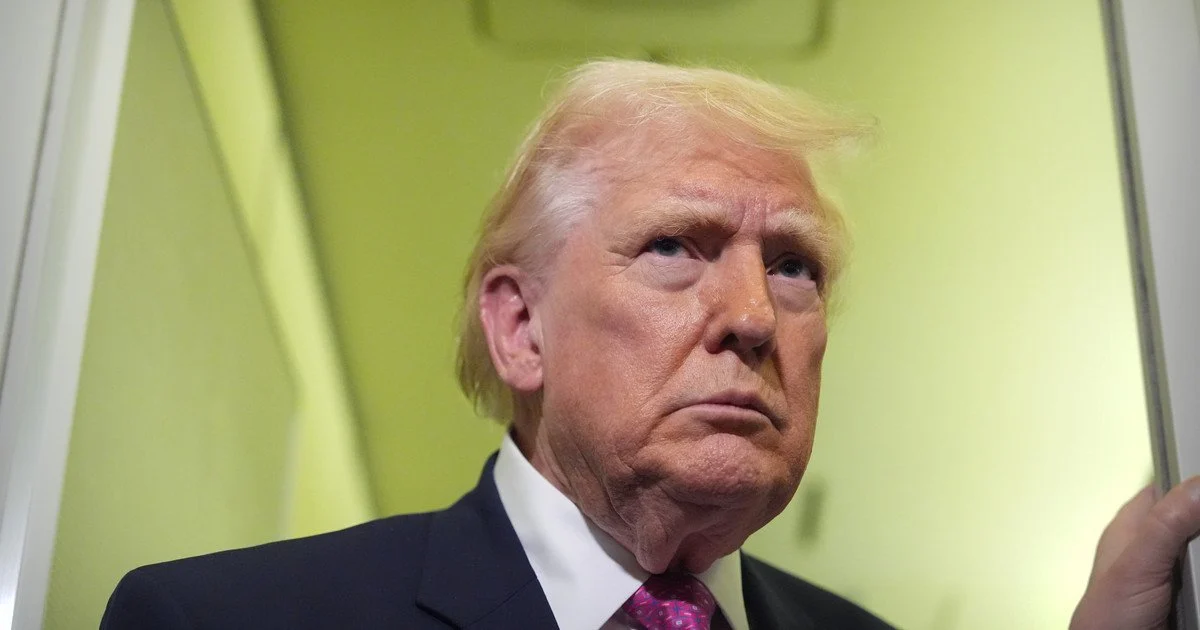
US President Donald Trump / © Associated Press
US allies in the Persian Gulf are imploring US President Donald Trump not to cease the military operation until Iran is thoroughly debilitated. Saudi Arabia and the UAE view this as an opportunity to enact substantial political transformations in the Iranian leadership or its replacement.
AP conveys this information, referencing American, Middle Eastern, and Israeli authorities.
The Iran War — Why US Allies Are Calling for a Continuation
As per sources, the Gulf nations, allied with the United States – predominantly Saudi Arabia and the UAE – are advising Trump against diminishing the military campaign against Iran. In their perspective, following a month of US-led attacks, Tehran remains insufficiently weakened. Certain partners are persuading the White House that the present juncture offers a momentous chance to ultimately destabilize Iran's theocratic system.
According to the sources, figures from Saudi Arabia, the UAE, Kuwait, and Bahrain insist in private discussions that the operation should not conclude absent significant alterations in Iran's governance or a sweeping overhaul of its policy.
Such appeals arise amidst Trump's inconsistent pronouncements: he concurrently mentions a weakened Iran's willingness for dialogue while threatening to intensify the war if deals are not achieved.
Trump is struggling to garner domestic backing for the conflict, which has already resulted in over 3,000 fatalities in the Middle East and is impacting the global economy, all while he increasingly asserts support from pivotal allies in the region.
“Saudi Arabia is actively retaliating. Qatar is retaliating. The UAE is retaliating. Kuwait is retaliating. Bahrain is retaliating. They are all retaliating,” the American leader stated.
The Persian Gulf countries provide their territories for American bases from which offensives against Iran are executed, yet they do not directly engage in combat.
Support among US allies is not uniform
Despite broad endorsement for the US initiative, disparities exist among regional states. As one diplomat points out, Saudi Arabia and the UAE favor augmenting military force against Tehran.
The UAE is regarded as the most assertive participant, strongly advocating for a ground intervention. Kuwait and Bahrain share a comparable stance. Amidst over 2,300 missile and drone assaults by Iran, the Emirates are progressively anxious about the prolonged character of the war and the risks to its reputation as a reliable financial and tourist hub.
Simultaneously, Oman and Qatar, historically mediators between Iran and the West, favor a diplomatic resolution.
As per sources, Saudi Arabia believes that a cessation of hostilities at this juncture does not guarantee a “favorable agreement” that would secure the safety of the Arab countries in the region.
Riyadh insists that any accord must incorporate reversing Iran's nuclear ambitions, dismantling its ballistic missiles, terminating aid to proxy groups, and assurances that the Strait of Hormuz, through which approximately a fifth of the world's oil passed before the war, remains unblocked.
In their view, this is attainable through substantial adjustments in the policies of the Iranian government or by its removal.
In parallel, UAE representatives are voicing increasingly harsh criticisms of Tehran.
“An Iranian regime that fires ballistic missiles at residential properties, uses global commerce as a weapon, and supports proxies can no longer be regarded as an acceptable component of the regional landscape. We seek guarantees that this will never recur,” UAE Foreign Minister Noura al-Kaabi penned.
US Secretary of State Marco Rubio emphasized the aligned positions of Washington and its Arab associates.
“These are religious zealots who must never possess nuclear weapons because they hold an apocalyptic vision of the future. And all their neighbors acknowledge this, thus their backing of our actions,” Rubio remarked.
Saudi Arabia's call not to stop the war against Iran
Saudi Crown Prince Mohammed bin Salman, in communications with the White House, underscored that further diminishing Iran's military potency and its leadership serves the strategic interests of the broader region.
Nevertheless, the kingdom is cognizant of the perils of prolonging the conflict, as this affords Iran more prospects to strike energy facilities.
A Saudi official observed that the country ultimately seeks a political agreement, but for the time being, the paramount objective is to safeguard the populace and vital infrastructure.
Iranian Foreign Minister Abbas Araghchi, for his part, declared that his state's offensives against the Persian Gulf countries are directed exclusively at American forces.
“Iran holds respect for the Kingdom of Saudi Arabia and views it as a fraternal country. Our operations target hostile aggressors… The time has come to withdraw US forces,” the minister wrote.
In recent days, Trump has highlighted the solidarity of allies in the region while criticizing NATO countries for their limited involvement. He has also lauded the function of partners, deeming them “courageous” and the Saudi prince a “warrior” and a “remarkable man.”
Will US allies go to war with Iran?
The United States has not yet invited Gulf states to engage in the offensive directly. One justification is the hazards of coordination: early in the war, three American fighter planes were inadvertently downed by “friendly fire” from Kuwait during an Iranian assault. Furthermore, six additional American servicemen perished in a tanker plane mishap in Iraq.
An added complexity is that solely the UAE and Bahrain maintain formal diplomatic ties with Israel, which impacts their capacity to engage in joint operations.
Iran, conversely, cautioned about potential strikes on the crucial infrastructure of neighboring countries, encompassing water desalination plants, should the United States further escalate actions.
Experts indicate that the absence of a defined ultimate objective and reservations about Washington's determination to finalize the operation are dissuading certain allies from adopting more proactive measures. Simultaneously, a substantial incident resulting in numerous casualties could alter the dynamics and draw them into open warfare.
War in Iran — latest news
Gulf states have virtually depleted their Patriot missile arsenals during the conflict with Iran, expending approximately 2,400 PAC-3 and GEM-T missiles from a total of 2,800. According to Bloomberg, the depletion stemmed from the intense frequency of attacks: Iran unleashed close to 1,200 ballistic missiles and 4,000 drones. The critical air defense burden has rendered the region reliant on US backing and is seeking less costly alternatives, such as JDAM munitions.
According to The Wall Street Journal, Trump is poised to conclude the war against Iran even absent the reopening of the Strait of Hormuz, aiming to avert prolonging hostilities beyond the projected 4-6 weeks. Rather than compelling the restoration of shipping, Washington will prioritize weakening Iran's fleet and missile capabilities, integrating this with diplomatic leverage. Should Tehran not voluntarily unlock the strait, the United States may shift this responsibility to allies in Europe and the Persian Gulf.
Notwithstanding the preparedness for forceful scenarios, the foremost concern for now is exiting the dynamic stage of the war, even though this may fortify Iran's grip over the strategic passageway down the line.
Source: tsn.ua